
Title
Erasmus On Women,Used
Sold by Ergodebooks, an authorized reseller.
Returns accepted within 30 days | support@ergodebooks.com
Shipping Information
- Free Standard Shipping — United States only
- Processing Time: 3–5 business days
- Estimated Delivery: 6–10 business days after dispatch
- Double-boxed, fully insured & discreetly packaged
- Tracking number sent via email once dispatched
Returns & Refund
Returns accepted within 30 days of delivery.
Damaged or Defective Item
Free return shipping + replacement or full refund
Wrong Item Received
Free return shipping + replacement or full refund
Change of Mind
Return shipping at customer's expense · 25% restocking fee applies
Payment Option

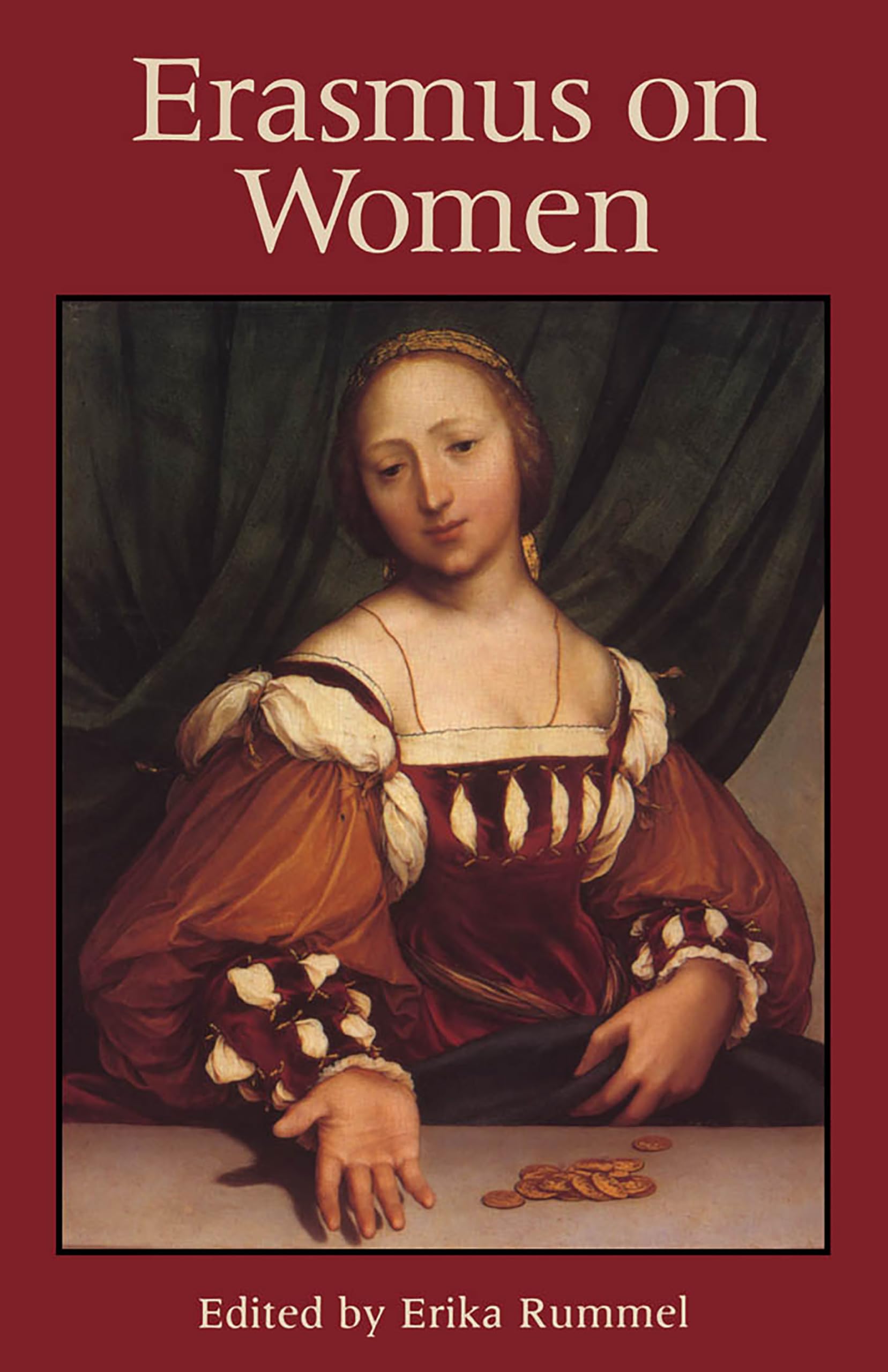
In His Writings Erasmus Was More Interested In Arguing Than In Settling A Case. However The Equivocation We Find In His Writings Is More Than A Literary Game Or A Technical Expedient. It Is The Corollary Of His Scepticism. One Can Hardly Expect Unequivocal Statements On Complex Issues Such As The Role Of Women In Society From A Man Who Holds That Human Affairs Take So Many Shapes That Definite Answers Cannot Be Provided For Them All.' But As Erika Rummel Demonstrates, The Difficulties Of Interpreting Erasmus' Texts Do Not Invalidate Their Use As Sources Of Social History; They Only Prevent Us From Ascribing The Views Expressed Specifically To Erasmus. What Emerges From The Text Is A Composite Picture Of Women'S Role In Society, Reflecting A Spectrum Of Views Held In Erasmus' Time Rather Than A Coherent Set Of Views Advocated By Him Personally.Erasmus On Women Offers Selections From Erasmus' Manuals On Marriage And Widowhood, His Rhetorical Treatises, And The Colloquies. The Texts Deal With The Courtship, Marriage, Childrearing, And Widowhood. Selections Treating Particular Topics, Such As Prostitution, Scholarship, And Activism, Are Placed Within The Context In Which They Are Discussed By Erasmus.Erasmus' Dialogues Present A Lively Cast Of Virgins And Mothers, Housewives And Harlots, Shrews And Activists. The Fifteen Texts And Excerpts Offered Here Represent A Mixture Of Traditional And Progressive Thought. Along The Traditional Lines, He Commends Women For Their Role As Caregivers And For Their Service To God And Society. In Contrast, He Holds Progressive Views (By The Standards Of His Time) On The Education Of Women And Breaks With Tradition By Challenging The Idea That Celibacy Is Superior To The Married State.Erasmus' Views Were Radical For His Time And Frequently Involved Him In Controversy. Lavishly Praised By Some, His Writings Were Bitterly Denounced By Others. Yet The Wide Dissemination Of His Writings Makes Him An Important Commentator And Influence On The Social Thought Of The Sixteenth Century.
⚠️ WARNING (California Proposition 65):
This product may contain chemicals known to the State of California to cause cancer, birth defects, or other reproductive harm.
For more information, please visit www.P65Warnings.ca.gov.