If you have any questions, you are always welcome to contact us. We'll get back to you as soon as possible, withing 24 hours on weekdays.
Customer service
All questions about your order, return and delivery must be sent to our customer service team by e-mail at yourstore@yourdomain.com
Sale & Press
If you are interested in selling our products, need more information about our brand or wish to make a collaboration, please contact us at press@yourdomain.com
Help
If you have any questions, you are always welcome to contact us. We'll get back to you as soon as possible, withing 24 hours on weekdays.
Customer service
All questions about your order, return and delivery must be sent to our customer service team by e-mail at yourstore@yourdomain.com
Sale & Press
If you are interested in selling our products, need more information about our brand or wish to make a collaboration, please contact us at press@yourdomain.com
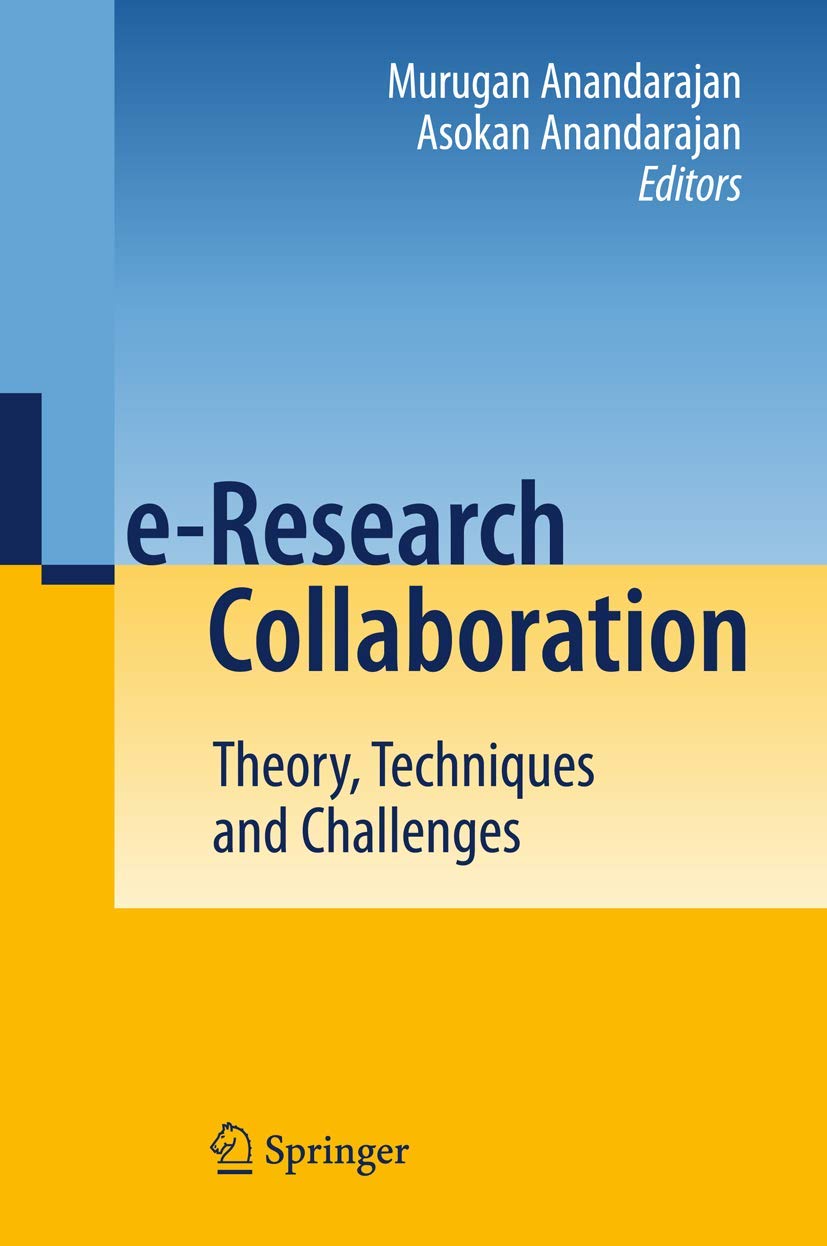
Product Description Research 2.0 is now a critical component in research management. This book describes how Web 2.0 technologies can help researchers collaborate. It contains examples of web portals including MyNetResearch and discusses critical aspects of research management. From the Back Cover Research in both academic and nonacademic circles has remained virtually identical in its conduct and organization over the last few decades. Disparate groups of researchers have worked on their ideas, projects and inventions in isolated clusters, with little sharing of information and synergies from collaboration. The advent of social networks and Web portals such as MyNetResearch have led to the creation of new research networks that dramatically reduces the barriers and obstacles to collaboration by researchers who are geographically, organizationally and disciplinarily distant. The current tens of thousands and eventually millions of researchers who will use research networks are ushering in a new paradigm for research. In this paradigm collaboration is made much easier, sharing of research knowledge is instant, and synergies from routine collaboration will yield huge advances in research productivity and innovation. This book examines how research networks are changing the practice of research and decide how best to embrace such technologies and use them to their best advantage.
⚠️ WARNING (California Proposition 65):
This product may contain chemicals known to the State of California to cause cancer,
birth defects, or other reproductive harm.
For MAP (Minimum Advertised Price) violations and Intellectual Property (IP) or Trademark concerns, please contact:
support@ergodebooks.com
⚠️ California Proposition 65 Warning: Some products sold on this website may expose you to chemicals known to the State of California to cause cancer, birth defects, or other reproductive harm. For more information, visit www.P65Warnings.ca.gov.