
Title
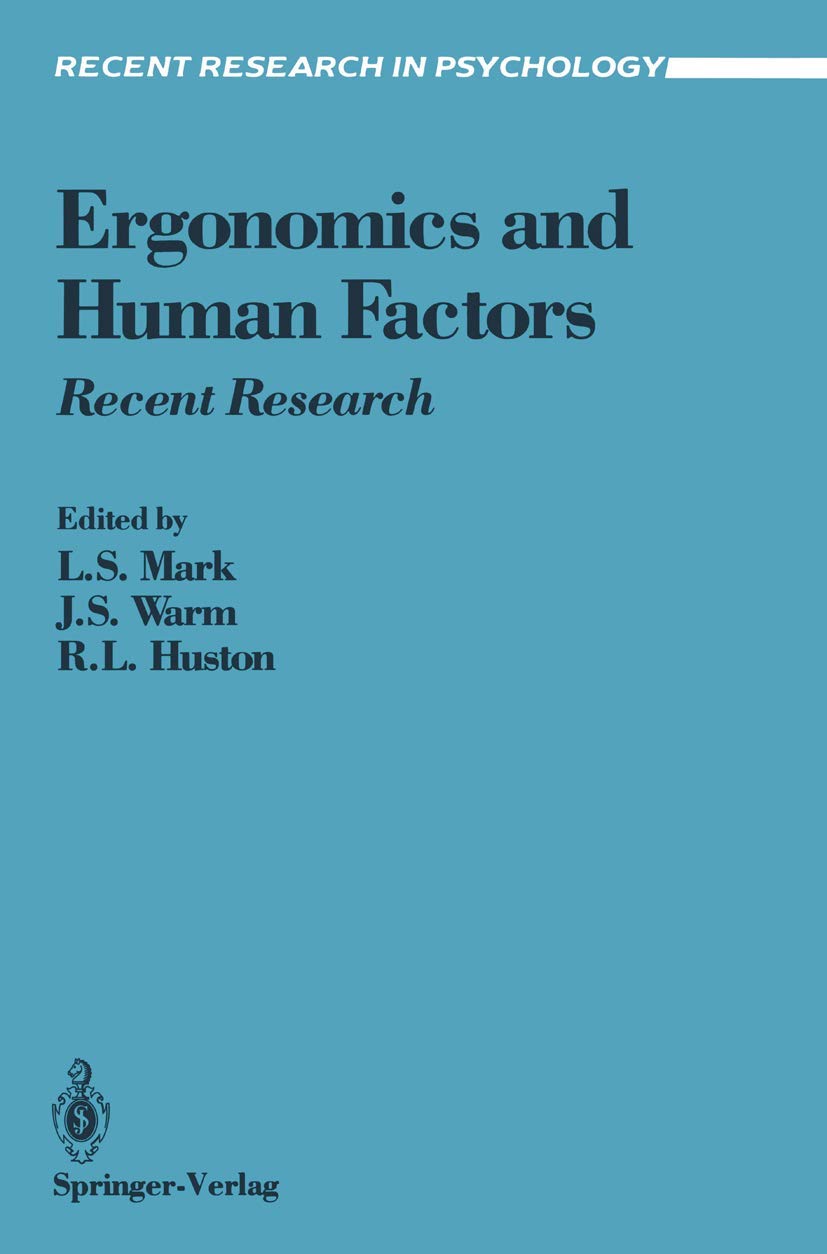
Ergonomics And Human Factors: Recent Research (Recent Research In Psychology)
Sold by Ergodebooks, an authorized reseller.
Returns accepted within 30 days | support@ergodebooks.com
Shipping Information
- Free Standard Shipping — United States only
- Processing Time: 3–5 business days
- Estimated Delivery: 6–10 business days after dispatch
- Double-boxed, fully insured & discreetly packaged
- Tracking number sent via email once dispatched
Returns & Refund
Returns accepted within 30 days of delivery.
Damaged or Defective Item
Free return shipping + replacement or full refund
Wrong Item Received
Free return shipping + replacement or full refund
Change of Mind
Return shipping at customer's expense · 25% restocking fee applies
Payment Option

And Applications To The HumanComputer Interface Michael E. Fotta AT&T Communications 16th FIr. Atrium II, Cincinnati, OH 45202 Artificial intelligence (AI) programs represent knowledge in a fashion similar to human knowledge and the activities of an AI system are closer to human behavior than that of traditional systems. Thus, AI enables the computer to act more like a human instead of making the human think and act more like a computer. This capability combined with applying human factors concepts to the interface can greatly improve the humancomputer interface. This paper provides an intro duction to artificial intelligence and then proposes a number of methods for using AI to improve the humanmachine inter action. AN INTRODUCTION TO ARTIFICIAL INTELLIGENCE Definition There are many definitions of artificial intelligence (AI) running from the very general to the very detailed. Perhaps the most well accepted general definition is that by Elaine Rich: 'Artificial intelligence is the study of how to make computers do things at which, at the moment, people are better', (Rich, 1983). A good example of a detailed definition is provided by the Brattle Research Corporation; 'In simplified terms, artificial intelligence works with pattern matching methods which attempt to describe objects, events or pro cesses in terms of their qualitative features and logical and compu tational relationships,' (Mishkoff, 1985).
⚠️ WARNING (California Proposition 65):
This product may contain chemicals known to the State of California to cause cancer, birth defects, or other reproductive harm.
For more information, please visit www.P65Warnings.ca.gov.