
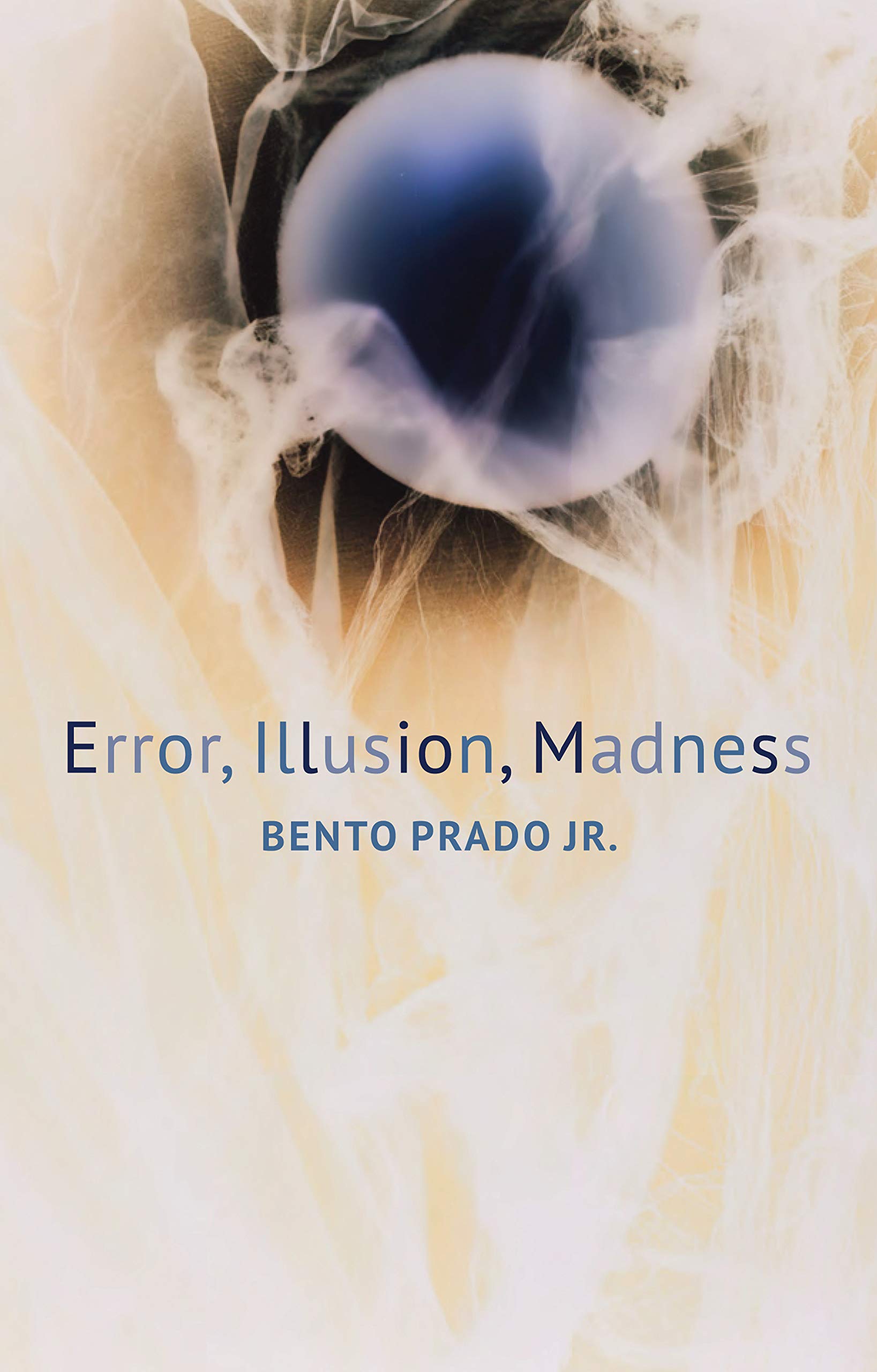
Title
Error, Illusion, Madness (Critical South),Used
Sold by Ergodebooks, an authorized reseller.
Returns accepted within 30 days | support@ergodebooks.com
Shipping Information
- Free Standard Shipping — United States only
- Processing Time: 3–5 business days
- Estimated Delivery: 6–10 business days after dispatch
- Double-boxed, fully insured & discreetly packaged
- Tracking number sent via email once dispatched
Returns & Refund
Returns accepted within 30 days of delivery.
Damaged or Defective Item
Free return shipping + replacement or full refund
Wrong Item Received
Free return shipping + replacement or full refund
Change of Mind
Return shipping at customer's expense · 25% restocking fee applies
Payment Option

This book makes available in English the work of one of the most important Brazilian philosophers and intellectuals of the twentieth century. First published in 2004, Error, Illusion, Madness is an original contribution to the debate about the nature and role of the subject and its forms of expression. In a context where the category of the subject was being at once dismissed by structuralist and poststructuralist thinkers and sidelined by the intersubjective turn of critical theory, Bento Prado Jr.s book represented a unique intellectual intervention. He mobilized authors as diverse as Wittgenstein and Deleuze to formulate a notion of the subject as both a critique of identity and an affirmation of difference, a notion that dismantled the foundational character usually associated with this category. In this way Bento Prado Jr. opened up a new and distinctive kind of critical thinking that emphasized subjectivity while avoiding both foundationalism and relativism.This important book will be of great interest to those working in philosophy, critical theory, cultural theory, and Latin American studies.
⚠️ WARNING (California Proposition 65):
This product may contain chemicals known to the State of California to cause cancer, birth defects, or other reproductive harm.
For more information, please visit www.P65Warnings.ca.gov.
- Q: How many pages does 'Error, Illusion, Madness' have? A: This book contains two hundred forty pages. It provides an extensive exploration of the author's philosophical arguments.
- Q: What is the binding type of this book? A: The binding type is paperback. This makes it lightweight and flexible for easy reading.
- Q: What are the dimensions of 'Error, Illusion, Madness'? A: The dimensions are five point thirty-one inches in length, zero point ninety-one inches in width, and eight point thirty-one inches in height. These sizes make it convenient to hold.
- Q: Who is the author of this book? A: The author is Bento Prado Jr. He is recognized as an influential Brazilian philosopher and intellectual.
- Q: What genre does 'Error, Illusion, Madness' belong to? A: This book is categorized under Modern philosophy. It addresses critical theory and cultural studies.
- Q: When was 'Error, Illusion, Madness' first published? A: It was first published in two thousand four. This date marks its introduction to the English-speaking audience.
- Q: How do I read 'Error, Illusion, Madness'? A: You can read it like any paperback book, page by page. Its philosophical content is suitable for readers interested in critical theory.
- Q: Is this book suitable for beginners in philosophy? A: Yes, it can be suitable for beginners. However, some familiarity with philosophical concepts may enhance understanding.
- Q: What themes are explored in 'Error, Illusion, Madness'? A: The book explores themes such as subjectivity, identity, and difference. It critiques traditional notions of the subject in philosophy.
- Q: How should I store 'Error, Illusion, Madness'? A: Store it in a cool, dry place away from direct sunlight. This will help preserve the integrity of the paperback binding.
- Q: Can I clean the pages of this book? A: No, avoid cleaning the pages. Instead, keep it away from moisture to prevent damage.
- Q: What if 'Error, Illusion, Madness' arrives damaged? A: If it arrives damaged, contact the seller for a return or replacement. Most retailers have policies for damaged items.
- Q: Is there a warranty for this book? A: No, books typically do not come with a warranty. However, check the seller’s return policy for assistance.
- Q: What if I have questions about the content of the book? A: You can consult academic resources or forums. Engaging with other readers may also provide insights.
- Q: How does this book compare to other philosophical texts? A: It offers a unique perspective on subjectivity compared to traditional texts. Its approach is distinct in modern philosophy.