
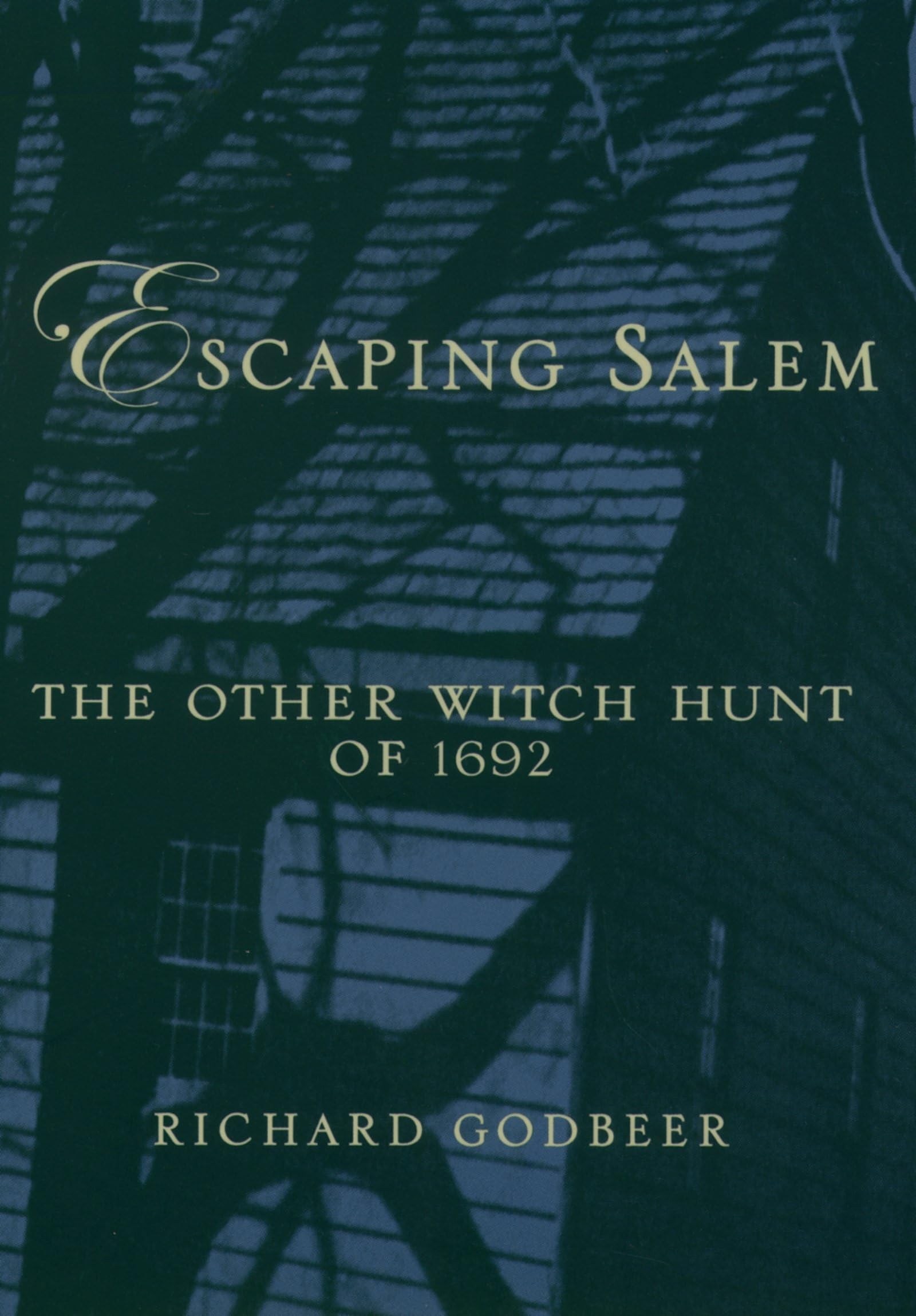
Title
Escaping Salem: The Other Witch Hunt Of 1692 (New Narratives In American History),New
Sold by Ergodebooks, an authorized reseller.
Returns accepted within 30 days | support@ergodebooks.com
Shipping Information
- Free Standard Shipping — United States only
- Processing Time: 3–5 business days
- Estimated Delivery: 6–10 business days after dispatch
- Double-boxed, fully insured & discreetly packaged
- Tracking number sent via email once dispatched
Returns & Refund
Returns accepted within 30 days of delivery.
Damaged or Defective Item
Free return shipping + replacement or full refund
Wrong Item Received
Free return shipping + replacement or full refund
Change of Mind
Return shipping at customer's expense · 25% restocking fee applies
Payment Option

The Salem Witch Hunt Of 1692 Is Among The Most Infamous Events In Early American History; However, It Was Not The Only Such Episode To Occur In New England That Year. Escaping Salem Reconstructs The 'Other Witch Hunt' Of 1692 That Took Place In Stamford, Connecticut. Concise And Accessible, The Book Takes Students On A Revealing Journey Into The Mental World Of Early America, Shattering The Stereotype Of Early New Englanders As Quick To Accuse And Condemn.Drawing On Eyewitness Testimony, Richard Godbeer Tells The Story Of Kate Branch, A Seventeenyearold Afflicted By Strange Visions And Given To Bloodchilling Wails Of Pain And Fright. Branch Accused Several Women Of Bewitching Her, Two Of Whom Were Put On Trial For Witchcraft. Escaping Salem Takes Us Inside The Connecticut Courtroom And Into The Minds Of The Surprisingly Skeptical Stamford Townspeople. Were The Pain And Screaming Due To Natural Or Supernatural Causes? Was Branch Simply Faking The Symptoms? And If She Was Indeed Bewitched, Why Believe Her Specific Accusations, Since Her Information Came From Demons Who Might Well Be Lying? For The Judges, Godbeer Shows, The Trial Was A Legal Thicket. All Agreed That Witches Posed A Real And Serious Threat, But Proving Witchcraft (An Invisible Crime) In Court Was Another Matter. The Court In Salem Had Become Mired In Controversy Over Its Use Of Dubious Evidence. In An Intriguing Chapter, Godbeer Examines Magistrate Jonathan Selleck'S Notes On How To Determine The Guilt Of Someone Accused Of Witchcraft, Providing An Illuminating Look At What Constituted Proof Of Witchcraft At The Time. The Stakes Were Highif Found Guilty, The Two Accused Women Would Be Hanged.In The Afterword, Godbeer Explains How He Used The Trial Evidence To Build His Narrative, Offering An Inside Perspective On The Historian'S Craft. Featuring Maps, Photos, And A Selected Bibliography, Escaping Salem Is Ideal For Use In Undergraduate U.S. Survey Courses. It Can Also Be Used For Courses In Colonial American History, Culture, And Religion; Witchcraft In The Early Modern World; And Crime And Society In Early America.
⚠️ WARNING (California Proposition 65):
This product may contain chemicals known to the State of California to cause cancer, birth defects, or other reproductive harm.
For more information, please visit www.P65Warnings.ca.gov.
- Q: How many pages does the book have? A: The book has two hundred pages. This length provides a comprehensive exploration of the witch hunt events without being overly lengthy.
- Q: What is the binding type of this book? A: The book is paperback bound. This makes it lightweight and easy to handle for both reading and carrying.
- Q: What are the dimensions of the book? A: The book measures seven point nine nine inches in length, five inches in width, and zero point five nine inches in height. These dimensions make it a convenient size for reading and storage.
- Q: Who is the author of 'Escaping Salem'? A: The author is Richard Godbeer. He is noted for his detailed research and engaging narrative style in the context of early American history.
- Q: In which category does this book belong? A: The book falls under the Colonial Period category. This classification helps readers identify its historical focus on early America.
- Q: What is the main theme of 'Escaping Salem'? A: The primary theme revolves around the witch hunt in Stamford, Connecticut, during 1692. It challenges common perceptions of early American witchcraft trials and their societal implications.
- Q: How is 'Escaping Salem' suitable for educational purposes? A: The book is ideal for use in undergraduate U.S. survey courses. Its accessible writing style and thorough analysis make it a valuable educational resource.
- Q: What kind of historical evidence does the book use? A: The book draws on eyewitness testimony and trial evidence. This approach provides readers with a rich perspective on the historical events discussed.
- Q: Is this book appropriate for younger readers? A: The book is suitable for high school students and above. Its themes of witchcraft and trial may not be appropriate for younger children.
- Q: How should I care for this paperback book? A: To maintain the book, store it in a cool, dry place and avoid exposing it to direct sunlight. This will help preserve its condition over time.
- Q: Can I return the book if I'm not satisfied? A: Yes, you can return the book if you are not satisfied. Make sure to check the return policy for specifics on timelines and conditions.
- Q: What if the book arrives damaged? A: If the book arrives damaged, you should contact customer support immediately. They will guide you through the return or replacement process.
- Q: Is there a selected bibliography included? A: Yes, the book features a selected bibliography. This section provides references for further reading and research on related topics.
- Q: What type of visual aids are included in the book? A: The book includes maps and photos. These visuals enhance understanding of the historical context and events described.
- Q: How does the author approach the topic of witchcraft trials? A: The author examines the trials through a skeptical lens, considering both natural and supernatural explanations. This critical analysis adds depth to the narrative.
- Q: Is there an afterword in the book? A: Yes, there is an afterword by the author. In it, he explains how he used trial evidence to construct the narrative, providing insight into his research process.