If you have any questions, you are always welcome to contact us. We'll get back to you as soon as possible, withing 24 hours on weekdays.
Customer service
All questions about your order, return and delivery must be sent to our customer service team by e-mail at yourstore@yourdomain.com
Sale & Press
If you are interested in selling our products, need more information about our brand or wish to make a collaboration, please contact us at press@yourdomain.com
Help
If you have any questions, you are always welcome to contact us. We'll get back to you as soon as possible, withing 24 hours on weekdays.
Customer service
All questions about your order, return and delivery must be sent to our customer service team by e-mail at yourstore@yourdomain.com
Sale & Press
If you are interested in selling our products, need more information about our brand or wish to make a collaboration, please contact us at press@yourdomain.com
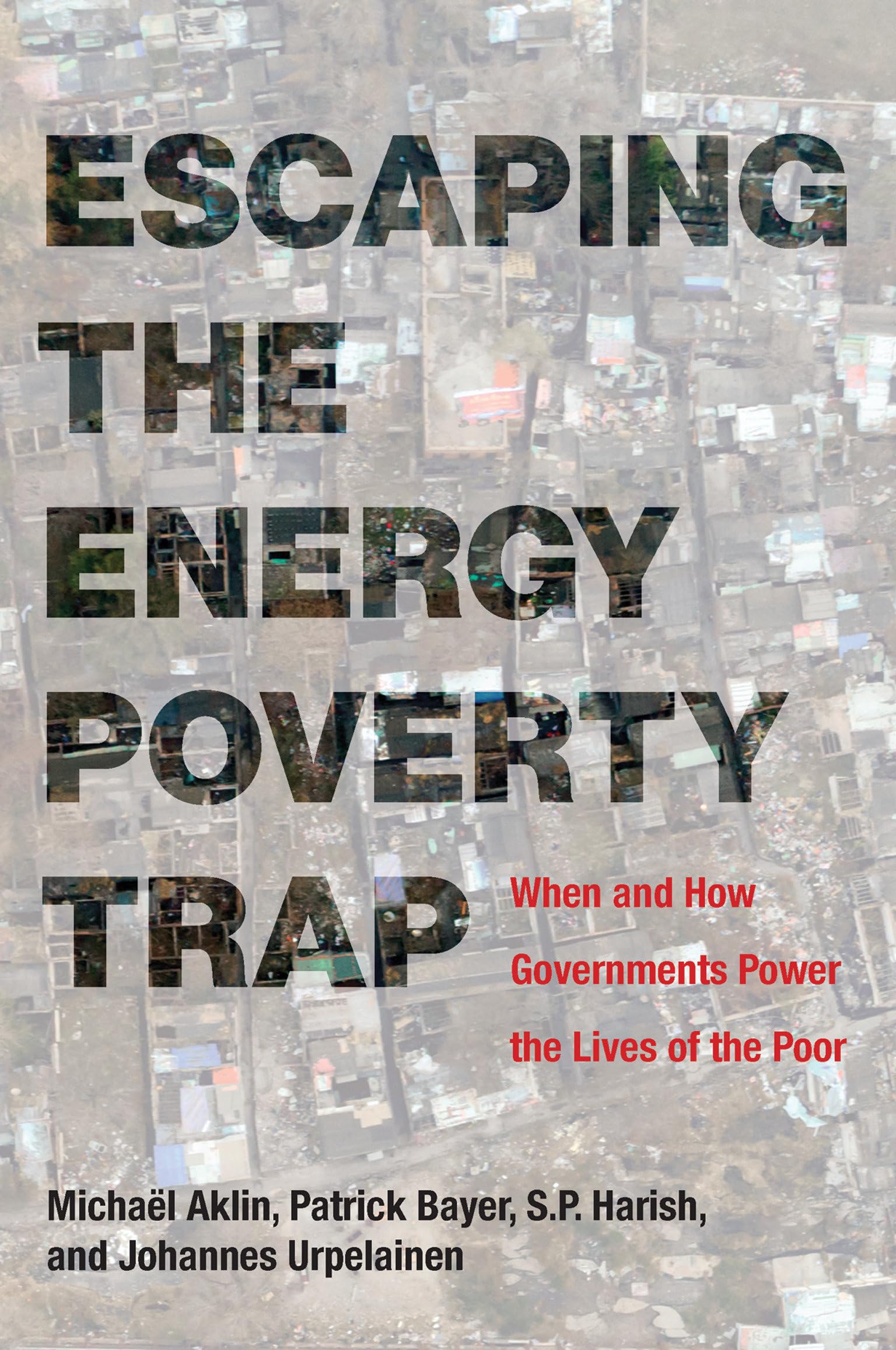
The first comprehensive political science account of energy poverty, arguing that governments can improve energy access for their citizens through appropriate policy design.In today's industrialized world, almost everything we do consumes energy. While industrialized countries enjoy all the amenities of modern energy, more than a billion people in the developing world still lack energy access. Why is energy poverty persistent in some countries and not in others? Offering the first comprehensive political science account of energy poverty, Escaping the Energy Poverty Trap explores why governments have or have not been able to lead in providing modern energy to their least advantaged citizens.Focusing on access to modern cooking fuels and household electrification, the authorsdevelop a new politicaleconomic theory that introduces government interest, institutional capacity, and local accountability as key determinants of energy access. They draw on case studies from India, East Asia, Africa, and Latin America to offer the optimistic conclusion that governments can improve institutional capacity and local accountability through appropriate policy design. Energy poverty is a policy problem, the authors assert, and engaging with it as such offers new opportunities not only for ensuring equal energy access, but also for political, economic, and environmental development.
⚠️ WARNING (California Proposition 65):
This product may contain chemicals known to the State of California to cause cancer,
birth defects, or other reproductive harm.
For MAP (Minimum Advertised Price) violations and Intellectual Property (IP) or Trademark concerns, please contact:
support@ergodebooks.com
⚠️ California Proposition 65 Warning: Some products sold on this website may expose you to chemicals known to the State of California to cause cancer, birth defects, or other reproductive harm. For more information, visit www.P65Warnings.ca.gov.