
Title
Essay on the Use of Celestial and Terrestrial Globes, An,Used
Sold by Ergodebooks, an authorized reseller.
Returns accepted within 30 days | support@ergodebooks.com
Shipping Information
- Free Standard Shipping — United States only
- Processing Time: 3–5 business days
- Estimated Delivery: 6–10 business days after dispatch
- Double-boxed, fully insured & discreetly packaged
- Tracking number sent via email once dispatched
Returns & Refund
Returns accepted within 30 days of delivery.
Damaged or Defective Item
Free return shipping + replacement or full refund
Wrong Item Received
Free return shipping + replacement or full refund
Change of Mind
Return shipping at customer's expense · 25% restocking fee applies
Payment Option

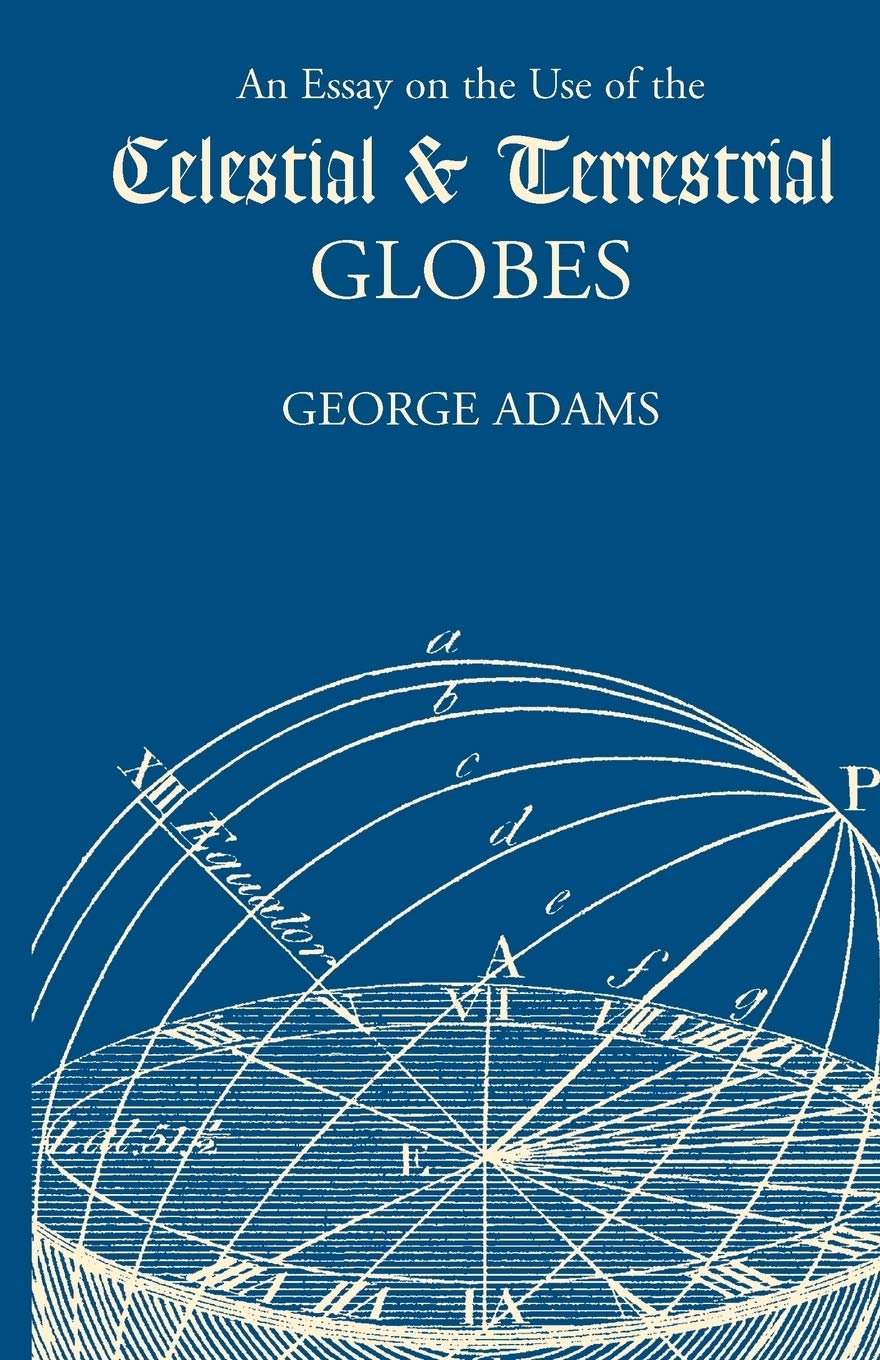
About the AuthorContemporary cartographers, astrologists, mechanics, and engineers are indebted to one eighteenthcentury scientist, George Adams (170472). Commissioned by the king of England as "Mathematical InstrumentMaker to the King," George Adams was given the resources to make strides and publish his findings, enabling advancements in many scientific fields.The royal courts interest in physics developed, in part, as a military tactic. Conducting a detailed geographical land survey allowed them to subdue the Scottish clans and gain control of the Highlands. But Adams instruments and expertise amassed more than land. George Adams is thought to be the predecessor of two significant globemaking pioneers, John Senex and James Ferguson. He created models of the solar system, mechanical pulleys, the hydraulic screw, and a compound engine.George Adams sons, George Adams, Jr. (175095) and Dudley Adams (17621830), continued the family business as instrument and globe makers in London; and the Adams expertise and practical applications are still used today.Product DescriptionHow to navigate using 18thcentury instruments. George Adams was the mathematical instrument maker to the King of England and the optician to the Prince of Wales. Utilizing simple scientific truths, Adams describes how to find the longitude and latitude of any location, how to ascertain the suns declination, how to construct a sundial, how to determine the coordinates of a comet, how to plan for winter or summer solstices, and much more.From the Back CoverOriginally published in 1766, An Essay on the Use of the Celestial and Terrestrial Globes can help you find the longitude of wherever you are or tell the time of day without using a watch. Utilizing simple scientific truths, George Adams describes how to construct a sundial, ascertain the sun's declination, determine the coordinates of a comet, plan for winter or summer solstices, and much more. His studies exemplify the general principles of navigation and are explained here in a series of astronomical and geographical essays and instructions.The book is as useful to the contemporary reader seeking knowledge of basic scientific principles as it is to the astronomy, navigation, or geography student or hobbyist desiring a comprehensive and methodical handbook.George Adams was the mathematical instrument maker to the king of England and the optician to the Prince of Wales.
⚠️ WARNING (California Proposition 65):
This product may contain chemicals known to the State of California to cause cancer, birth defects, or other reproductive harm.
For more information, please visit www.P65Warnings.ca.gov.