
Title
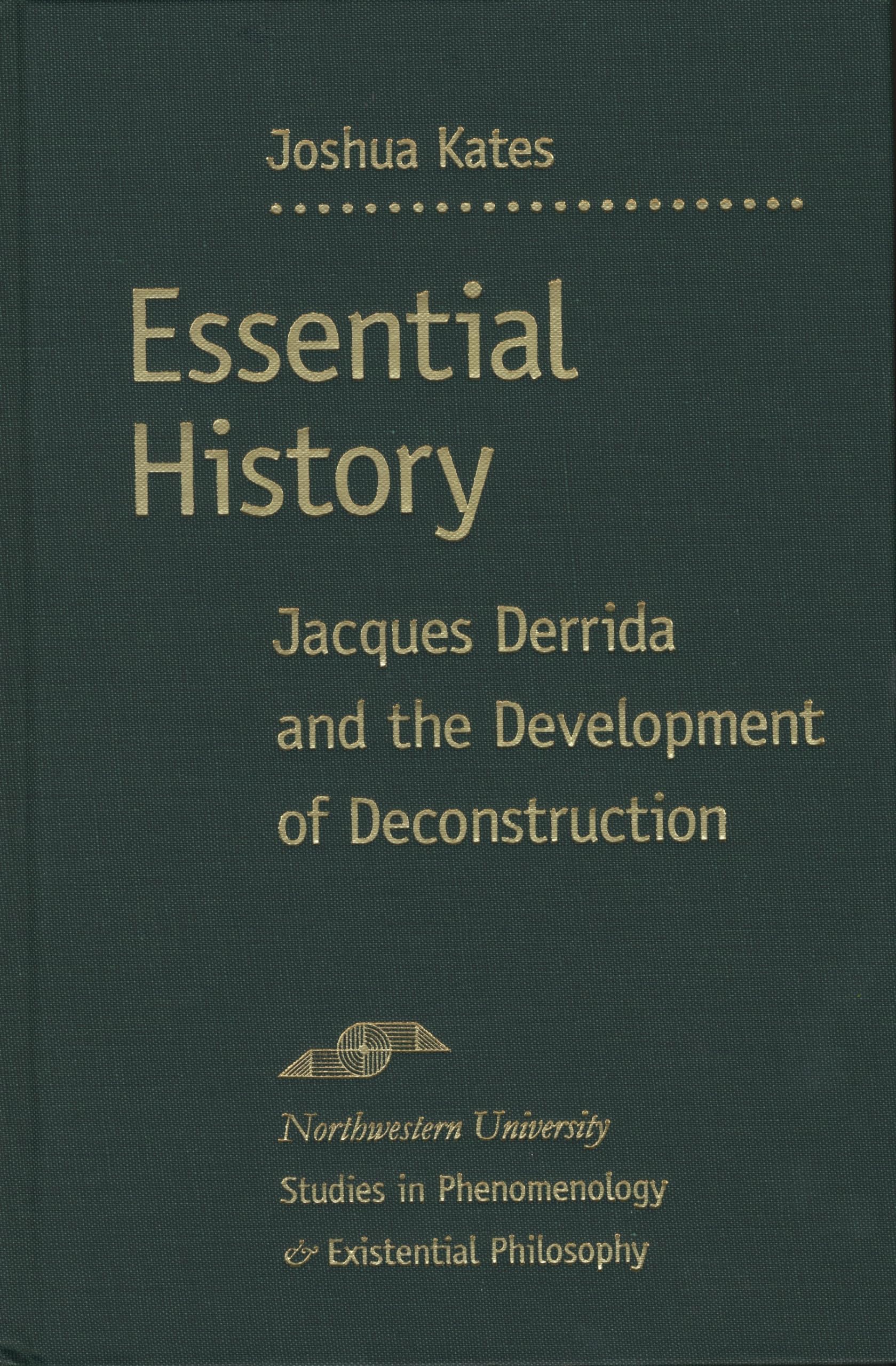
Essential History: Jacques Derrida And The Development Of Deconstruction (Studies In Phenomenology And Existential Philosophy),Used
Sold by Ergodebooks, an authorized reseller.
Returns accepted within 30 days | support@ergodebooks.com
Shipping Information
- Free Standard Shipping — United States only
- Processing Time: 3–5 business days
- Estimated Delivery: 6–10 business days after dispatch
- Double-boxed, fully insured & discreetly packaged
- Tracking number sent via email once dispatched
Returns & Refund
Returns accepted within 30 days of delivery.
Damaged or Defective Item
Free return shipping + replacement or full refund
Wrong Item Received
Free return shipping + replacement or full refund
Change of Mind
Return shipping at customer's expense · 25% restocking fee applies
Payment Option

However widelyand differentlyJacques Derrida may be viewed as a 'foundational' French thinker, the most basic questions concerning his work still remain unanswered: Is Derrida a friend of reason, or philosophy, or rather the most radical of skeptics? Are languagerelated themeswriting, semiosishis central concern, or does he really write about something else? And does his thought form a system of its own, or does it primarily consist of commentaries on individual texts? This book seeks to address these questions by returning to what it claims is essential history: the development of Derrida's core thought through his engagement with Husserlian phenomenology. Joshua Kates recasts what has come to be known as the Derrida/Husserl debate, by approaching Derrida's thought historically, through its development. Based on this developmental work, Essential History culminates by offering discrete interpretations of Derrida's two booklength 1967 texts, interpretations that elucidate the until now largely opaque relation of Derrida's interest in language to his focus on philosophical concerns.A fundamental reinterpretation of Derrida's project and the works for which he is best known, Kates's study fashions a new manner of working with the French thinker that respects the radical singularity of his thought as well as the often different aims of those he reads. Such a view is in fact 'essential' if Derrida studies are to remain a vital field of scholarly inquiry, and if the humanities, more generally, are to have access to a replenishing source of living theoretical concerns.
⚠️ WARNING (California Proposition 65):
This product may contain chemicals known to the State of California to cause cancer, birth defects, or other reproductive harm.
For more information, please visit www.P65Warnings.ca.gov.