If you have any questions, you are always welcome to contact us. We'll get back to you as soon as possible, withing 24 hours on weekdays.
Customer service
All questions about your order, return and delivery must be sent to our customer service team by e-mail at yourstore@yourdomain.com
Sale & Press
If you are interested in selling our products, need more information about our brand or wish to make a collaboration, please contact us at press@yourdomain.com
Help
If you have any questions, you are always welcome to contact us. We'll get back to you as soon as possible, withing 24 hours on weekdays.
Customer service
All questions about your order, return and delivery must be sent to our customer service team by e-mail at yourstore@yourdomain.com
Sale & Press
If you are interested in selling our products, need more information about our brand or wish to make a collaboration, please contact us at press@yourdomain.com
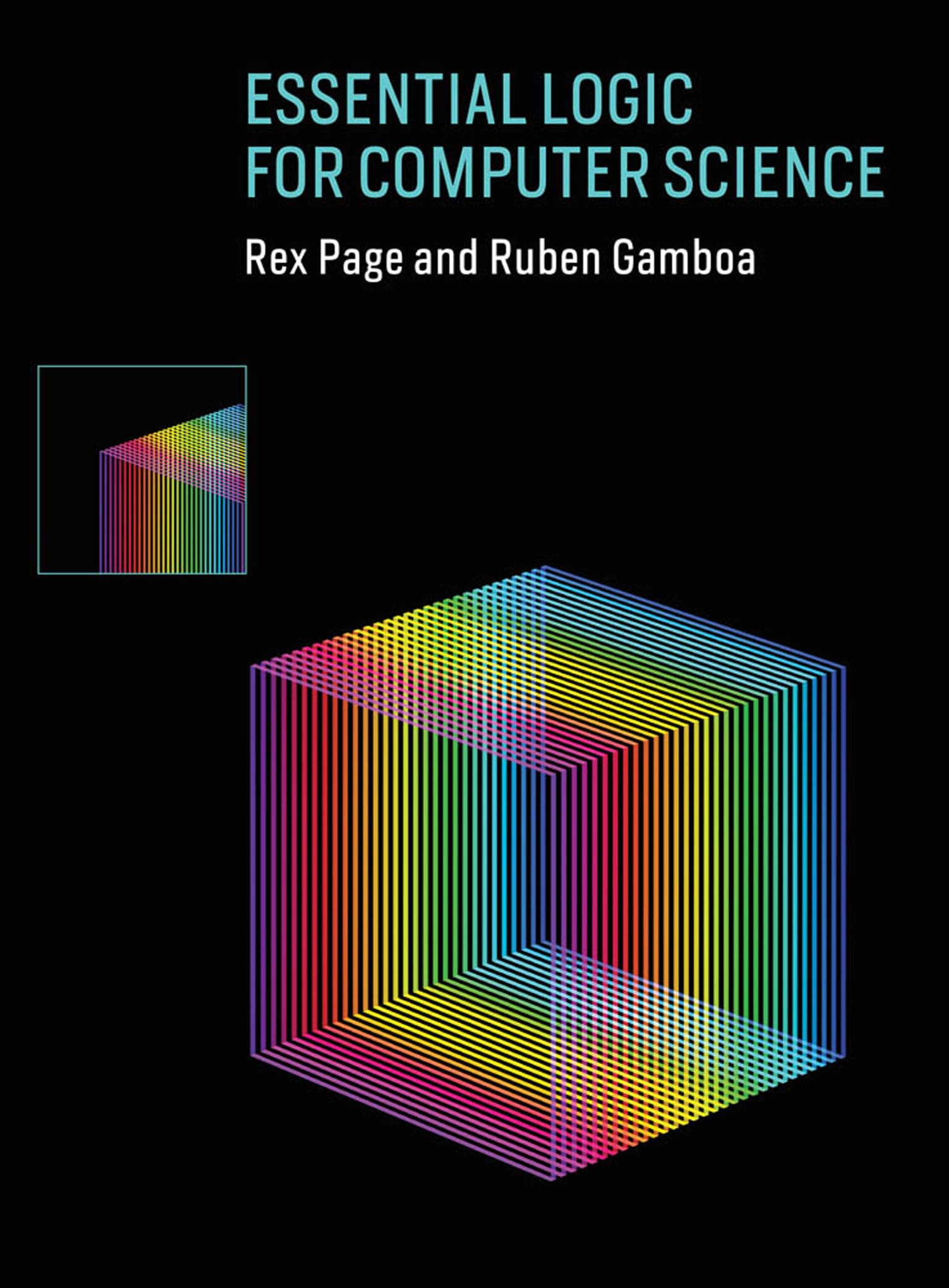
An introduction to applying predicate logic to testing and verification of software and digital circuits that focuses on applications rather than theory.Computer scientists use logic for testing and verification of software and digital circuits, but many computer science students study logic only in the context of traditional mathematics, encountering the subject in a few lectures and a handful of problem sets in a discrete math course. This book offers a more substantive and rigorous approach to logic that focuses on applications in computer science. Topics covered include predicate logic, equationbased software, automated testing and theorem proving, and largescale computation.Formalism is emphasized, and the book employs three formal notations: traditional algebraic formulas of propositional and predicate logic; digital circuit diagrams; and the widely used partially automated theorem prover, ACL2, which provides an accessible introduction to mechanized formalism. For readers who want to see formalization in action, the text presents examples using Proof Pad, a lightweight ACL2 environment. Readers will not become ALC2 experts, but will learn how mechanized logic can benefit software and hardware engineers. In addition, 180 exercises, some of them extremely challenging, offer opportunities for problem solving. There are no prerequisites beyond high school algebra. Programming experience is not required to understand the book's equationbased approach. The book can be used in undergraduate courses in logic for computer science and introduction to computer science and in math courses for computer science students.
⚠️ WARNING (California Proposition 65):
This product may contain chemicals known to the State of California to cause cancer,
birth defects, or other reproductive harm.
For MAP (Minimum Advertised Price) violations and Intellectual Property (IP) or Trademark concerns, please contact:
support@ergodebooks.com
⚠️ California Proposition 65 Warning: Some products sold on this website may expose you to chemicals known to the State of California to cause cancer, birth defects, or other reproductive harm. For more information, visit www.P65Warnings.ca.gov.