If you have any questions, you are always welcome to contact us. We'll get back to you as soon as possible, withing 24 hours on weekdays.
Customer service
All questions about your order, return and delivery must be sent to our customer service team by e-mail at yourstore@yourdomain.com
Sale & Press
If you are interested in selling our products, need more information about our brand or wish to make a collaboration, please contact us at press@yourdomain.com
Help
If you have any questions, you are always welcome to contact us. We'll get back to you as soon as possible, withing 24 hours on weekdays.
Customer service
All questions about your order, return and delivery must be sent to our customer service team by e-mail at yourstore@yourdomain.com
Sale & Press
If you are interested in selling our products, need more information about our brand or wish to make a collaboration, please contact us at press@yourdomain.com
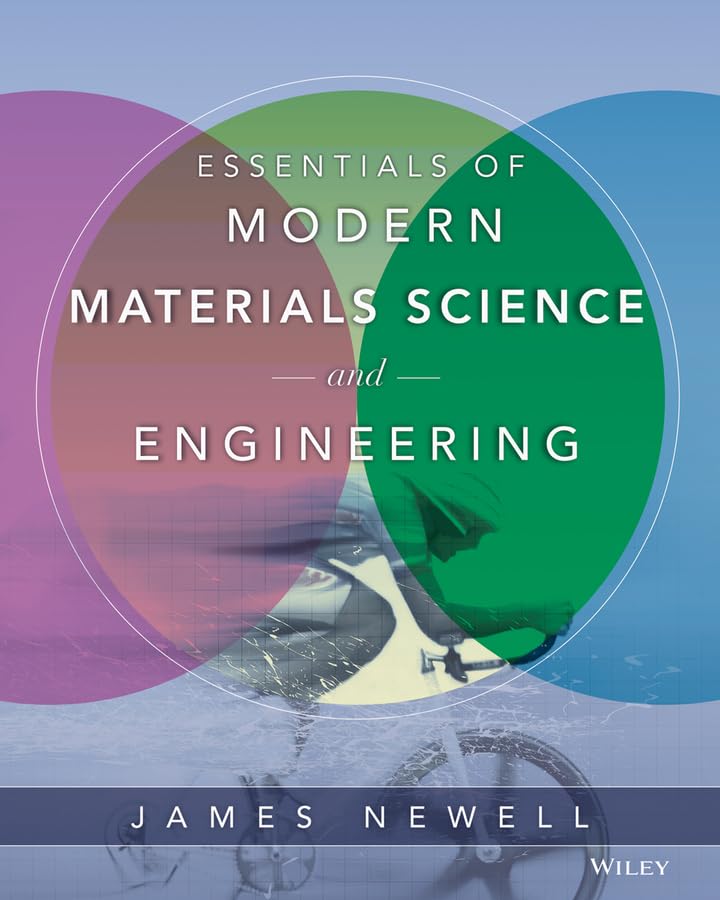
This book begins with four fundamental tenants: The properties of a material are determined by its structure. Processing can alter that structure in specific and predictable ways;The behavior of materials is grounded in science and is understandable; The properties of all materials change over time with use and exposure to environmental conditions;When selecting a material, sufficient and appropriate testing must be performed to insure that the material will remain suitable throughout the reasonable life of the product. This text assumes that the students are at least sophomores, so that they are familiar with basic chemical bonding and the periodic table. But it is an introductory materials course, so there will be no differential equations, percolation theory, quantum mechanics, statistical thermodynamics, or other advanced topics. The book is designed as an introduction to the field, not a comprehensive guide to all materials science knowledge. Instead of going into great detail in many areas, the book provides key concepts and fundamentals students need to understand materials science and make informed decisions. An example of the philosophy is found in the materials testing section. Although countless variations exist in testing techniques, the chapter focuses on operating principles and the property to be measured, rather than confusing the student with exposition on variations and exceptions. That material is beyond the scope of most introductory courses.
⚠️ WARNING (California Proposition 65):
This product may contain chemicals known to the State of California to cause cancer,
birth defects, or other reproductive harm.
For MAP (Minimum Advertised Price) violations and Intellectual Property (IP) or Trademark concerns, please contact:
support@ergodebooks.com
⚠️ California Proposition 65 Warning: Some products sold on this website may expose you to chemicals known to the State of California to cause cancer, birth defects, or other reproductive harm. For more information, visit www.P65Warnings.ca.gov.