
Title
Essentials Of Programming Languages,Used
Sold by Ergodebooks, an authorized reseller.
Returns accepted within 30 days | support@ergodebooks.com
Shipping Information
- Free Standard Shipping — United States only
- Processing Time: 3–5 business days
- Estimated Delivery: 6–10 business days after dispatch
- Double-boxed, fully insured & discreetly packaged
- Tracking number sent via email once dispatched
Returns & Refund
Returns accepted within 30 days of delivery.
Damaged or Defective Item
Free return shipping + replacement or full refund
Wrong Item Received
Free return shipping + replacement or full refund
Change of Mind
Return shipping at customer's expense · 25% restocking fee applies
Payment Option

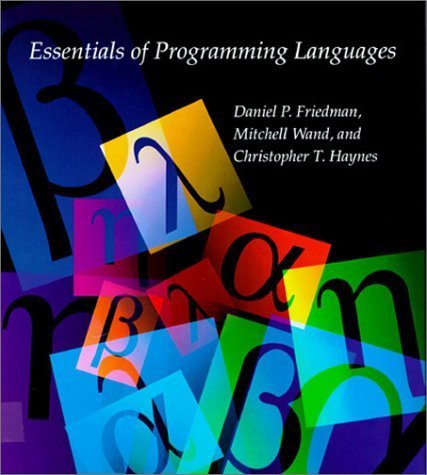
What Really Happens When A Program Runs? Essentials Of Programming Languages Teaches The Fundamental Concepts Of Programming Languages Through Numerous Short Programs, Or 'Interpreters,' That Actually Implement The Features Of A Language. Nearly 300 Exercises Using These Programs Provide A Handson Understanding Of Programming Principles That Is Hard, If Not Impossible, To Achieve By Formal Study Alone. In An Approach That Is Uniquely Suited To Mastering A New Level Of Programming Structure, The Authors Derive A Sequence Of Interpreters That Begins With A Highlevel Operational Specification (Close To Formal Semantics) And Ends With What Is Effectively Assembly Language A Process Involving Programming Transformation Techniques That Should Be In The Toolbox Of Every Programmer.The First Four Chapters Provide The Foundation For An Indepth Study Of Programming Languages, Including Most Of The Features Of Scheme, Needed To Run The Languageprocessing Programs Of The Book. The Next Four Chapters Form The Core Of The Book, Deriving A Sequence Of Interpreters Ranging From Very High To Very Lowlevel. The Authors Then Explore Variations In Programming Language Semantics, Including Various Parameterpassing Techniques And Objectoriented Languages, And Describe Techniques For Transforming Interpreters That Ultimately Allow The Interpreter To Be Implemented In Any Lowlevel Language. They Conclude By Discussing Scanners And Parsers And The Derivation Of A Compiler And Virtual Machine From An Interpreter.Daniel P. Friedman Is Professor Of Computer Science At Indiana University. Mitchell Wand Is Professor In The College Of Computer Science At Northeastern University. Christopher T. Haynes Is Associate Professor In The Computer Science Department At Indiana University.
⚠️ WARNING (California Proposition 65):
This product may contain chemicals known to the State of California to cause cancer, birth defects, or other reproductive harm.
For more information, please visit www.P65Warnings.ca.gov.