If you have any questions, you are always welcome to contact us. We'll get back to you as soon as possible, withing 24 hours on weekdays.
Customer service
All questions about your order, return and delivery must be sent to our customer service team by e-mail at yourstore@yourdomain.com
Sale & Press
If you are interested in selling our products, need more information about our brand or wish to make a collaboration, please contact us at press@yourdomain.com
Help
If you have any questions, you are always welcome to contact us. We'll get back to you as soon as possible, withing 24 hours on weekdays.
Customer service
All questions about your order, return and delivery must be sent to our customer service team by e-mail at yourstore@yourdomain.com
Sale & Press
If you are interested in selling our products, need more information about our brand or wish to make a collaboration, please contact us at press@yourdomain.com
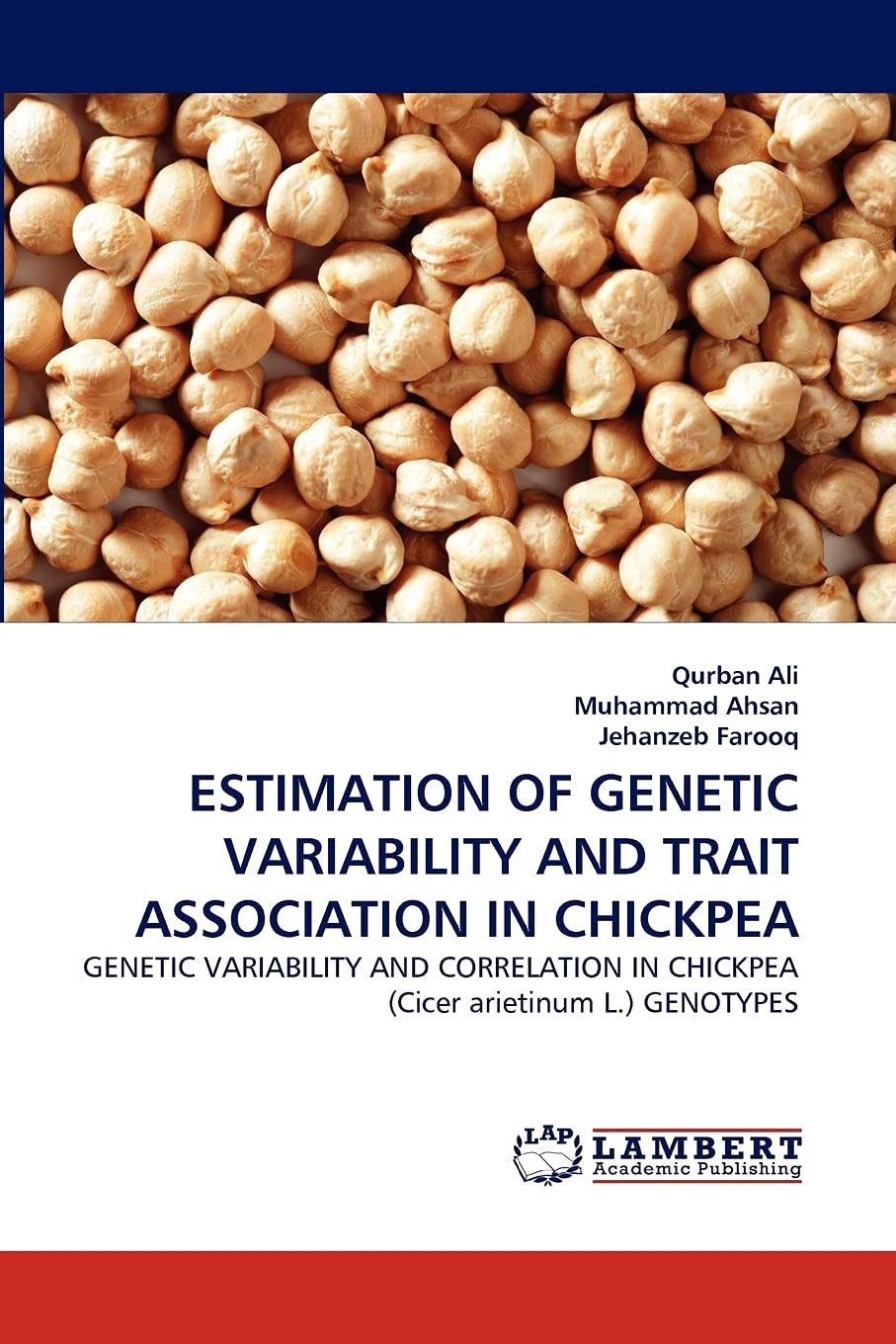
Chickpea is the principal rabi pulse crop and important source of calories which is predominantly grown in the vast rainfed areas of Pakistan. Pakistan ranks second to India in terms of acreage Pulses, dry edible seeds of leguminous plants, constitute an important source of balanced human diet throughout the world. Among the pulses, chickpea is the third leading grain legume in the world and first in the South Asia. Ninety two percent of the area and eighty nine percent of the production of grain are concentrated in semiarid tropical countries of the world The present study pertaining to the estimation of genetic parameters and trait association in eighty chickpea genotypes was conducted in the glasshouse of the Department of Plant Breeding and Genetics, University of Agriculture, Faisalabad. Correlation studies for different seedling parameters were found to be associated with each other positively and significantly. On the basis of these results, it may be concluded that seedling length, root length, seedling biomass, leaf length, leaf width and leaf area significantly related with the seedling health. We can select genotypes at seedling level for improvement.
⚠️ WARNING (California Proposition 65):
This product may contain chemicals known to the State of California to cause cancer,
birth defects, or other reproductive harm.
For MAP (Minimum Advertised Price) violations and Intellectual Property (IP) or Trademark concerns, please contact:
support@ergodebooks.com
⚠️ California Proposition 65 Warning: Some products sold on this website may expose you to chemicals known to the State of California to cause cancer, birth defects, or other reproductive harm. For more information, visit www.P65Warnings.ca.gov.