If you have any questions, you are always welcome to contact us. We'll get back to you as soon as possible, withing 24 hours on weekdays.
Customer service
All questions about your order, return and delivery must be sent to our customer service team by e-mail at yourstore@yourdomain.com
Sale & Press
If you are interested in selling our products, need more information about our brand or wish to make a collaboration, please contact us at press@yourdomain.com
Help
If you have any questions, you are always welcome to contact us. We'll get back to you as soon as possible, withing 24 hours on weekdays.
Customer service
All questions about your order, return and delivery must be sent to our customer service team by e-mail at yourstore@yourdomain.com
Sale & Press
If you are interested in selling our products, need more information about our brand or wish to make a collaboration, please contact us at press@yourdomain.com
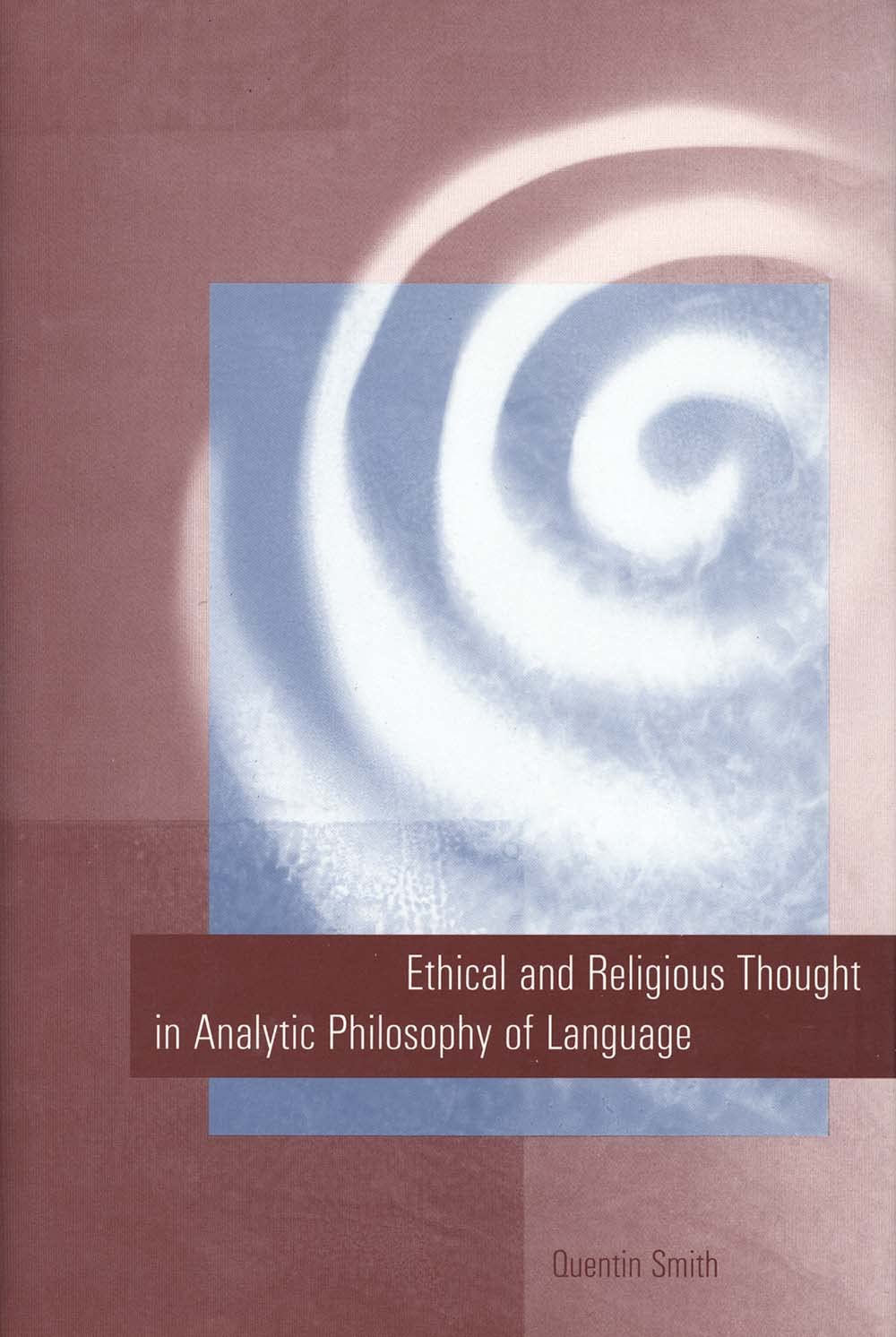
This book is the first to provide a critical history of analytic philosophy from its inception in the late nineteenth century to the present day. Quentin Smith focuses on the connections between the four leading movements in analytic philosophylogical realism, logical positivism, ordinary language analysis, and linguistic essentialismand corresponding twentiethcentury theories of ethics and of religion. Through a critical evaluation of each schools theoretical positions, Smith counters the widespread view of analytic philosophy as indifferent to important questions about right and wrong and human meaning. He argues that analytic philosophy throughout its history has revolved around the central issues of existence, and he offers a new ethics and philosophy of religion.The author develops a positive ethical theory based on a method of ethics first formulated by Robert Adams. Smiths theory belongs to the tradition of perfectionism or selfrealization ethics and builds on Thomas Hurkas recent theory of perfectionism. In his consideration of philosophy of religion, Smith concludes that there is a sound 'logical argument from evil' that takes into account Alvin Plantingas freewill defense and undermines monotheism, paving the way to a naturalistic pantheism.
⚠️ WARNING (California Proposition 65):
This product may contain chemicals known to the State of California to cause cancer,
birth defects, or other reproductive harm.
For MAP (Minimum Advertised Price) violations and Intellectual Property (IP) or Trademark concerns, please contact:
support@ergodebooks.com
⚠️ California Proposition 65 Warning: Some products sold on this website may expose you to chemicals known to the State of California to cause cancer, birth defects, or other reproductive harm. For more information, visit www.P65Warnings.ca.gov.