
Title
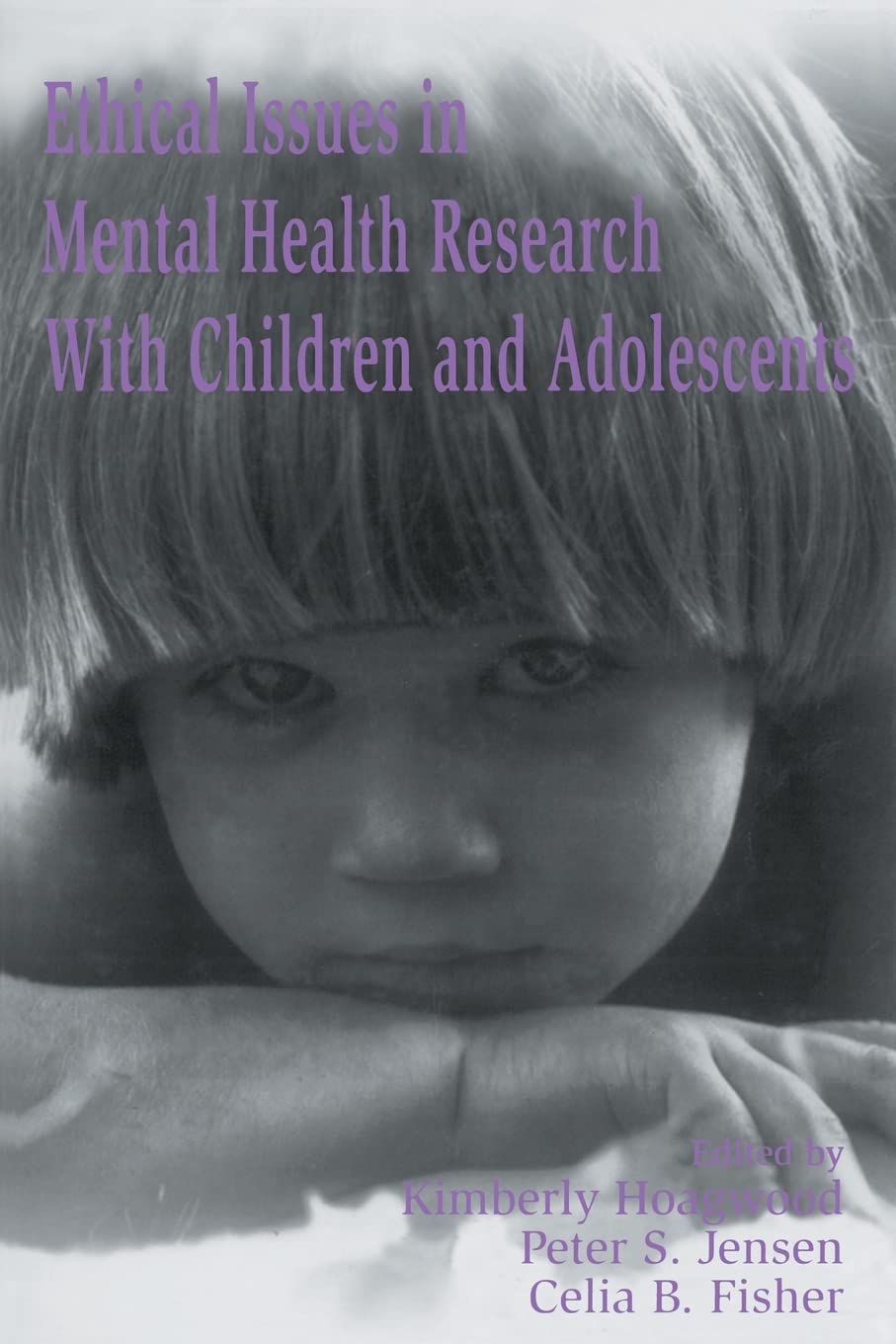
Ethical Issues In Mental Health Research With Children And Adolescents,New
Sold by Ergodebooks, an authorized reseller.
Returns accepted within 30 days | support@ergodebooks.com
Shipping Information
- Free Standard Shipping — United States only
- Processing Time: 3–5 business days
- Estimated Delivery: 6–10 business days after dispatch
- Double-boxed, fully insured & discreetly packaged
- Tracking number sent via email once dispatched
Returns & Refund
Returns accepted within 30 days of delivery.
Damaged or Defective Item
Free return shipping + replacement or full refund
Wrong Item Received
Free return shipping + replacement or full refund
Change of Mind
Return shipping at customer's expense · 25% restocking fee applies
Payment Option

Studies involving children with mental, emotional, or behavioral problemsor their familieshave to meet certain standards of research ethics. This book contains chapters on the kinds of ethical dilemmas that typically occur in different types of studies of children, and then presents 65 realworld cases from experts who study children's mental health. These experts offer practical suggestions for how to handle these dilemmas. Chapters on the perspectives of parents, regulators, and bioethicists provide additional points of view on these issues. Written in downtoearth language, this book will be useful for professionals who study children, for those who train students in research methods, and for parents who are thinking about participating in research studies.In attempting to bridge the apparent gap between ethics and science, the editors close this volume on a note commonly sounded by researchers: more research is needed. Yet in this area, a new kind of research is required. The science of scientific ethics must be developed and expanded, and better understanding of the determinants and circumstances under which children can comprehend and evaluate risks and benefits is needed. Likewise, fuller knowledge of the contextual factors affecting children's and families' consent to participate in research is essential. In particular, development of scales to assess children's ability to comprehend riskbenefit issues, studies of families' reactions to research procedures, and empirical data on the impact of various forms of participant reimbursement will advance both science and ethics. This volume should spur further research, serving as a guide for current investigators, participating families, institutional review boards, and policymakers who shape the research enterprise.
⚠️ WARNING (California Proposition 65):
This product may contain chemicals known to the State of California to cause cancer, birth defects, or other reproductive harm.
For more information, please visit www.P65Warnings.ca.gov.