
Title
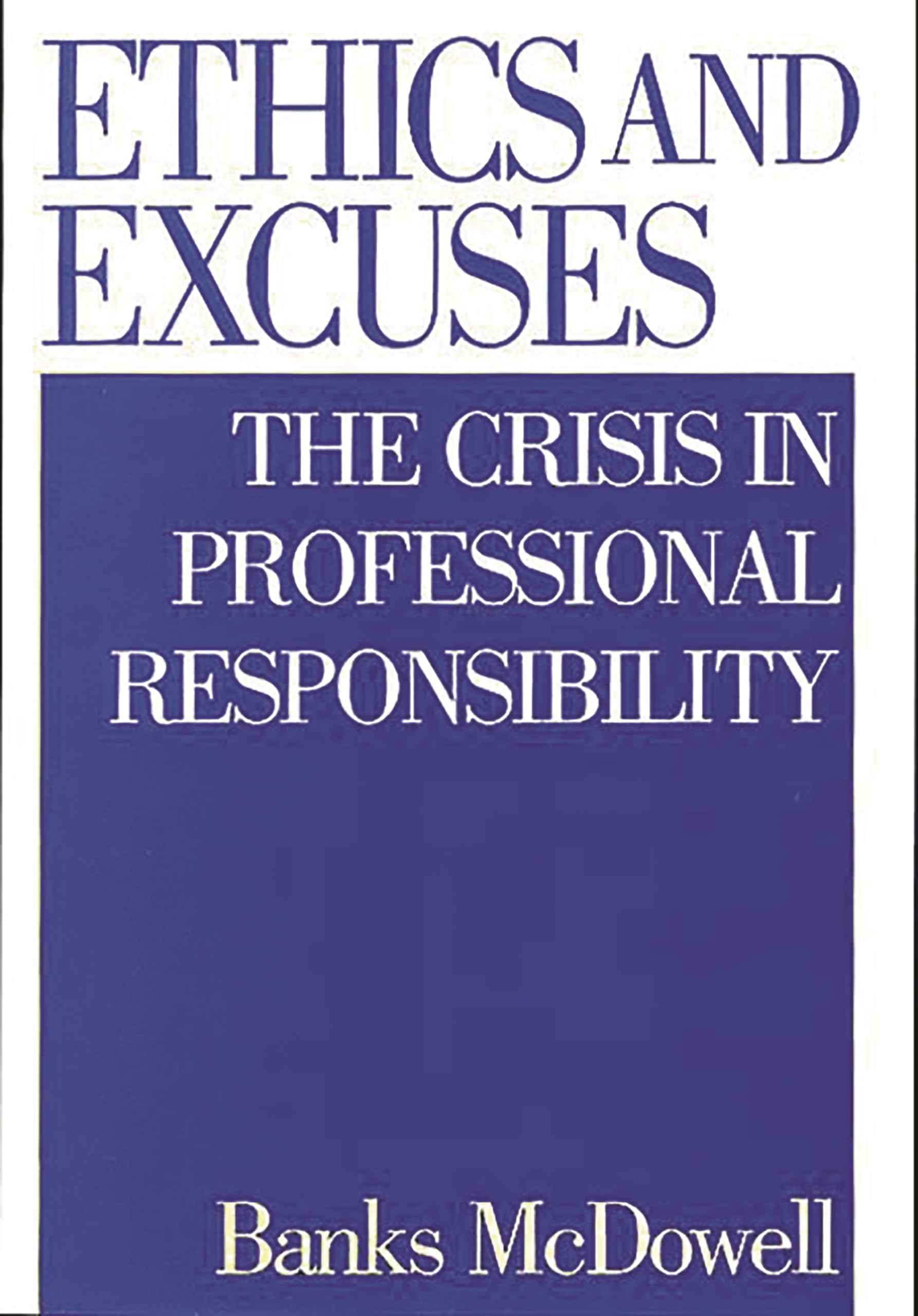
Ethics and Excuses: The Crisis in Professional Responsibility,New
Sold by Ergodebooks, an authorized reseller.
Returns accepted within 30 days | support@ergodebooks.com
Shipping Information
- Free Standard Shipping — United States only
- Processing Time: 3–5 business days
- Estimated Delivery: 6–10 business days after dispatch
- Double-boxed, fully insured & discreetly packaged
- Tracking number sent via email once dispatched
Returns & Refund
Returns accepted within 30 days of delivery.
Damaged or Defective Item
Free return shipping + replacement or full refund
Wrong Item Received
Free return shipping + replacement or full refund
Change of Mind
Return shipping at customer's expense · 25% restocking fee applies
Payment Option

Rarely discussed in courses on ethics is the topic of excuses, but in McDowell's view, excuses offer the most illuminating way to understand the true nature of ethical problems in the professions. He looks at excuses that professionals give when accused of acting unethically, and asks, when are they valid and when not? Problems of professional ethics are really problems of compliance, he argues, not ignorance of expectations. The study of excuses can help us understand what these problems are and offer insights into ways to solve them. Banks maintains too that our ethical expectations may need overhauling, given substantial changes that have occurred in how professionals do their work today. They can be easily persuaded that what they are doing is not unethical; it depends on the excuses they give themselves as well as others. Professionals know what's expected of them, but social and economic pressures make compliance difficult. Professionals in all fields, who struggle to be both successful and ethical, will find the book challenging, provocative, and yet sympathetic and reassuring too. It will also be an important resource for graduate students in courses exploring the relationship between business and ethics.Excuses may be ways of avoiding professional responsibility, says McDowell, but they may also be the way in which general ethical principles are adapted to particular contexts. They may also indicate that ethical codes need to be reformulated to adapt to changes in how professional services are delivered. Specialization, urbanization and the systematic breakdown in community relationships, the globalization of the economy, system, and market pressures for successfor all these reasons, professionals today face problems much different from those faced by their counterparts earlier in the century. Excuses also raise the problem of whether any system of voluntary compliance, like professional ethics, can function when the decision on whether an excuse is valid or invalid rests with the actor, who can rationalize almost any selfinterested action he or she might take. McDowell explores these issues and others in a fresh, readable style, with numerous anecdotal examples, and with evidence from many sources that the crisis is real and demands quick but lasting remedies.
⚠️ WARNING (California Proposition 65):
This product may contain chemicals known to the State of California to cause cancer, birth defects, or other reproductive harm.
For more information, please visit www.P65Warnings.ca.gov.
- Q: What is the main focus of 'Ethics and Excuses: The Crisis in Professional Responsibility'? A: The book explores the role of excuses in professional ethics, analyzing how they can illuminate ethical problems and compliance issues faced by professionals.
- Q: Who is the author of this book? A: The author is Banks McDowell.
- Q: What is the publication date of this book? A: The book was published on June 30, 2000.
- Q: What are the main themes discussed in this book? A: The book discusses themes such as the nature of excuses in professional ethics, the need for reformulation of ethical codes, and the impact of social and economic pressures on compliance.
- Q: Is this book suitable for graduate students? A: Yes, it serves as an important resource for graduate students exploring the relationship between business and ethics.
- Q: How many pages does the book have? A: The book contains 184 pages.
- Q: What type of binding does this book have? A: The book is available in hardcover.
- Q: What condition is the book in? A: The book is listed as 'New'.
- Q: What is the category of this book? A: The book falls under the category of Ethics.
- Q: What unique perspective does the author provide? A: McDowell offers a fresh perspective on how excuses can be both a way to evade responsibility and a method to adapt ethical principles to specific professional contexts.