
Title
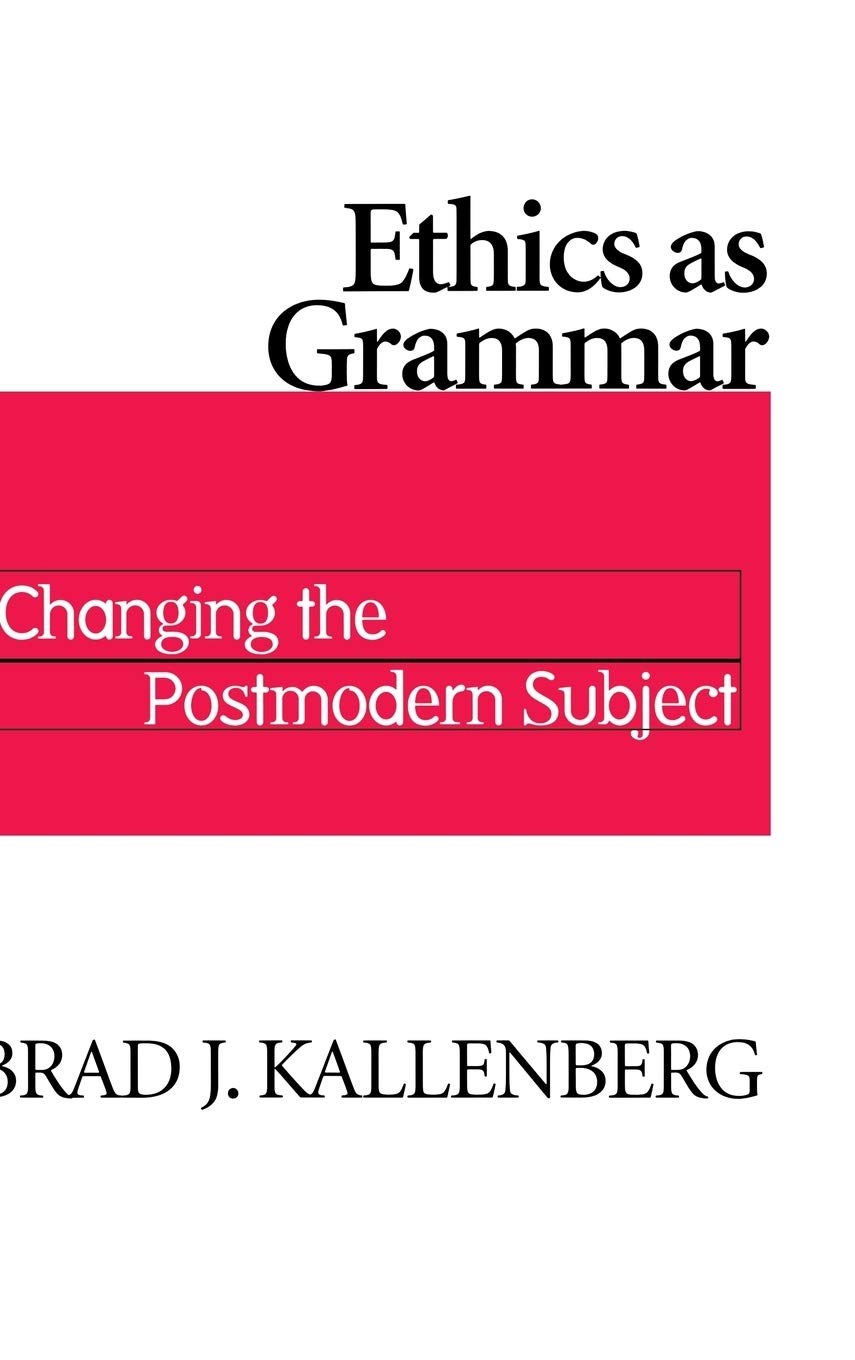
Ethics as Grammar: Changing the Postmodern Subject,Used
Sold by Ergodebooks, an authorized reseller.
Returns accepted within 30 days | support@ergodebooks.com
Shipping Information
- Free Standard Shipping — United States only
- Processing Time: 3–5 business days
- Estimated Delivery: 6–10 business days after dispatch
- Double-boxed, fully insured & discreetly packaged
- Tracking number sent via email once dispatched
Returns & Refund
Returns accepted within 30 days of delivery.
Damaged or Defective Item
Free return shipping + replacement or full refund
Wrong Item Received
Free return shipping + replacement or full refund
Change of Mind
Return shipping at customer's expense · 25% restocking fee applies
Payment Option

Wittgenstein, one of the most influential, and yet widely misunderstood, philosophers of our age, confronted his readers with aporiaslinguistic puzzlesas a means of countering modern philosophical confusions over the nature of language without replicating the same confusions in his own writings. In Ethics as Grammar, Brad Kallenberg uses the writings of theological ethicist Stanley Hauerwas as a foil for demonstrating how Wittgensteins method can become concrete within the Christian tradition. Kallenberg shows that the aesthetic, political, and grammatical strands epitomizing Hauerwass thought are the result of his learning to do Christian ethics by thinking through Wittgenstein.Kallenberg argues that Wittgensteins pedagogical strategy cultivates certain skills of judgment in his readers by making them struggle to move past the aporias and acquire the fluency of languages deeper grammar. Theologians, says Kallenberg, are well suited to this task of 'going on' because the gift of Christianity supplies them with the requisite resources for reading Wittgenstein. Kallenberg uses Hauerwas to make this caseshowing that Wittgensteins aporetic philosophy has engaged Hauerwas in a lifelong conversation that has cured him of many philosophical confusions. Yet, because Hauerwas comes to the conversation as a Christian believer, he is able to surmount Wittgensteins aporias with the assistance of theological convictions that he possesses through grace.Ethics as Grammar reveals that Wittgensteins intention to cultivate concrete skill in real people was akin to Aristotles emphasis on the close relationship of practical reason and ethics. In this thoughtprovoking book, Kallenberg demonstrates that Wittgenstein does more than simply offer a vantage point for reassessing Aristotle, he paves the way for ethics to become a distinctively Christian discipline, as exemplified by Stanley Hauerwas.
⚠️ WARNING (California Proposition 65):
This product may contain chemicals known to the State of California to cause cancer, birth defects, or other reproductive harm.
For more information, please visit www.P65Warnings.ca.gov.