
Title
Ethics for Adversaries,Used
Sold by Ergodebooks, an authorized reseller.
Returns accepted within 30 days | support@ergodebooks.com
Shipping Information
- Free Standard Shipping — United States only
- Processing Time: 3–5 business days
- Estimated Delivery: 6–10 business days after dispatch
- Double-boxed, fully insured & discreetly packaged
- Tracking number sent via email once dispatched
Returns & Refund
Returns accepted within 30 days of delivery.
Damaged or Defective Item
Free return shipping + replacement or full refund
Wrong Item Received
Free return shipping + replacement or full refund
Change of Mind
Return shipping at customer's expense · 25% restocking fee applies
Payment Option

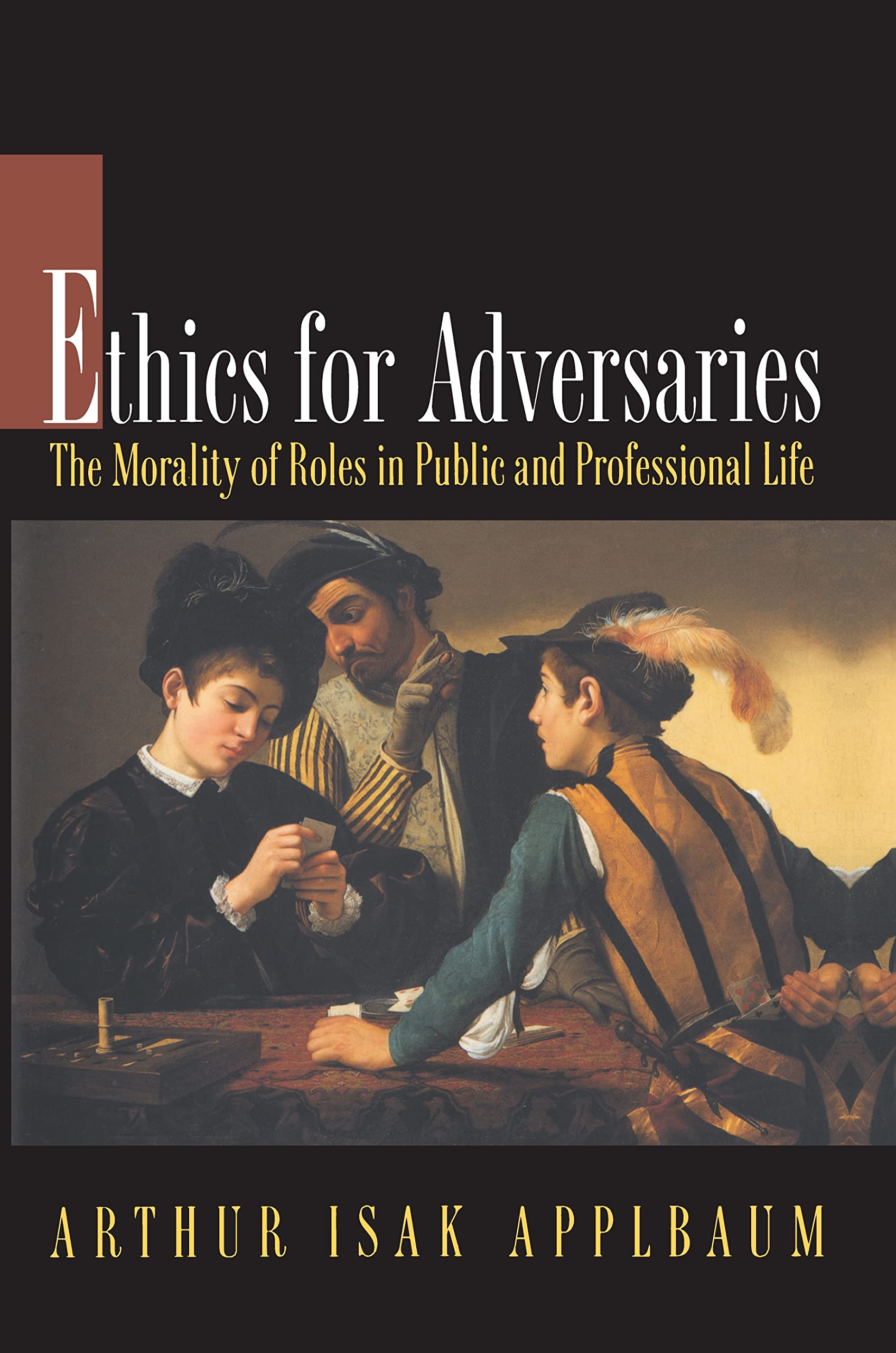
The adversary professionslaw, business, and government, among otherstypically claim a moral permission to violate persons in ways that, if not for the professional role, would be morally wrong. Lawyers advance bad ends and deceive, business managers exploit and despoil, public officials enforce unjust laws, and doctors keep confidences that, if disclosed, would prevent harm. Ethics for Adversaries is a philosophical inquiry into arguments that are offered to defend seemingly wrongful actions performed by those who occupy what Montaigne called 'necessary offices.'Applbaum begins by examining the career of CharlesHenri Sanson, who is appointed executioner of Paris by Louis XVI and serves the punitive needs of the ancien rgime for decades. Come the French Revolution, the King's Executioner becomes the king's executioner, and he ministers with professional detachment to each defeated political faction throughout the Terror and its aftermath. By exploring one extraordinary role and the arguments that can be offered in its defense, Applbaum raises unsettling doubts about arguments in defense of less sanguinary professions and their practices.To justify harmful acts, adversaries appeal to arguments about the rules of the game, fair play, consent, the social construction of actions and actors, good outcomes in equilibrium, and the legitimate authority of institutions. Applbaum concludes that these arguments are weaker than supposed and do not morally justify much of the violation that professionals and public officials inflict. Institutions and the roles they create ordinarily cannot mint moral permissions to do what otherwise would be morally prohibited.
⚠️ WARNING (California Proposition 65):
This product may contain chemicals known to the State of California to cause cancer, birth defects, or other reproductive harm.
For more information, please visit www.P65Warnings.ca.gov.