
Title
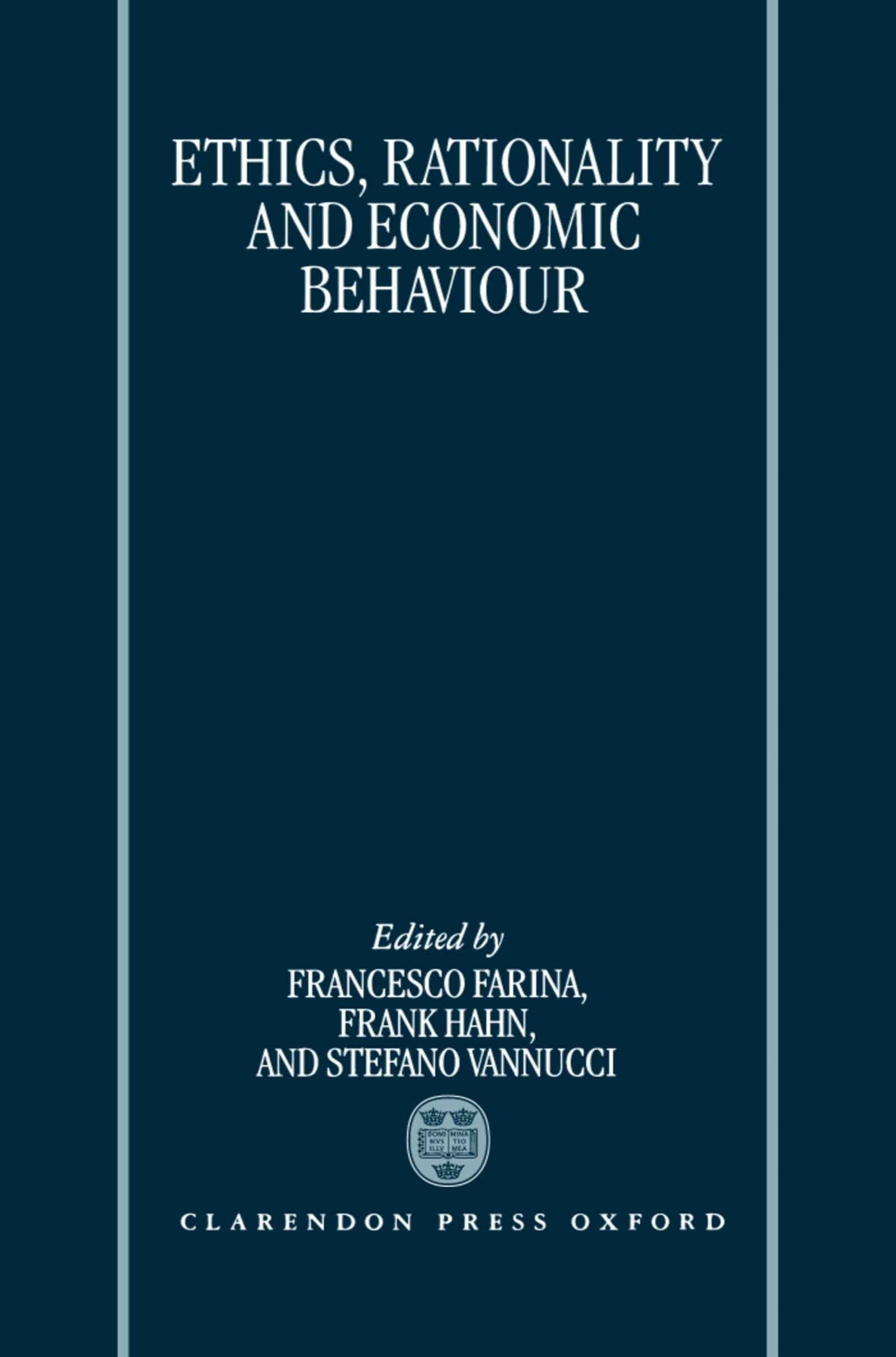
Ethics, Rationality, and Economic Behaviour,Used
Sold by Ergodebooks, an authorized reseller.
Returns accepted within 30 days | support@ergodebooks.com
Shipping Information
- Free Standard Shipping — United States only
- Processing Time: 3–5 business days
- Estimated Delivery: 6–10 business days after dispatch
- Double-boxed, fully insured & discreetly packaged
- Tracking number sent via email once dispatched
Returns & Refund
Returns accepted within 30 days of delivery.
Damaged or Defective Item
Free return shipping + replacement or full refund
Wrong Item Received
Free return shipping + replacement or full refund
Change of Mind
Return shipping at customer's expense · 25% restocking fee applies
Payment Option

The connection between economics and ethics is as old as economics itself, and central to both disciplines. It is an issue that has recently attracted much interest from economists and philosophers. The connection is, in part, a result of the desire of economists to make policy prescriptions, which clearly require some normative criteria. More deeply, much economic theory is founded on the assumption of utility maximization, thereby creating an immediate connection between the foundations of economics and the philosophical literature on utilitarianism and reasons for action. In fact, some influential contemporary approaches to ethics advocate decisiontheoretic or gametheoretic foundations of some sort for moral principles, while several economic theorists are now prepared to take into account the ethical dimensions of rational decisions. As a result, it appears that economics and ethics are somehow inextricably linked through theories of rational decisionmaking.Most of us would probably find it disturbing to concede that there are contradictions between the prescriptions of rationality and the requirements of moral "rightness". The essays included in the present volume provide a detailed analysis of the connections between ethics and economics as viewed from several differentsometimes conflicting perspectives. This book, the outcome of a joint meeting of philosophers and economists, has three main themes: the validity of utilitarianism much used by economists, the notion of fairness and equity, and the coherence of the rationality postulate of economics. The book does not reach any final conclusions, but it greatly illuminates the exact areas of possible disagreement and indeed the openended nature of ethical reasoning. There is much that eoncomists, and especially welfare economists, can learn from these papersincluding circumspection.
⚠️ WARNING (California Proposition 65):
This product may contain chemicals known to the State of California to cause cancer, birth defects, or other reproductive harm.
For more information, please visit www.P65Warnings.ca.gov.