If you have any questions, you are always welcome to contact us. We'll get back to you as soon as possible, withing 24 hours on weekdays.
Customer service
All questions about your order, return and delivery must be sent to our customer service team by e-mail at yourstore@yourdomain.com
Sale & Press
If you are interested in selling our products, need more information about our brand or wish to make a collaboration, please contact us at press@yourdomain.com
Help
If you have any questions, you are always welcome to contact us. We'll get back to you as soon as possible, withing 24 hours on weekdays.
Customer service
All questions about your order, return and delivery must be sent to our customer service team by e-mail at yourstore@yourdomain.com
Sale & Press
If you are interested in selling our products, need more information about our brand or wish to make a collaboration, please contact us at press@yourdomain.com
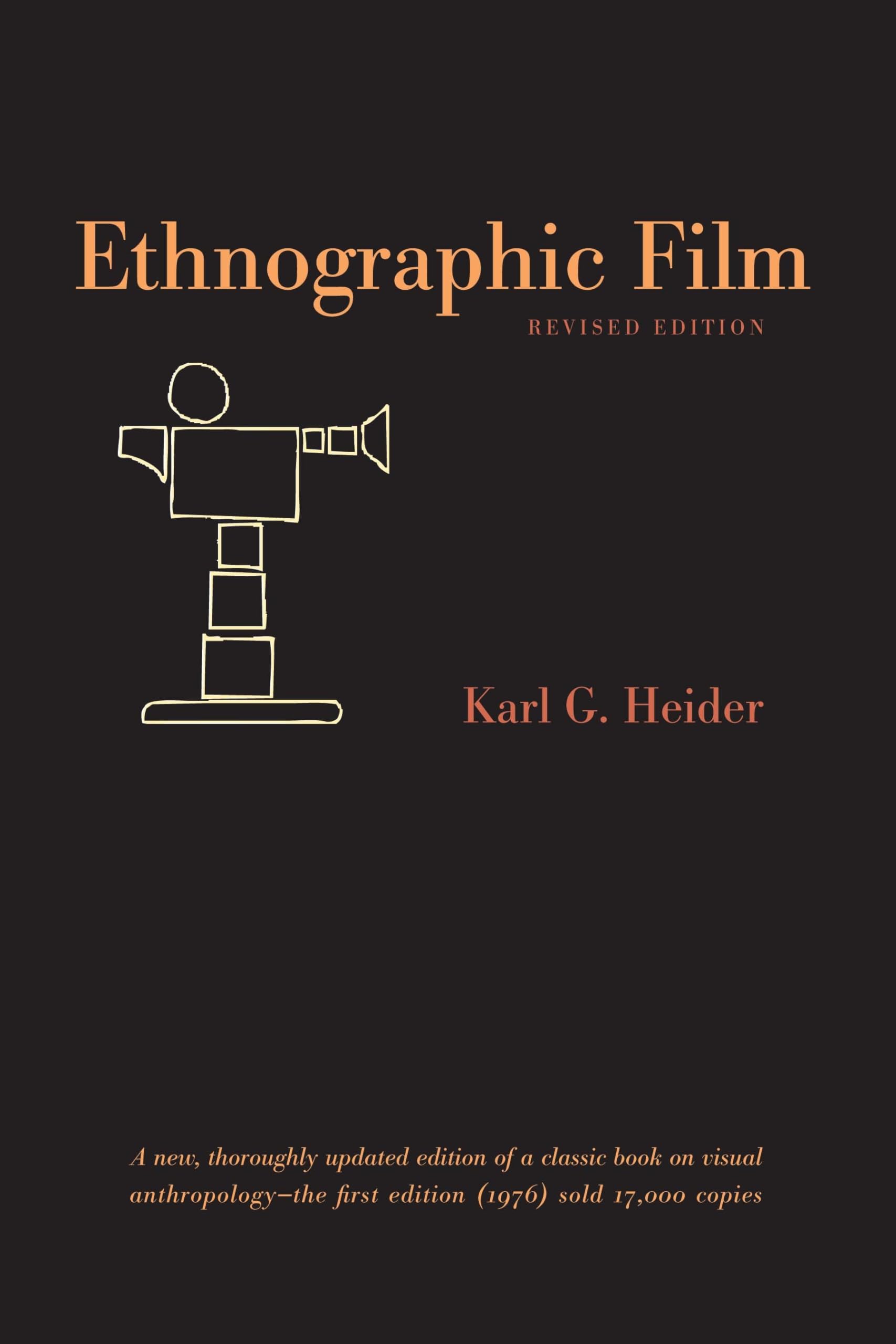
From reviews of the first edition:Ethnographic Film can rightly be considered a film primer for anthropologists.ChoiceThis is an interesting and useful book about what it means to be ethnographic and how this might affect ethnographic filmmaking for the better. It obviously belongs in all departments of anthropology, and most ethnographic filmmakers will want to read it.EthnohistoryEven before Robert Flaherty released Nanook of the North in 1922, anthropologists were producing films about the lifeways of native peoples for a public audience, as well as for research and teaching. Ethnographic Film (1976) was one of the first books to provide a comprehensive introduction to this field of visual anthropology, and it quickly became the standard reference.In this new edition, Karl G. Heider thoroughly updates Ethnographic Film to reflect developments in the field over the three decades since its publication, focusing on the work of four seminal filmmakersJean Rouch, John Marshall, Robert Gardner, and Timothy Asch. He begins with an introduction to ethnographic film and a history of the medium. He then considers many attributes of ethnographic film, including the crucial need to present 'whole acts,' 'whole bodies,' 'whole interactions,' and 'whole people' to preserve the integrity of the cultural context. Heider also discusses numerous aspects of making ethnographic films, from ethics and finances to technical considerations such as film versus video and preserving the filmed record. He concludes with a look at using ethnographic film in teaching.
⚠️ WARNING (California Proposition 65):
This product may contain chemicals known to the State of California to cause cancer,
birth defects, or other reproductive harm.
For MAP (Minimum Advertised Price) violations and Intellectual Property (IP) or Trademark concerns, please contact:
support@ergodebooks.com
⚠️ California Proposition 65 Warning: Some products sold on this website may expose you to chemicals known to the State of California to cause cancer, birth defects, or other reproductive harm. For more information, visit www.P65Warnings.ca.gov.