
Title
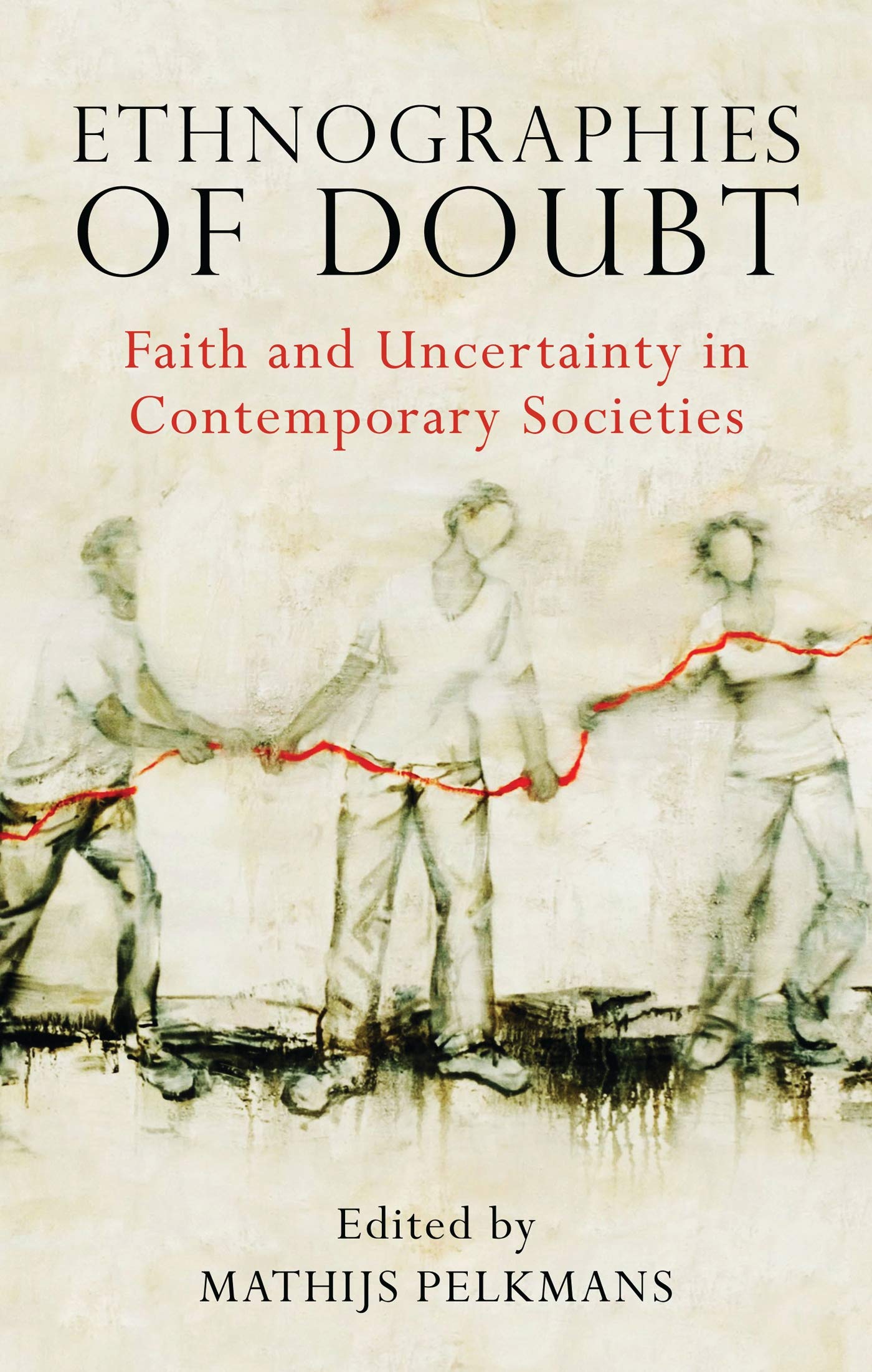
Ethnographies Of Doubt: Faith And Uncertainty In Contemporary Societies (Library Of Modern Religion),Used
Sold by Ergodebooks, an authorized reseller.
Returns accepted within 30 days | support@ergodebooks.com
Shipping Information
- Free Standard Shipping — United States only
- Processing Time: 3–5 business days
- Estimated Delivery: 6–10 business days after dispatch
- Double-boxed, fully insured & discreetly packaged
- Tracking number sent via email once dispatched
Returns & Refund
Returns accepted within 30 days of delivery.
Damaged or Defective Item
Free return shipping + replacement or full refund
Wrong Item Received
Free return shipping + replacement or full refund
Change of Mind
Return shipping at customer's expense · 25% restocking fee applies
Payment Option

Product DescriptionReligious and secular convictions have powerful effects, but their fundaments are often surprisingly fragile. Because of the conspicuous role that nationalisms, populisms, and fundamentalisms have in our globalizing world it is essential not to take their strength for granted, but to acknowledge that conviction and doubt are part of the same dynamic. The chapters in this volume demonstrate that doubt and hesitation are daily concerns even among the Maoist movement in India, rightwing populists in Europe and newly pious Somali Muslims in London. In fact, new converts are often such stringent believers precisely because they need to dispel their own lingering doubts, while revolutionary movements survive only through the denial of ambiguity. By studying everyday doubt this volume unravels the mechanisms by which convictions gain and lose their force, and analyzes the dynamics that propel loosely held ideas into committed action. Whereas a focus on overcoming doubt highlights the exclusionary effects of committed action, attention to the breakdown of belief serves to better understand the cycles of hope, conviction, and disillusion that bespeak the human condition. This is the central theme in several chapters looking at ideological breakdown. The collapse of communism, for instance, produced an epistemological crisis in which all knowledge became unstable, prompting goldminers in Mongolia to go as far as to doubt the cosmos. The postideological environment of Western democracies also produces anxieties, as the breakdown of the bonds of trust between governments and citizens results in feelings of betrayal. Questions of truth and action are always related: if nothing is worth fighting for then apathy and hopelessness may become symptomatic. By paying attention to the mechanisms and dynamics by which specific ideas gain and lose their credibility this volume sheds important new light on the role of ideas in social and political action.ReviewTo comeAbout the AuthorMathijs Pelkmans is Lecturer in Anthropology at the London School of Economics, UK. He is the author of Defending the Border: Identity, Religion and Modernity in the Republic of Georgia (2006, Cornell University Press) and Conversion after Socialism: Disruptions, Modernisms and Technologies of Faith in the Former Soviet Union (2009, Berghahn Books).
⚠️ WARNING (California Proposition 65):
This product may contain chemicals known to the State of California to cause cancer, birth defects, or other reproductive harm.
For more information, please visit www.P65Warnings.ca.gov.