
Title
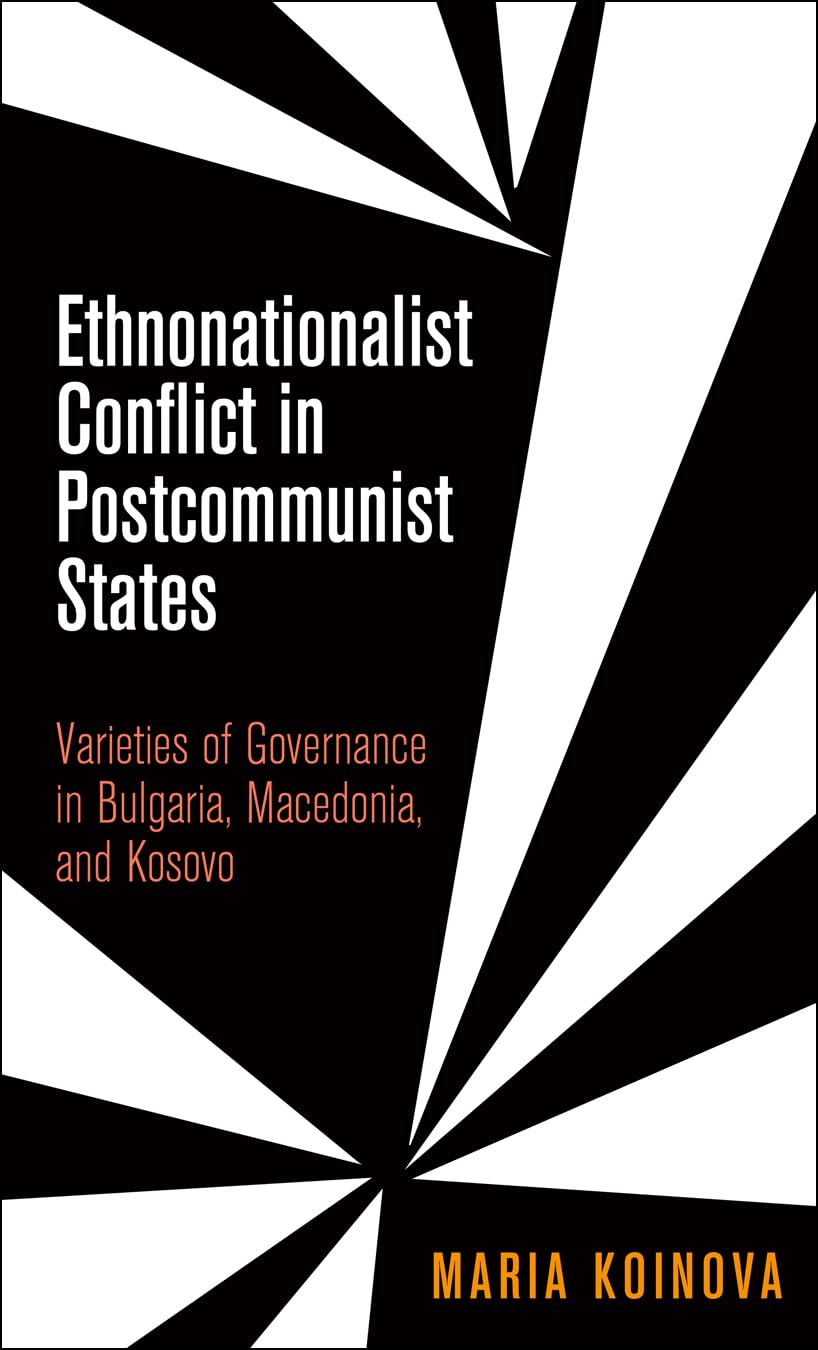
Ethnonationalist Conflict in Postcommunist States: Varieties of Governance in Bulgaria, Macedonia, and Kosovo (National and Ethn,Used
Sold by Ergodebooks, an authorized reseller.
Returns accepted within 30 days | support@ergodebooks.com
Shipping Information
- Free Standard Shipping — United States only
- Processing Time: 3–5 business days
- Estimated Delivery: 6–10 business days after dispatch
- Double-boxed, fully insured & discreetly packaged
- Tracking number sent via email once dispatched
Returns & Refund
Returns accepted within 30 days of delivery.
Damaged or Defective Item
Free return shipping + replacement or full refund
Wrong Item Received
Free return shipping + replacement or full refund
Change of Mind
Return shipping at customer's expense · 25% restocking fee applies
Payment Option

Ethnonationalist Conflict in Postcommunist States investigates why some Eastern European states transitioned to new forms of governance with minimal violence while others broke into civil war. In Bulgaria, the Turkish minority was subjected to coerced assimilation and forced expulsion, but the nation ultimately negotiated peace through institutional channels. In Macedonia, periodic outbreaks of insurgent violence escalated to armed conflict. Kosovo's internal warfare culminated in NATO's controversial bombing campaign. In the twentyfirst century, these conflicts were subdued, but violence continued to flare occasionally and impede durable conflict resolution.In this comparative study, Maria Koinova applies historical institutionalism to conflict analysis, tracing ethnonationalist violence in postcommunist states to a volatile, formative period between 1987 and 1992. In this era of instability, the incidents that brought majorities and minorities into dispute had a profound impact and a cumulative effect, as did the interventions of international agents and kin states. Whether the conflicts initially evolved in peaceful or violent ways, the dynamics of their disputes became selfperpetuating and informally institutionalized. Thus, external policies or interventions could affect only minimal change, and the impact of international agents subsided over time. Regardless of the constitutions, laws, and injunctions, majorities, minorities, international agents, and kin states continue to act in accord with the logic of informally institutionalized conflict dynamics.Koinova analyzes the development of those dynamics in Bulgaria, Macedonia, and Kosovo, drawing on theories of democratization, international intervention, and pathdependence as well as interviews and extensive fieldwork. The result is a compelling account of the underlying causal mechanisms of conflict perpetuation and change that will shed light on broader patterns of ethnic violence.
⚠️ WARNING (California Proposition 65):
This product may contain chemicals known to the State of California to cause cancer, birth defects, or other reproductive harm.
For more information, please visit www.P65Warnings.ca.gov.
- Q: What is the main focus of 'Ethnonationalist Conflict in Postcommunist States'? A: The book examines why some Eastern European countries transitioned to new governance forms with minimal violence, while others experienced civil wars, analyzing the dynamics of ethnonationalist violence.
- Q: Who is the author of this book? A: The author of 'Ethnonationalist Conflict in Postcommunist States' is Maria Koinova.
- Q: What are the key topics addressed in this comparative study? A: Key topics include historical institutionalism, conflict analysis, democratization theories, international intervention, and the factors contributing to the perpetuation of ethnonationalist conflicts.
- Q: How many pages does the book have? A: The book contains 328 pages.
- Q: What is the binding type of this book? A: The book is available in hardcover binding.
- Q: When was 'Ethnonationalist Conflict in Postcommunist States' published? A: The book was published on July 4, 2013.
- Q: Is this book suitable for academic research? A: Yes, it provides an in-depth analysis of ethnonationalist conflicts and is suitable for academic research in fields such as political science and human rights.
- Q: What specific countries does the book analyze? A: The book analyzes Bulgaria, Macedonia, and Kosovo in the context of ethnonationalist conflict.
- Q: Does the book include any interviews or fieldwork? A: Yes, Maria Koinova incorporates interviews and extensive fieldwork in her analysis.
- Q: What themes are explored regarding international agents and kin states? A: The book discusses how external policies and interventions by international agents and kin states interact with the dynamics of informally institutionalized conflicts.