
Title
Etowah: The Political History Of A Chiefdom Capital,Used
Sold by Ergodebooks, an authorized reseller.
Returns accepted within 30 days | support@ergodebooks.com
Shipping Information
- Free Standard Shipping — United States only
- Processing Time: 3–5 business days
- Estimated Delivery: 6–10 business days after dispatch
- Double-boxed, fully insured & discreetly packaged
- Tracking number sent via email once dispatched
Returns & Refund
Returns accepted within 30 days of delivery.
Damaged or Defective Item
Free return shipping + replacement or full refund
Wrong Item Received
Free return shipping + replacement or full refund
Change of Mind
Return shipping at customer's expense · 25% restocking fee applies
Payment Option

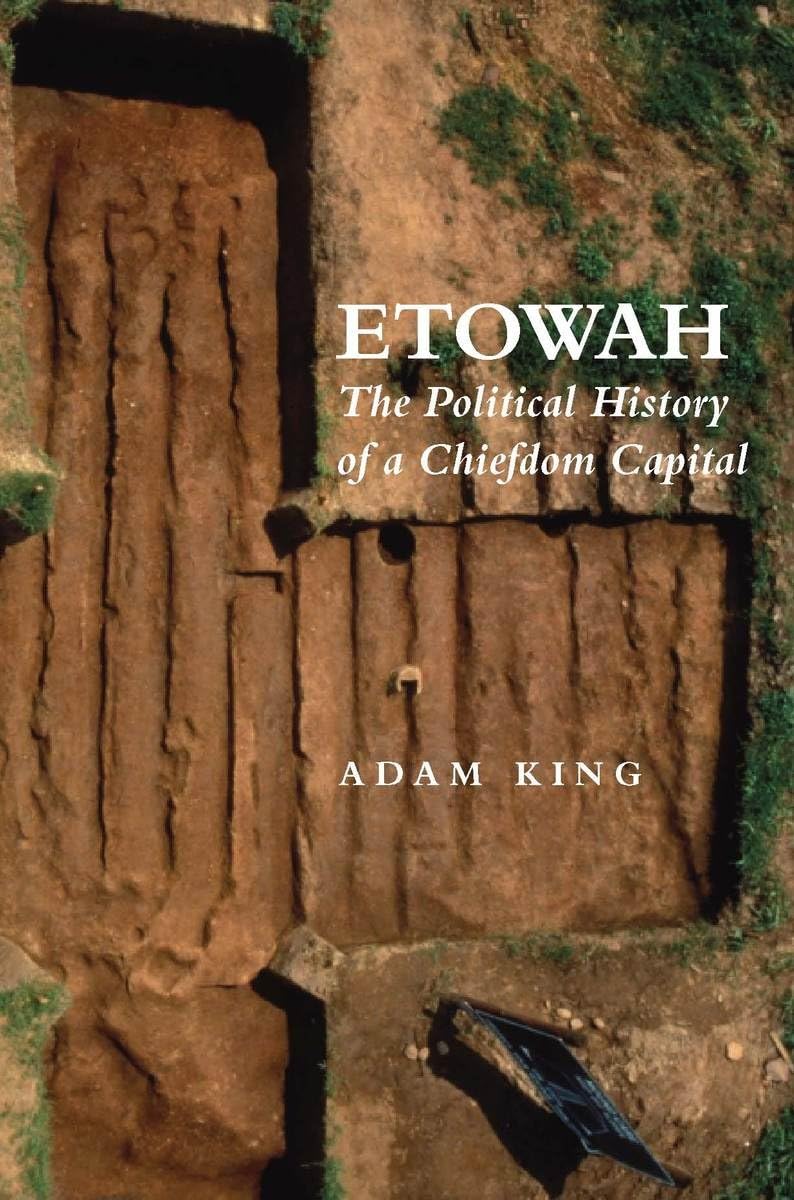
A Dan Josselyn Memorial PublicationDetailed reconstruction of the waxing and waning of political fortunes among the chiefly elites at an important center of the prehistoric worldAt the time the first Europeans arrived in the New World, thousands of earthen platform mounds dotted the landscape of eastern North America. Only a few of the mound sites have survived the ravages of time and the devastation of pilferers; one of these valuable monuments is Etowah, located near Cartersville in northern Georgia. Over a period of more than 100 years, excavations of the sites six mounds, and in particular Mound C, have yielded a wealth of artifacts, including marble statues, copper embossed plates, ceremonial items, and personal adornments. These objects indicate an extensive trading network between Mississippian centers and confirm contact with Spanish conquistadores near Etowah in the mid1500s.Adam King has analyzed the architecture and artifacts of Etowah and deduced its vital role in the prehistory of the area. He advances a plausible historical sequence and a model for the ancient town's complex political structure. The chiefdom society relied upon institutional social ranking, permanent political offices, religious ideology, a redistribution of goods and services, and the willing support of the constituent population. King reveals strategies used by the paramount chiefs to maintain their sources of power and to control changes in the social organization. Elite alliances did not necessarily involve the extreme asymmetry of political domination and tribute extraction. King's use of ceramic assemblages recovered from Etowah to determine the occupation history and the construction sequence of public facilities (mounds and plazas) at the center is significant.This fresh interpretation of the Etowah site places it in a contemporary social and political context with other Mississippian cultures. It is a onevolume sourcebook for the Etowah polity and its neighbors and will, therefore, command an eager audience of scholars and generalists.
⚠️ WARNING (California Proposition 65):
This product may contain chemicals known to the State of California to cause cancer, birth defects, or other reproductive harm.
For more information, please visit www.P65Warnings.ca.gov.