
Title
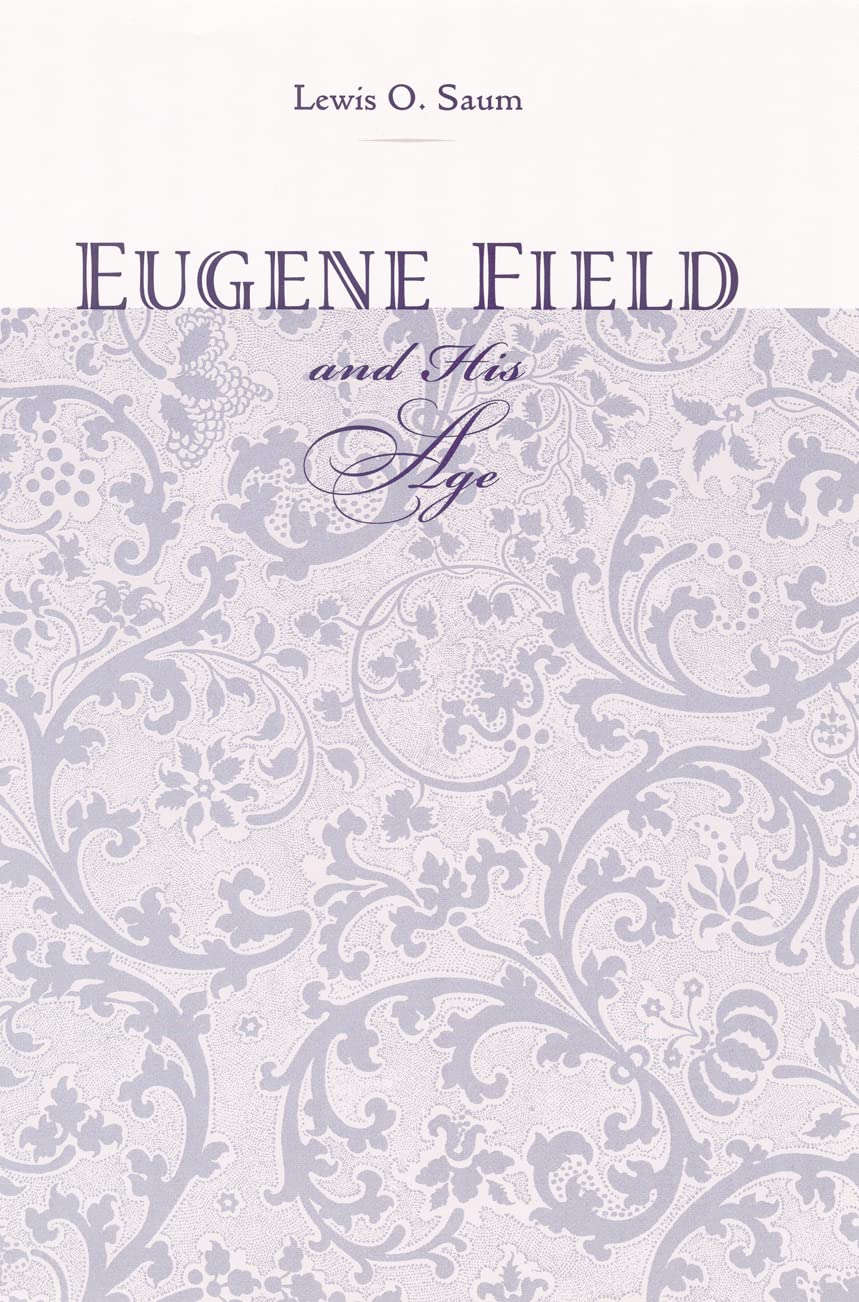
Eugene Field and His Age,Used
Sold by Ergodebooks, an authorized reseller.
Returns accepted within 30 days | support@ergodebooks.com
Shipping Information
- Free Standard Shipping — United States only
- Processing Time: 3–5 business days
- Estimated Delivery: 6–10 business days after dispatch
- Double-boxed, fully insured & discreetly packaged
- Tracking number sent via email once dispatched
Returns & Refund
Returns accepted within 30 days of delivery.
Damaged or Defective Item
Free return shipping + replacement or full refund
Wrong Item Received
Free return shipping + replacement or full refund
Change of Mind
Return shipping at customer's expense · 25% restocking fee applies
Payment Option

Product DescriptionEugene Field (185095) is perhaps best remembered for his children's verse, especially "Little Boy Blue" and "Wynken, Blynken, and Nod." During his journalistic career, however, his column, "Sharps and Flats," in the Chicago Daily News illuminated the shenanigans of local and national politics, captured the excitement of baseball, and praised the cultural scene of Chicago and the West over that of the East Coast and Europe. Field used whimsy, satire, and, at times, unadorned admiration to depict and encapsulate the energy of a young nation reinventing itself and its political ambitions in the closing decades of the nineteenth century.Foremost, Field was a political observer. During his lifetime politics saw more public awareness and involvement than at any other time in American history, and Field's great popularity derived mainly from his nearceaseless commentaryarch, outlandish, comic, seriouson that arena of affairs. Field also devoted many columns to entertainment and diversions, discussing the baseball "idiocy" that stormed Chicago and championing and criticizing authors and actors.From the Back CoverEUGENE FIELD (185095) is perhaps best remembered for his children's verse, especially "Little Boy Blue" and "Wynken, Blynken, and Nod". During his journalistic career, however, his column, "Sharps and Flats", in the Chicago Daily News illuminated the shenanigans of local and national politics, captured the excitement of baseball, and praised the cultural scene of Chicago and the West over that of the East Coast and Europe. Field used whimsy, satire, and, at times, unadorned admiration to depict and encapsulate the energy of a young nation reinventing itself and its political ambitions in the closing decades of the nineteenth century.Foremost, Field was a political observer. During his lifetime politics saw more public awareness and involvement than at any other time in American history, and Field's great popularity derived mainly from his nearceaseless commentary arch, outlandish, comic, serious on that arena of affairs. Field also devoted many columns to entertainment and diversions, discussing the baseball "idiocy" that stormed Chicago and championing and criticizing authors and actors.About the AuthorLewis O. Saum is a professor emeritus of history at the University of Washington. His books include The Popular Mood of America, 18601890.
⚠️ WARNING (California Proposition 65):
This product may contain chemicals known to the State of California to cause cancer, birth defects, or other reproductive harm.
For more information, please visit www.P65Warnings.ca.gov.