
Title
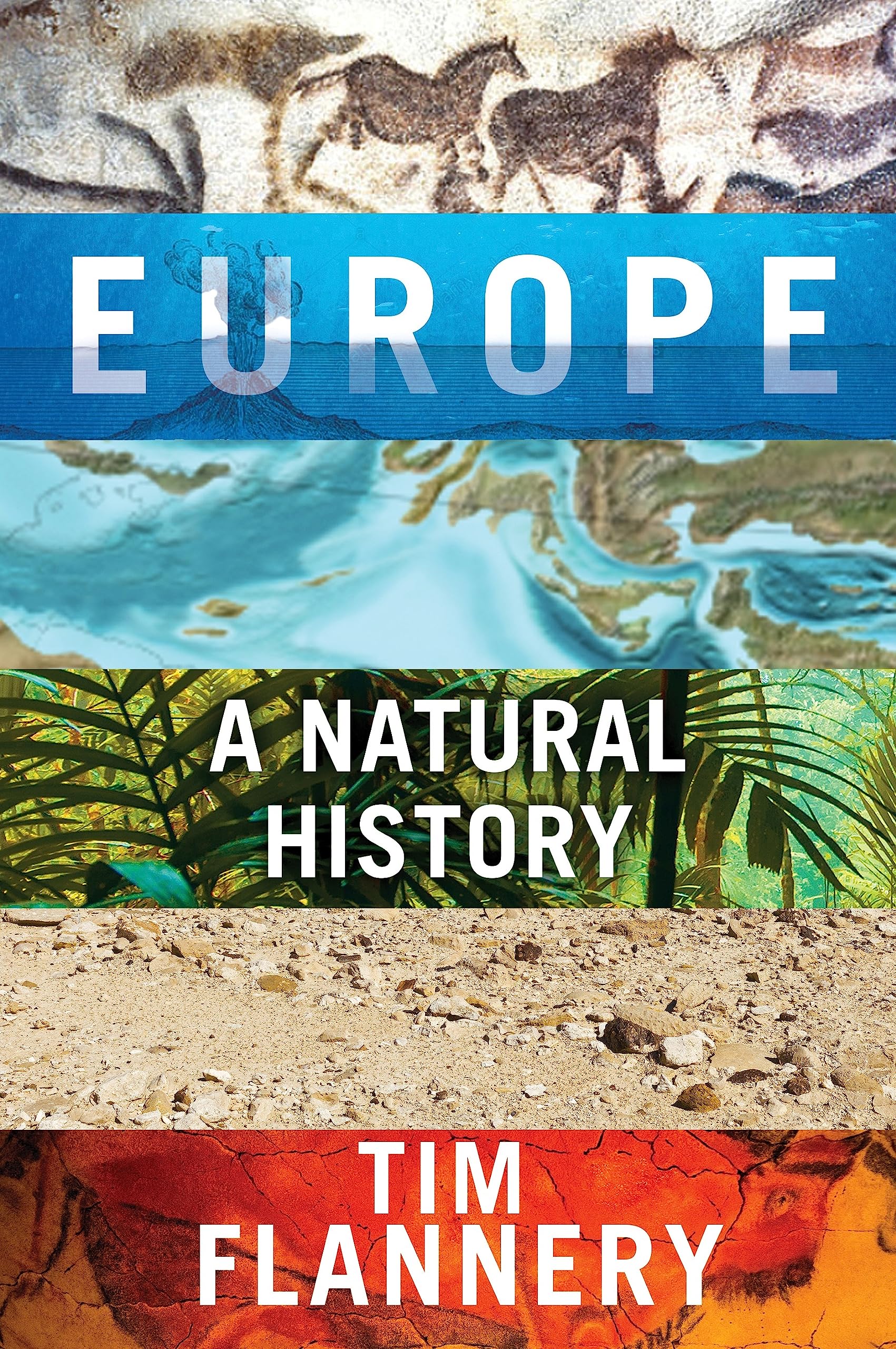
Europe: A Natural History,New
Sold by Ergodebooks, an authorized reseller.
Returns accepted within 30 days | support@ergodebooks.com
Shipping Information
- Free Standard Shipping — United States only
- Processing Time: 3–5 business days
- Estimated Delivery: 6–10 business days after dispatch
- Double-boxed, fully insured & discreetly packaged
- Tracking number sent via email once dispatched
Returns & Refund
Returns accepted within 30 days of delivery.
Damaged or Defective Item
Free return shipping + replacement or full refund
Wrong Item Received
Free return shipping + replacement or full refund
Change of Mind
Return shipping at customer's expense · 25% restocking fee applies
Payment Option

From internationally bestselling author and celebrated scientist Tim Flannery, a history of Europe unlike any before: an ecological account of the land itself and the forces shaping life on it.In Europe: A Natural History, worldrenowned scientist, explorer, and conservationist Tim Flannery applies the eloquent interdisciplinary approach he used in his ecological histories of Australia and North America to the story of Europe. He begins 100 million years ago, when the continents of Asia, North America, and Africa interacted to create an island archipelago that would later become the Europe we know today. It was on these ancient tropical lands that the first distinctly European organisms evolved. Flannery teaches us about Europes midwife toad, which has endured since the continents beginning, while elephants, crocodiles, and giant sharks have come and gone. He explores the monumental changes wrought by the devastating comet strike and shows how rapid atmospheric shifts transformed the European archipelago into a single landmass during the Eocene.As the story moves through millions of years of evolutionary history, Flannery eventually turns to our own species, describing the immense impact humans had on the continents flora and faunawithin 30,000 years of our arrival in Europe, the woolly rhino, the cave bear, and the giant elk, among others, would disappear completely. The story continues right up to the present, as Flannery describes Europes leading role in wildlife restoration, and then looks ahead to ponder the continents future: with advancements in gene editing technology, European scientists are working to recreate some of the continents lost creatures, such as the great ox of Europes primeval forests and even the woolly mammoth.Written with Flannerys characteristic combination of elegant prose and scientific expertise, Europe: A Natural History narrates the dramatic natural history and dynamic evolution of one of the most influential places on Earth.
⚠️ WARNING (California Proposition 65):
This product may contain chemicals known to the State of California to cause cancer, birth defects, or other reproductive harm.
For more information, please visit www.P65Warnings.ca.gov.
- Q: What is the main focus of 'Europe: A Natural History'? A: The book provides an ecological account of Europe's history, detailing the land and the forces that have shaped life on the continent over millions of years.
- Q: Who is the author of 'Europe: A Natural History'? A: The author is Tim Flannery, an internationally bestselling author and celebrated scientist known for his work in ecological histories.
- Q: How many pages does this book have? A: The book contains 288 pages.
- Q: What type of binding is used for 'Europe: A Natural History'? A: The book is available in hardcover binding.
- Q: When was 'Europe: A Natural History' published? A: The book was published on February 12, 2019.
- Q: Is 'Europe: A Natural History' suitable for all readers? A: The book is written for a general audience, making it accessible to readers interested in natural history, ecology, and European wildlife.
- Q: What are some key themes discussed in the book? A: Key themes include the evolutionary history of Europe, the impact of humans on flora and fauna, and the future of wildlife restoration efforts in the continent.
- Q: Does the book cover the impact of climate change on Europe? A: Yes, the book discusses how rapid atmospheric shifts and climate change have influenced the ecological landscape of Europe.
- Q: Are there any illustrations or images in 'Europe: A Natural History'? A: The book features illustrations and images that complement the text, enhancing the reader's understanding of the ecological topics discussed.
- Q: What makes 'Europe: A Natural History' different from other history books about Europe? A: This book uniquely focuses on the ecological and evolutionary aspects of Europe, rather than solely on human history, providing a distinct perspective on the continent's natural heritage.