
Title
Europe (In Theory),New
Sold by Ergodebooks, an authorized reseller.
Returns accepted within 30 days | support@ergodebooks.com
Shipping Information
- Free Standard Shipping — United States only
- Processing Time: 3–5 business days
- Estimated Delivery: 6–10 business days after dispatch
- Double-boxed, fully insured & discreetly packaged
- Tracking number sent via email once dispatched
Returns & Refund
Returns accepted within 30 days of delivery.
Damaged or Defective Item
Free return shipping + replacement or full refund
Wrong Item Received
Free return shipping + replacement or full refund
Change of Mind
Return shipping at customer's expense · 25% restocking fee applies
Payment Option

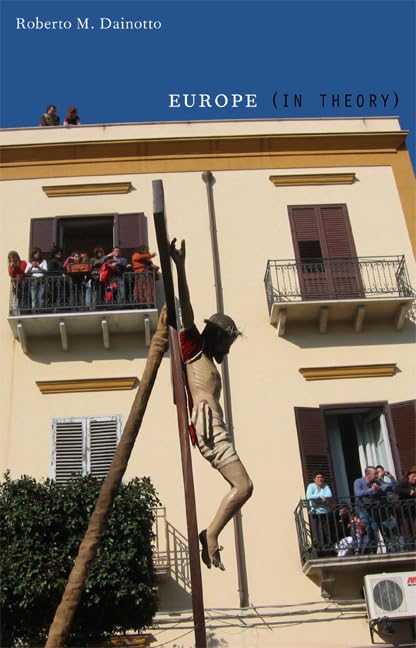
Europe (in Theory) is an innovative analysis of eighteenth and nineteenthcentury ideas about Europe that continue to inform thinking about culture, politics, and identity today. Drawing on insights from subaltern and postcolonial studies, Roberto M. Dainotto deconstructs imperialism not from the socalled periphery but from within Europe itself. He proposes a genealogy of Eurocentrism that accounts for the way modern theories of Europe have marginalized the continents own southern region, portraying countries including Greece, Italy, Spain, and Portugal as irrational, corrupt, and clanbased in comparison to the rational, civicminded nations of northern Europe. Dainotto argues that beginning with Montesquieus The Spirit of Laws (1748), Europe not only defined itself against an Oriental other but also against elements within its own borders: its South. He locates the roots of Eurocentrism in this disavowal; internalizing the other made it possible to understand and explain Europe without reference to anything beyond its boundaries.Dainotto synthesizes a vast array of literary, philosophical, and historical works by authors from different parts of Europe. He scrutinizes theories that came to dominate thinking about the continent, including Montesquieus invention of Europes northsouth divide, Hegels two Europes, and Madame de Stals idea of opposing European literatures: a modern one from the North, and a premodern one from the South. At the same time, Dainotto brings to light counternarratives written from Europes margins, such as the Spanish Jesuit Juan Andrss suggestion that the origins of modern European culture were eastern rather than northern and the Italian Orientalist Michele Amaris assertion that the South was the cradle of a social democracy brought to Europe via Islam.
⚠️ WARNING (California Proposition 65):
This product may contain chemicals known to the State of California to cause cancer, birth defects, or other reproductive harm.
For more information, please visit www.P65Warnings.ca.gov.