
Title
European Monetary Unification: Theory, Practice, and Analysis,Used
Sold by Ergodebooks, an authorized reseller.
Returns accepted within 30 days | support@ergodebooks.com
Shipping Information
- Free Standard Shipping — United States only
- Processing Time: 3–5 business days
- Estimated Delivery: 6–10 business days after dispatch
- Double-boxed, fully insured & discreetly packaged
- Tracking number sent via email once dispatched
Returns & Refund
Returns accepted within 30 days of delivery.
Damaged or Defective Item
Free return shipping + replacement or full refund
Wrong Item Received
Free return shipping + replacement or full refund
Change of Mind
Return shipping at customer's expense · 25% restocking fee applies
Payment Option

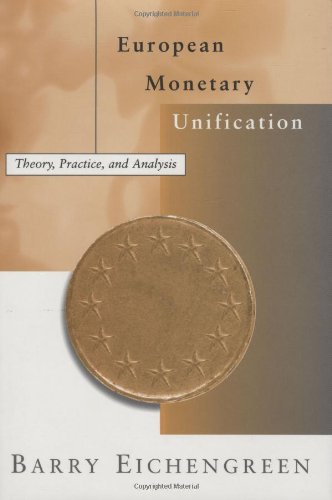
The process of European monetary unification (EMU) is approaching a critical juncture. At the beginning of 1998 the member states of the European Union will decide whether or not to go ahead with their monetary union and determine which countries qualify as members. There is a high likelihood that Stage III of the Maastricht processmonetary union itselfwill commence on January 1, 1999, and that a single currency, to be known as the Euro, will replace the national currencies of the founding member states at the beginning of 2002. Even if it is delayed, Stage III is likely to go forward soon thereafter. Whether EMU is feasible and desirable is contested among economists and politicians alike. This book sheds light on the controversy by considering seven major aspects: (1) what the theory of optimum currency areas reveals about the EMU project, (2) how Europe compares with existing monetary unions such as the United States, (3) the crisis in the European monetary system and the feasibility of stabilizing exchange rates in the absence of monetary unification, (4) fiscal policy and EMU, (5) labor markets and EMU, (6) the connections between monetary and political union, and (7) EMU and the rest of the world.The author views EMU as neither a grand achievement nor a terrible blunder, but as a process. He argues that the effects of monetary unification will depend on how it is structured and governed, and how quickly Europe's markets adapt to a single currency. The process of monetary unification will not end in 1999 or 2002; rather, the structure and operation of Europe's monetary union will continue to evolve for years to come.
⚠️ WARNING (California Proposition 65):
This product may contain chemicals known to the State of California to cause cancer, birth defects, or other reproductive harm.
For more information, please visit www.P65Warnings.ca.gov.