
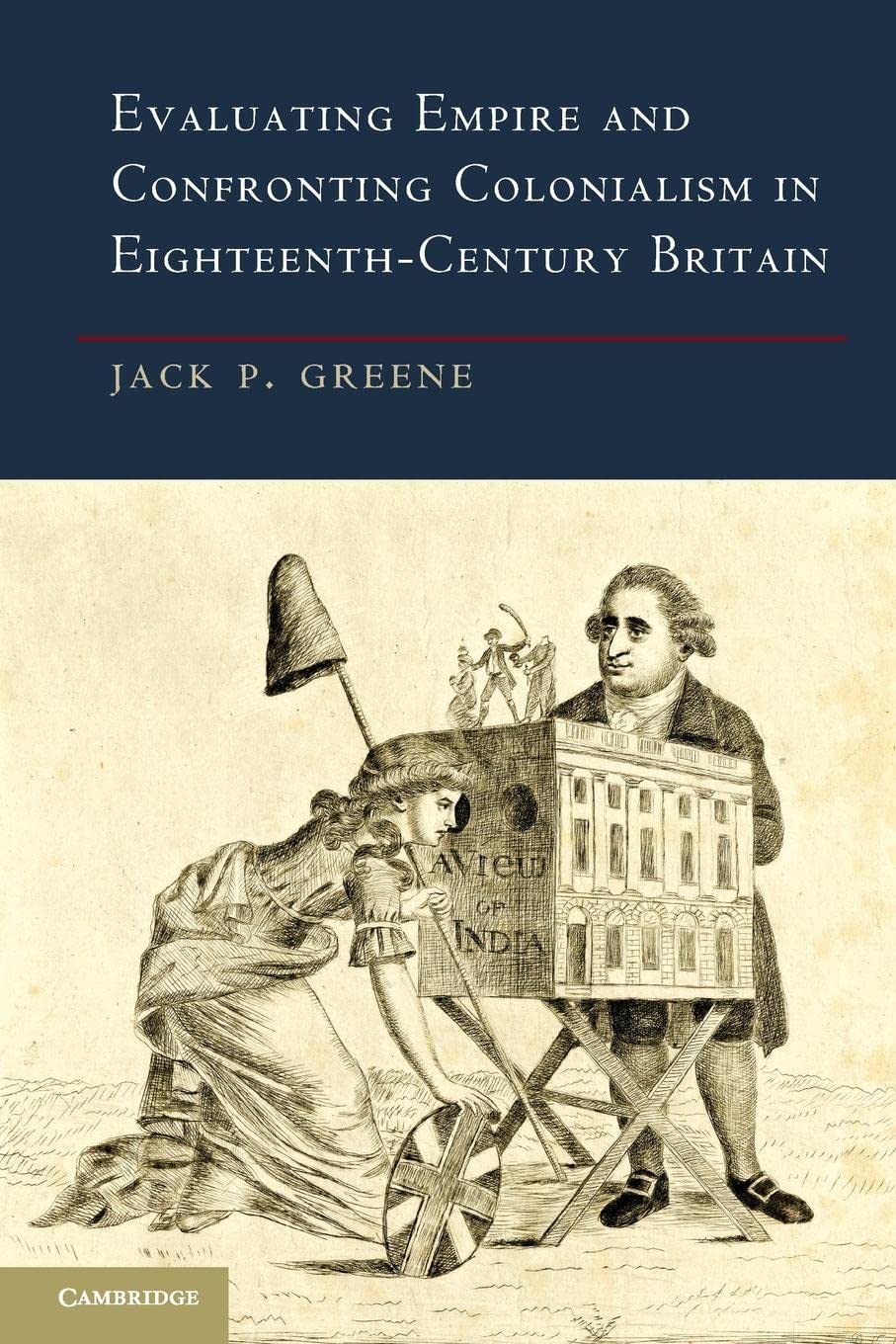
Title
Evaluating Empire and Confronting Colonialism in EighteenthCentury Britain,Used
Sold by Ergodebooks, an authorized reseller.
Returns accepted within 30 days | support@ergodebooks.com
Shipping Information
- Free Standard Shipping — United States only
- Processing Time: 3–5 business days
- Estimated Delivery: 6–10 business days after dispatch
- Double-boxed, fully insured & discreetly packaged
- Tracking number sent via email once dispatched
Returns & Refund
Returns accepted within 30 days of delivery.
Damaged or Defective Item
Free return shipping + replacement or full refund
Wrong Item Received
Free return shipping + replacement or full refund
Change of Mind
Return shipping at customer's expense · 25% restocking fee applies
Payment Option

This volume comprehensively examines the ways metropolitan Britons spoke and wrote about the British Empire during the short eighteenth century, from about 1730 to 1790. The work argues that following several decades of largely uncritical celebration of the empire as a vibrant commercial entity that had made Britain prosperous and powerful, a growing familiarity with the character of overseas territories and their inhabitants during and after the Seven Years' War produced a substantial critique of empire. Evolving out of a widespread revulsion against the behaviors exhibited by many groups of Britons overseas and building on a language of otherness that metropolitans had used since the beginning of overseas expansion to describe its participants, the societies, and polities that Britons abroad had constructed in their new habitats, this critique used the languages of humanity and justice as standards by which to evaluate and condemn the behaviors, in turn, of East India Company servants, American slaveholders, Atlantic slave traders, Irish pensioners, absentees, oppressors of Catholics, and British political and military leaders during the American War of Independence. Although this critique represented a massive contemporary condemnation of British colonialism and manifested an impulse among metropolitans to distance themselves from imperial excesses, the benefits of empire were far too substantial to permit any turning away from it, and the moment of sensibility waned.
⚠️ WARNING (California Proposition 65):
This product may contain chemicals known to the State of California to cause cancer, birth defects, or other reproductive harm.
For more information, please visit www.P65Warnings.ca.gov.
- Q: What is the main focus of 'Evaluating Empire and Confronting Colonialism in Eighteenth-Century Britain'? A: This book examines how Britons discussed and critiqued the British Empire during the eighteenth century, particularly after the Seven Years' War, highlighting a shift from celebration to critical evaluation.
- Q: Who is the author of this book? A: The author of this book is Jack P. Greene.
- Q: What is the condition of the book being sold? A: The book is in new condition.
- Q: How many pages does the book have? A: The book contains 404 pages.
- Q: What type of binding does this book have? A: This book is available in paperback binding.
- Q: When was 'Evaluating Empire and Confronting Colonialism in Eighteenth-Century Britain' published? A: The book was published on March 29, 2013.
- Q: What topics are covered in this volume? A: The volume covers the critique of British colonialism, the responses to imperial behaviors, and the standards of humanity and justice used to evaluate British actions abroad.
- Q: Is this book suitable for academic research? A: Yes, this book provides a comprehensive analysis of the British Empire, making it suitable for academic research in history and colonial studies.
- Q: What can readers expect to learn from this book? A: Readers can expect to learn about the evolving perspectives on British colonialism and the critiques that emerged in the context of the empire's impact on society and politics.
- Q: Does this book include any specific case studies or examples? A: Yes, the book discusses specific groups involved in colonialism, including East India Company servants and American slaveholders, to illustrate its critiques.