
Title
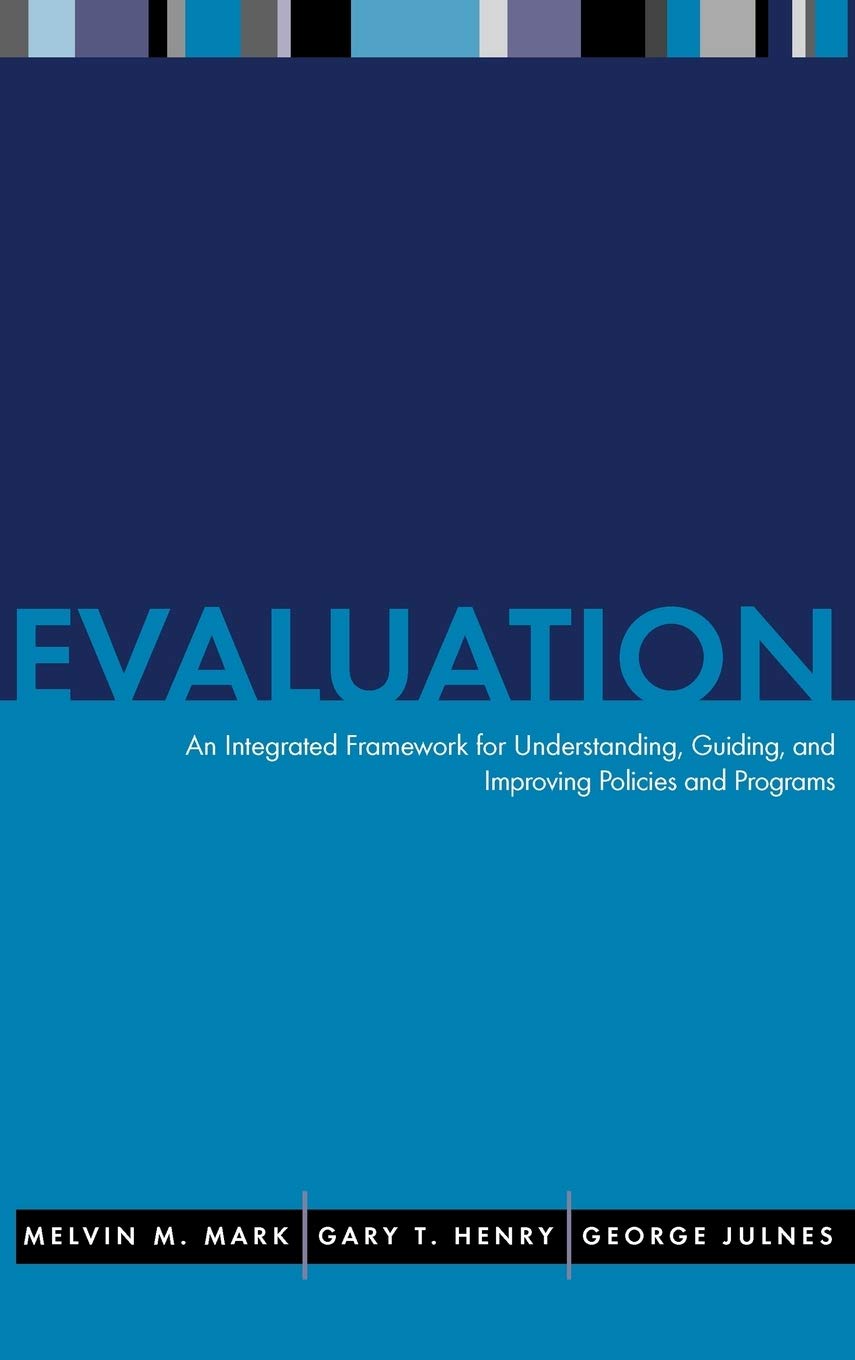
Evaluation: An Integrated Framework for Understanding, Guiding, and Improving Policies and Programs,Used
Sold by Ergodebooks, an authorized reseller.
Returns accepted within 30 days | support@ergodebooks.com
Shipping Information
- Free Standard Shipping — United States only
- Processing Time: 3–5 business days
- Estimated Delivery: 6–10 business days after dispatch
- Double-boxed, fully insured & discreetly packaged
- Tracking number sent via email once dispatched
Returns & Refund
Returns accepted within 30 days of delivery.
Damaged or Defective Item
Free return shipping + replacement or full refund
Wrong Item Received
Free return shipping + replacement or full refund
Change of Mind
Return shipping at customer's expense · 25% restocking fee applies
Payment Option

This is one of the most coherent and comprehensive theories ofevaluation yet formulated and one that makes a most valuablecontribution. The authors are pioneering in important newdirections.'Ernest R. House, author of Professional Evaluation and Evaluatingwith Validity'This book is the best I've ever read detailing a practical theoryof evaluation. It is comprehensive, beautifully written, and makessense of the evaluation enterprise. It does so by emphasizing themajor function of evaluation as sensemaking about policies andprograms.'Thomas D. Cook, professor, sociology, psychology, education, andpublic policy, Northwestern UniversityPrograms that serve the needs of the public continually facechanges brought by social, political, and economic forces. Tosurvive these changes, organizations must evaluate their programswisely and realistically. This book offers a new approach toevaluation, one that will encourage all kinds of organizations andagencies to improve their contributions to social betterment. Theauthors draw from three decades of evaluation practice and theoryto present their own framework for conceptualizing evaluation andfor pragmatically assessing social policies and programs.They analyze four purposes of evaluation:* To review the merit of programs and their value to society* To improve the organization and its services* To ensure program compliance with mandates* To build knowledge and expertise for future programsFor the practitioner, these purposes help define the approach andmethods for an evaluation. The authors also enrich their discussionwith four possible modes of inquiry: description, classification,causal analysis, and values inquiry. Filled with tables, charts,and figures, this resource invites organizations to make the mostappropriate programming decisions based on thoughtful andsystematic methods. Evaluation: An Integrated Framework forUnderstanding, Guiding, and Improving Policies and Programs is atool that scholars can use to rejuvenate their view of evaluationand that practitioners can use to integrate the best techniqueswith a contemporary understanding of social policy and change.
⚠️ WARNING (California Proposition 65):
This product may contain chemicals known to the State of California to cause cancer, birth defects, or other reproductive harm.
For more information, please visit www.P65Warnings.ca.gov.
- Q: How many pages does this book have? A: This book has four hundred pages. It's a comprehensive resource for understanding evaluation in policies and programs.
- Q: What are the dimensions of this book? A: The book measures six point three two inches in length, one point two three inches in width, and nine point two three inches in height.
- Q: What type of binding does this book have? A: This book is bound in hardcover. This binding adds durability and a professional appearance, making it suitable for both personal and academic use.
- Q: How do I use this book for evaluation? A: You can use this book as a guide for evaluating programs and policies. It provides a framework for assessing effectiveness and improving organizational contributions.
- Q: Is this book suitable for beginners in evaluation? A: Yes, this book is suitable for beginners. It offers clear explanations and practical theories that can help new evaluators understand complex concepts.
- Q: Can this book help me improve my evaluation skills? A: Yes, this book is designed to enhance your evaluation skills. It presents various methodologies and theoretical insights to refine your approach.
- Q: How should I care for this book? A: To keep this book in good condition, store it upright in a dry place. Avoid exposure to excessive moisture and direct sunlight to prevent damage.
- Q: Is this book safe for children? A: Yes, this book is safe for older children and teens. However, parents should review its content to ensure it aligns with their educational goals.
- Q: What is the recommended storage for this book? A: Store this book in a cool, dry location. Keeping it on a bookshelf will help maintain its shape and protect the pages from wear.
- Q: How do I contact support if I have an issue with the book? A: You can contact Jossey-Bass for support regarding the book. They offer customer service for inquiries about returns or damaged copies.
- Q: What should I do if the book arrives damaged? A: If the book arrives damaged, contact the retailer immediately for a return or exchange. Be sure to provide details about the damage for a smooth process.
- Q: Are there any specific features that make this book stand out? A: Yes, this book includes tables, charts, and figures that enhance understanding. These features aid in visualizing evaluation concepts and methods.
- Q: Is this book useful for practitioners in social policy? A: Yes, this book is highly useful for practitioners in social policy. It integrates evaluation techniques with contemporary policy analysis.
- Q: How can this book help in program compliance? A: This book outlines evaluation purposes, including ensuring program compliance with mandates. It helps organizations align their practices with required standards.
- Q: Is this book relevant for those in management? A: Yes, this book is relevant for individuals in management. It offers insights into improving organizational effectiveness through evaluation.
- Q: What evaluation modes does the book discuss? A: The book discusses four modes of inquiry: description, classification, causal analysis, and values inquiry. These modes provide a comprehensive approach to evaluation.