If you have any questions, you are always welcome to contact us. We'll get back to you as soon as possible, withing 24 hours on weekdays.
Customer service
All questions about your order, return and delivery must be sent to our customer service team by e-mail at yourstore@yourdomain.com
Sale & Press
If you are interested in selling our products, need more information about our brand or wish to make a collaboration, please contact us at press@yourdomain.com
Help
If you have any questions, you are always welcome to contact us. We'll get back to you as soon as possible, withing 24 hours on weekdays.
Customer service
All questions about your order, return and delivery must be sent to our customer service team by e-mail at yourstore@yourdomain.com
Sale & Press
If you are interested in selling our products, need more information about our brand or wish to make a collaboration, please contact us at press@yourdomain.com
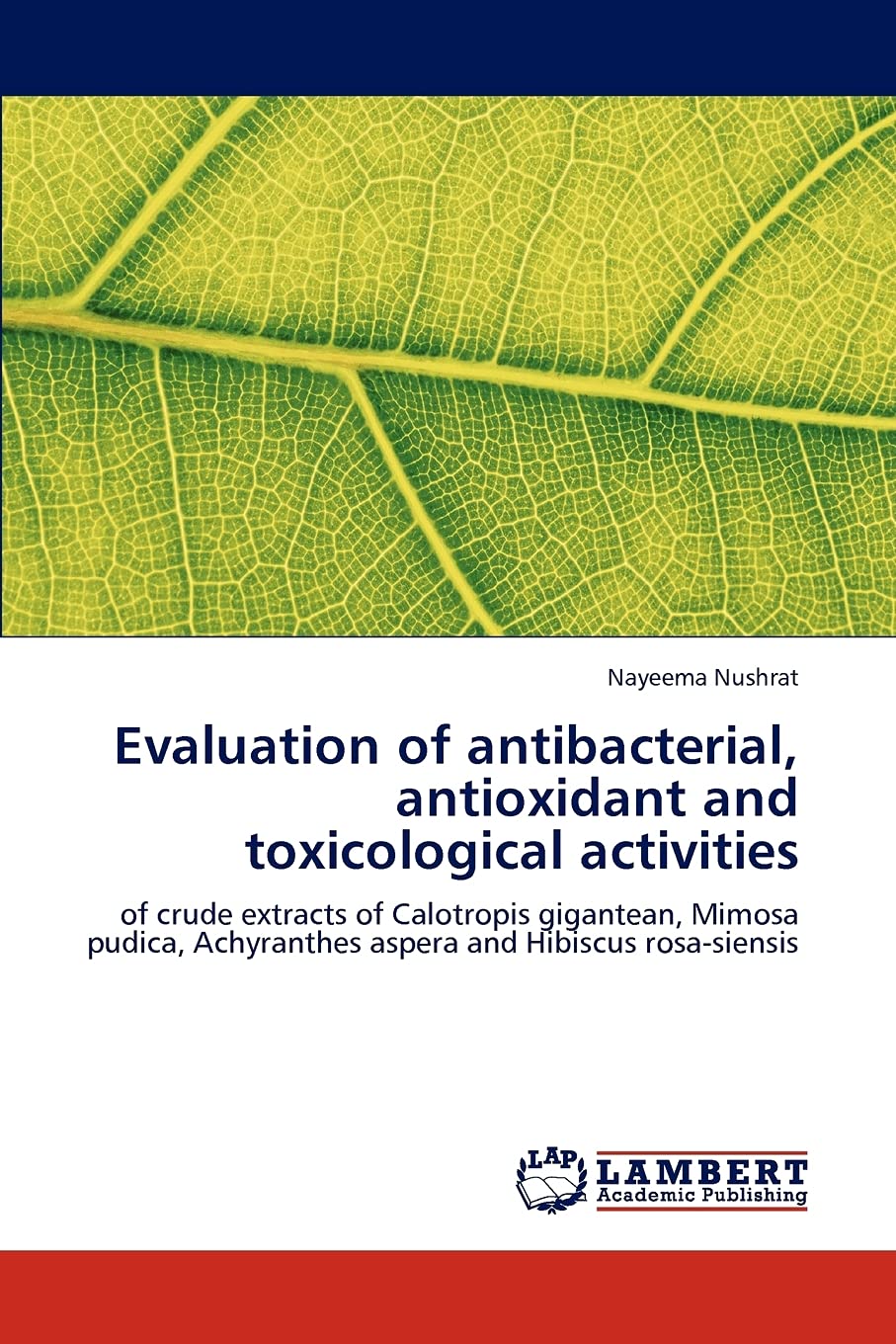
Recent years have witnessed that there is a revival of concern in drug discovery from medicinal plants for the maintenance of health in all parts of the world. The aim of this work was to investigate 4 plants belonging to 4 families (Calotropis gigantean, Mimosa pudica, Achyranthes aspera and Hibiscus rosasiensis variety: Kalyani, which were collected from different places in Bangladesh (Faridpur) for their in vitro antibacterial, antioxidant and toxicological evaluation. The 4 plants were extracted with methanol and chloroform to yield 8 extracts by Soxhlets extraction. Antimicrobial activity was tested by agar diffusion & broth microdilution assay. Antioxidant activity was investigated by measuring the scavenging activity of the DPPH (1, 1diphenyl2picrylhydrazyl) radical. Evaluation for in vitro toxicological screening was done against MDCK (MadinDarby Kanine Kidney) cells by using an established microtiter plate assay based on cellular staining with trypan blue. The results will guide the selection of some plant species for further pharmacological and phytochemical investigations.
⚠️ WARNING (California Proposition 65):
This product may contain chemicals known to the State of California to cause cancer,
birth defects, or other reproductive harm.
For MAP (Minimum Advertised Price) violations and Intellectual Property (IP) or Trademark concerns, please contact:
support@ergodebooks.com
⚠️ California Proposition 65 Warning: Some products sold on this website may expose you to chemicals known to the State of California to cause cancer, birth defects, or other reproductive harm. For more information, visit www.P65Warnings.ca.gov.