
Title
Evangelicalism & the StoneCampbell Movement,New
Sold by Ergodebooks, an authorized reseller.
Returns accepted within 30 days | support@ergodebooks.com
Shipping Information
- Free Standard Shipping — United States only
- Processing Time: 3–5 business days
- Estimated Delivery: 6–10 business days after dispatch
- Double-boxed, fully insured & discreetly packaged
- Tracking number sent via email once dispatched
Returns & Refund
Returns accepted within 30 days of delivery.
Damaged or Defective Item
Free return shipping + replacement or full refund
Wrong Item Received
Free return shipping + replacement or full refund
Change of Mind
Return shipping at customer's expense · 25% restocking fee applies
Payment Option

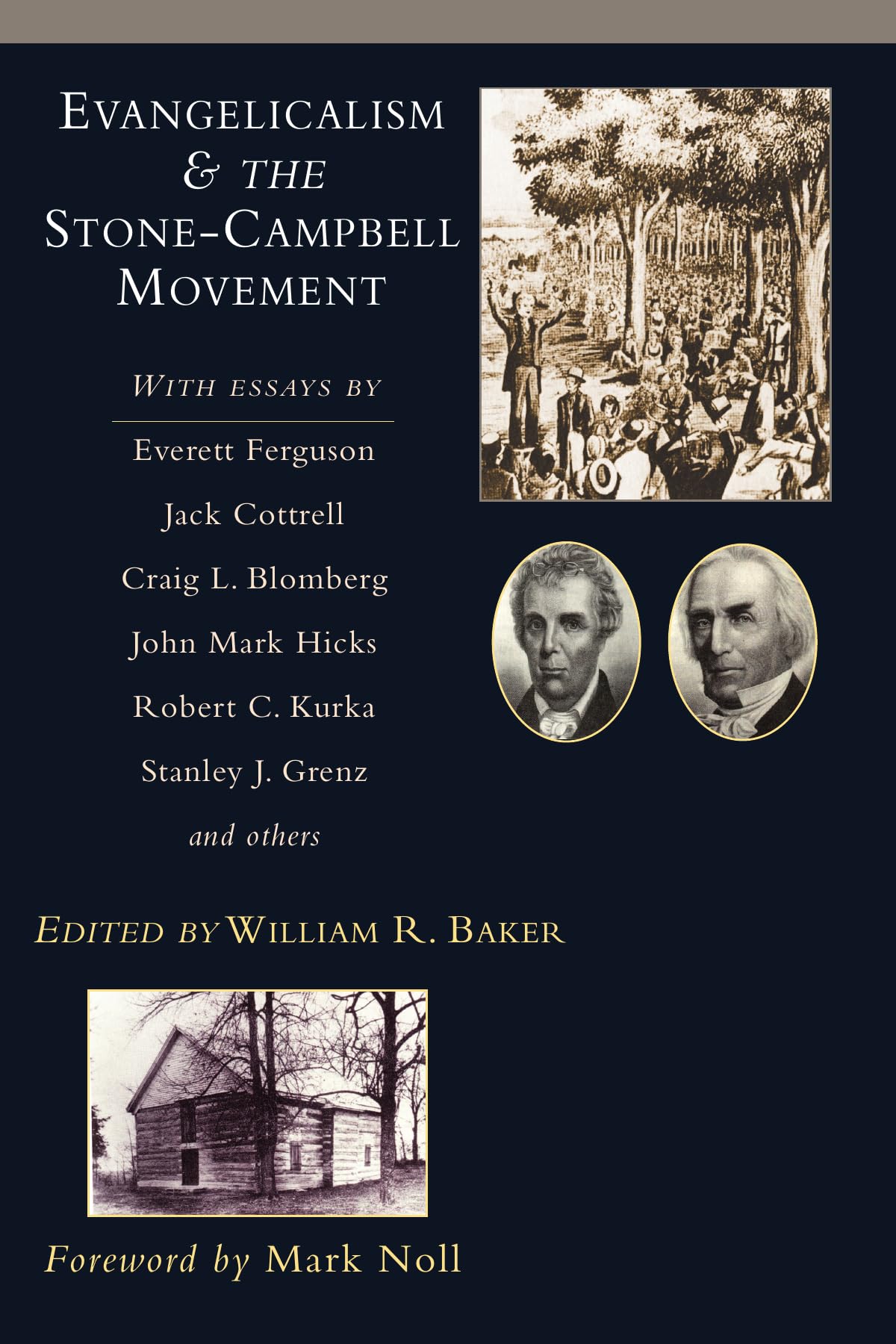
The StoneCampbell Movement, also known as the Restoration Movement, arose on the frontiers of early nineteenthcentury America. Likeminded Methodists, Baptists and Presbyterians abandoned denominational labels in order to be 'Christians only.' They called followers to join in Christian unity and restore the ideals of the New Testament church, holding authoritative no book but the Bible and believing no creed but Christ.Modernday inheritors of this movement, including the Churches of Christ (a cappella) and the Christian Churches (independent), find much in common with wider evangelical Christianity as a whole. Both groups are committed to the authority of Scripture and the importance of personal conversion. Yet Restorationists and evangelicals, separated by sociological history as well as points of doctrinal emphasis, have been wary of each other. Evangelicals have often misunderstood Restorationists as exclusivist separatists and baptismal regenerationists. On the other hand, StoneCampbell adherents have been suspicious of mainstream denominational evangelicals as having compromised key aspects of the Christian faith.In recent years Restoration Movement leaders and churches have moved more freely within evangelical circles. As a result, StoneCampbell scholars have reconsidered their relationship to evangelicalism, pondering to what extent Restorationists can identify themselves as evangelicals. Gathered here are essays by leading StoneCampbell thinkers, drawing from their Restoration heritage and offering significant contributions to evangelical discussions of the theology of conversion and ecclesiology. Also included are responses from noted evangelicals, who assess how StoneCampbell thought both corresponds with and diverges from evangelical perspectives.Along with William R. Baker (editor) and Mark Noll (who wrote the Foreword), contributors include Tom Alexander, Jim Baird, Craig L. Blomberg, Jack Cottrell, Everett Ferguson, Stanley J. Grenz, John Mark Hicks, Gary Holloway, H. Wayne House, Robert C. Kurka, Robert Lowery, Edward P. Myers and Jon A. Weatherly.For all concerned with Christian unity and the restoration of the church, Evangelicalism the StoneCampbell Movement offers a substantive starting point for dialogue and discussion.
⚠️ WARNING (California Proposition 65):
This product may contain chemicals known to the State of California to cause cancer, birth defects, or other reproductive harm.
For more information, please visit www.P65Warnings.ca.gov.
- Q: What is the main topic of 'Evangelicalism & the Stone-Campbell Movement'? A: The book explores the relationship between the Stone-Campbell Movement, also known as the Restoration Movement, and evangelical Christianity, highlighting their historical tensions and theological discussions.
- Q: Who are the contributors to this book? A: Contributors include notable scholars such as Tom Alexander, Jim Baird, Craig L. Blomberg, and others, alongside the editor William R. Baker and Foreword writer Mark Noll.
- Q: What is the publication date of this book? A: The book was published on June 11, 2002.
- Q: How many pages does 'Evangelicalism & the Stone-Campbell Movement' have? A: The book contains 256 pages.
- Q: What is the binding type of this book? A: The book is available in paperback binding.
- Q: Is this book suitable for those interested in Christian unity? A: Yes, the book serves as a substantive starting point for dialogue and discussion on Christian unity and the restoration of the church.
- Q: What kind of essays are included in the book? A: The book features essays from leading Stone-Campbell thinkers that relate their Restoration heritage to evangelical discussions, along with responses from noted evangelicals.
- Q: What are the key themes discussed in the book? A: Key themes include the theology of conversion, ecclesiology, and the historical relationship between Restorationists and evangelicals.
- Q: Is this book geared towards scholars or general readers? A: The book is suitable for both scholars and general readers interested in religious studies, particularly those exploring the dynamics between different Christian movements.
- Q: What is the condition of the book being sold? A: The book is listed as new.