
Title
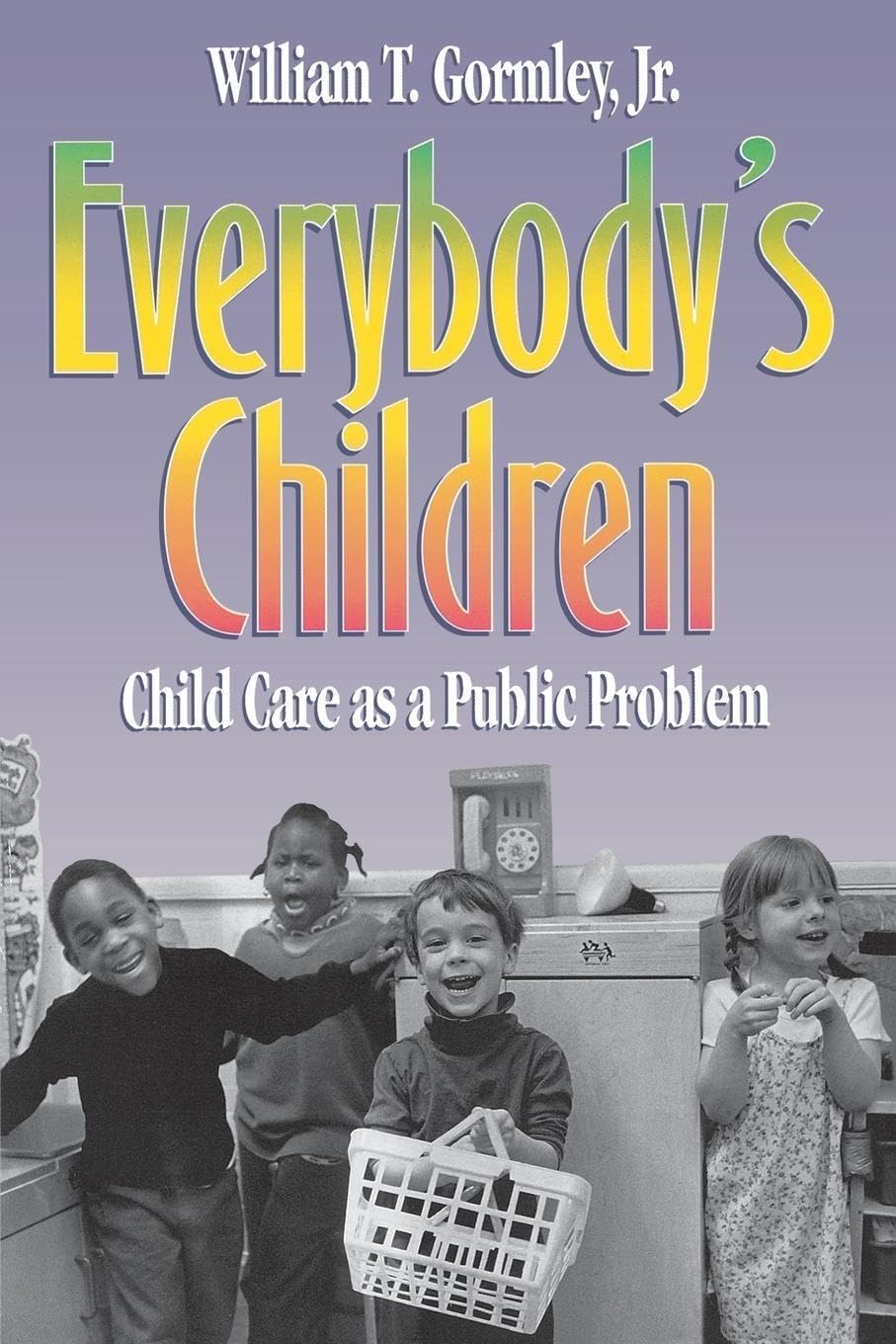
Everybody'S Children: Child Care As A Public Problem,Used
Sold by Ergodebooks, an authorized reseller.
Returns accepted within 30 days | support@ergodebooks.com
Shipping Information
- Free Standard Shipping — United States only
- Processing Time: 3–5 business days
- Estimated Delivery: 6–10 business days after dispatch
- Double-boxed, fully insured & discreetly packaged
- Tracking number sent via email once dispatched
Returns & Refund
Returns accepted within 30 days of delivery.
Damaged or Defective Item
Free return shipping + replacement or full refund
Wrong Item Received
Free return shipping + replacement or full refund
Change of Mind
Return shipping at customer's expense · 25% restocking fee applies
Payment Option

Nearly twothirds of American women with children under age six are in the labor force. It should be no surprise that child care is one of the most serious and widespread concerns of parents today. They worry constantly, wondering if they can afford a particular arrangement, dreading that their favorite provider will quit, and, mostly, questioning whether or not they're doing the best they can for their children. Although these concerns are usually considered a private headache, William Gormley argues that child care is a social problem of critical importance, aggravated by weak institutional supports, and that there are compelling reasons for government intervention.In this important new book, Gormley offers a balanced and comprehensive analysis of the market, government, and societal failures to ensure available, affordable, highquality child care in the United States. Unreliable child care, he says, contributes to family stress and undermines efforts to achieve educational readiness, welfare reform, and gender equity. Neither regulators nor family support agencies distinguish sharply enough between good and bad child care facilities. Meanwhile, government and businesses provide inadequate financial and logistical support. Children suffer as a result, as does society as a whole.Gormley presents evidence on how different states and communities have responded to child care challenges and he prescribes the roles to be played by federal, state, and local governments, forprofit and nonprofit child care providers, churches, schools, and family support agencies. Gormley recommends a number of reforms, including information sharing, flexible enforcement, targeted subsidies, and familyfriendly workplaces. He contends that different levels of government and societal institutions must work together to achieve the goals of efficiency, justice, choice, discretion, coordination, and responsiveness.'
⚠️ WARNING (California Proposition 65):
This product may contain chemicals known to the State of California to cause cancer, birth defects, or other reproductive harm.
For more information, please visit www.P65Warnings.ca.gov.