
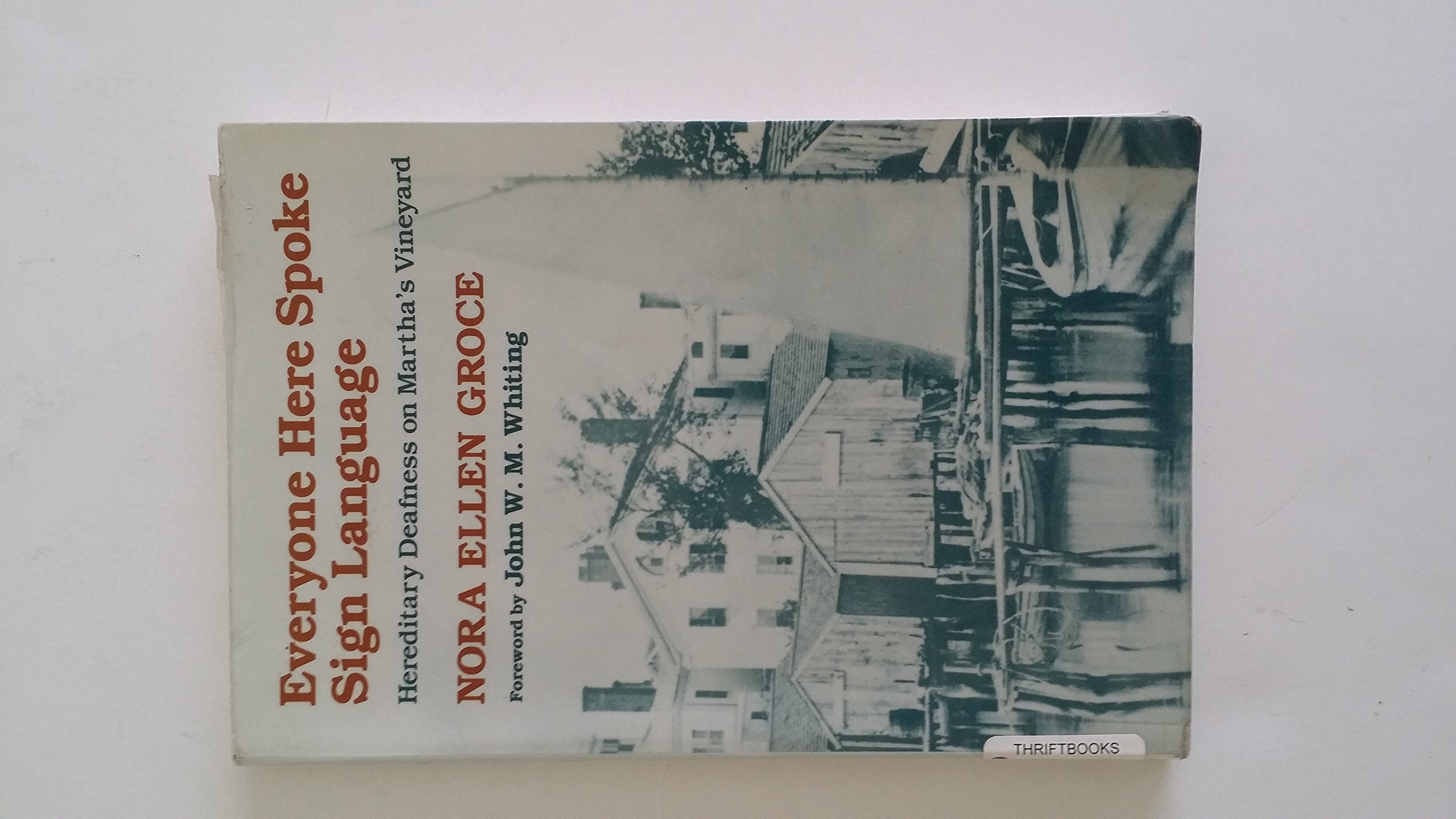
Title
Everyone Here Spoke Sign Language: Hereditary Deafness On Marthas Vineyard
Sold by Ergodebooks, an authorized reseller.
Returns accepted within 30 days | support@ergodebooks.com
Shipping Information
- Free Standard Shipping — United States only
- Processing Time: 3–5 business days
- Estimated Delivery: 6–10 business days after dispatch
- Double-boxed, fully insured & discreetly packaged
- Tracking number sent via email once dispatched
Returns & Refund
Returns accepted within 30 days of delivery.
Damaged or Defective Item
Free return shipping + replacement or full refund
Wrong Item Received
Free return shipping + replacement or full refund
Change of Mind
Return shipping at customer's expense · 25% restocking fee applies
Payment Option

From The Seventeenth Century To The Early Years Of The Twentieth, The Population Of Marthas Vineyard Manifested An Extremely High Rate Of Profound Hereditary Deafness. In Stark Contrast To The Experience Of Most Deaf People In Our Own Society, The Vineyarders Who Were Born Deaf Were So Thoroughly Integrated Into The Daily Life Of The Community That They Were Not Seenand Did Not See Themselvesas Handicapped Or As A Group Apart. Deaf People Were Included In All Aspects Of Life, Such As Town Politics, Jobs, Church Affairs, And Social Life. How Was This Possible?On The Vineyard, Hearing And Deaf Islanders Alike Grew Up Speaking Sign Language. This Unique Sociolinguistic Adaptation Meant That The Usual Barriers To Communication Between The Hearing And The Deaf, Which So Isolate Many Deaf People Today, Did Not Exist.
⚠️ WARNING (California Proposition 65):
This product may contain chemicals known to the State of California to cause cancer, birth defects, or other reproductive harm.
For more information, please visit www.P65Warnings.ca.gov.
- Q: How many pages does the book contain? A: The book contains one hundred sixty-nine pages. It provides an in-depth exploration of hereditary deafness on Martha's Vineyard.
- Q: What is the binding type of this book? A: The book is a paperback edition. This makes it lightweight and easy to handle while reading.
- Q: What are the dimensions of the book? A: The book measures six inches in length, zero point five one inches in width, and nine point zero two inches in height. These dimensions make it a convenient size for reading and storage.
- Q: Who is the author of 'Everyone Here Spoke Sign Language'? A: The author is Nora Ellen Groce. She presents a comprehensive study of the unique deaf community on Martha's Vineyard.
- Q: What is the main topic of this book? A: The main topic is hereditary deafness in Martha's Vineyard. It discusses how the community integrated Deaf individuals into everyday life.
- Q: What historical period does the book cover? A: The book covers the seventeenth century to the early twentieth century. It highlights significant sociolinguistic adaptations during this time.
- Q: How can I learn more about Deaf culture from this book? A: You can learn about Deaf culture through the experiences documented in the book. It describes how Deaf individuals were fully integrated into the community and communicated using sign language.
- Q: Is this book suitable for academic research? A: Yes, the book is suitable for academic research. It provides valuable insights into the sociolinguistic aspects of Deaf culture.
- Q: What features does this book offer? A: The book is described as a used book in good condition. This indicates it is well-maintained despite being previously owned.
- Q: Is there a specific audience for this book? A: Yes, the book is suitable for readers interested in sociolinguistics, Deaf culture, and American history. It appeals to both scholars and general readers.
- Q: How should I care for the book? A: To care for the book, keep it in a dry place and avoid direct sunlight. This will help preserve its condition for future reading.
- Q: Can I return the book if I am not satisfied? A: Yes, you can typically return the book if you are not satisfied. Check the return policy of the seller for specific details.
- Q: What if the book arrives damaged? A: If the book arrives damaged, contact the seller immediately. They will usually provide instructions for returns or exchanges.
- Q: Is this book recommended for beginners in Deaf studies? A: Yes, the book is recommended for beginners in Deaf studies. It presents information in an accessible manner for new readers.
- Q: Are there any illustrations or images in the book? A: The book does not specifically mention illustrations. It primarily focuses on text and historical accounts of the Deaf community.
- Q: Does the book discuss the integration of hearing individuals with Deaf individuals? A: Yes, the book discusses how hearing individuals communicated with Deaf members of the community. It emphasizes their shared use of sign language.