
Title
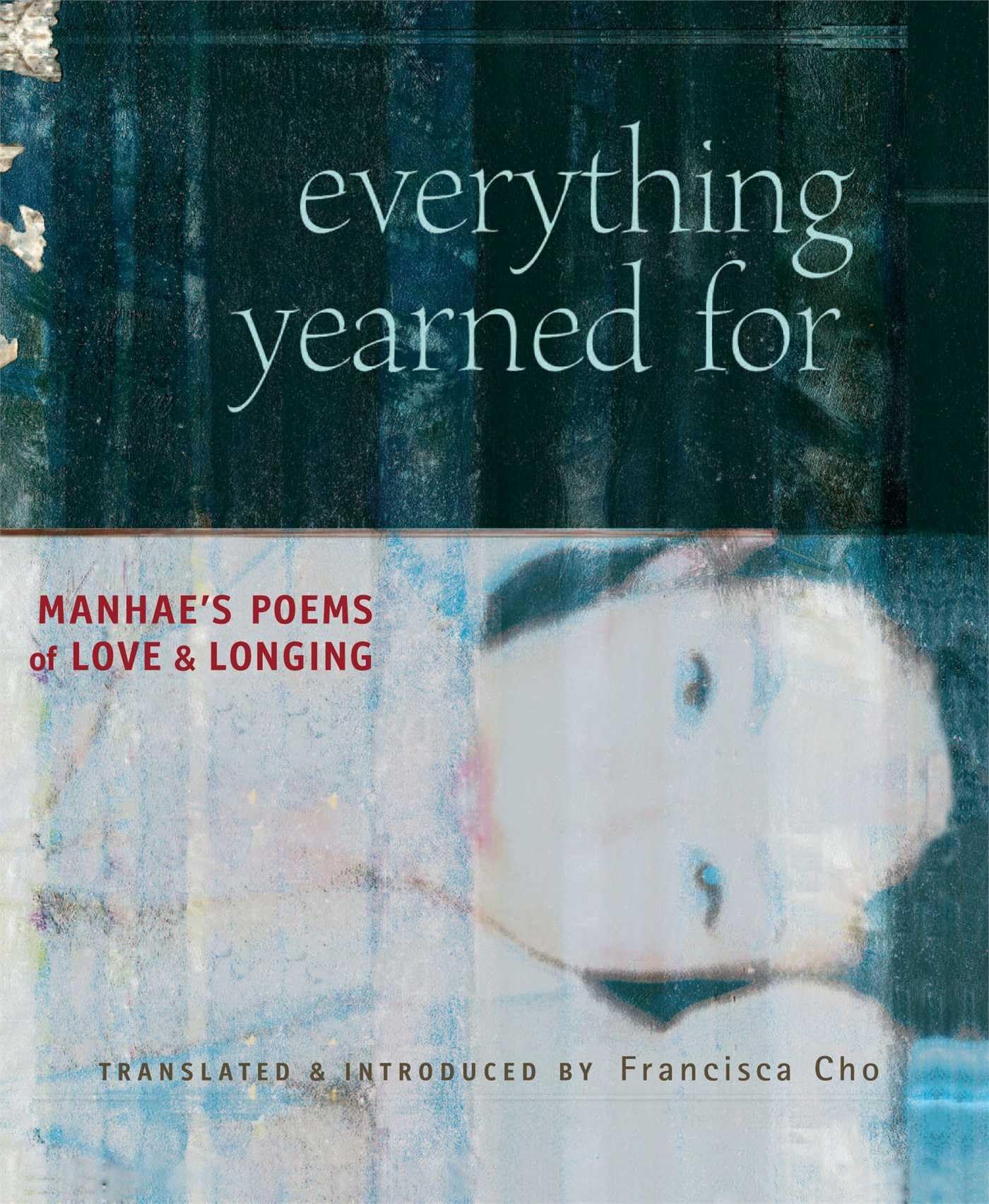
Everything Yearned For: Manhae's Poems of Love and Longing,Used
Sold by Ergodebooks, an authorized reseller.
Returns accepted within 30 days | support@ergodebooks.com
Shipping Information
- Free Standard Shipping — United States only
- Processing Time: 3–5 business days
- Estimated Delivery: 6–10 business days after dispatch
- Double-boxed, fully insured & discreetly packaged
- Tracking number sent via email once dispatched
Returns & Refund
Returns accepted within 30 days of delivery.
Damaged or Defective Item
Free return shipping + replacement or full refund
Wrong Item Received
Free return shipping + replacement or full refund
Change of Mind
Return shipping at customer's expense · 25% restocking fee applies
Payment Option

Manhae (18791944), or Han Yongun, was a Korean Buddhist (Son) monk during the era of Japanese colonial occupation (19101945). Manhae is a political and cultural hero in Korea, and his works are studied by college students and school children alike.Everything Yearned For is a collection of 88 love poems, evocative of the mystical love poetry of Rumi, and even reminiscent of the work of Pablo Neruda.Though Manahe's poetry can be read allegorically on many levels political and religious it is completely unlike any other poetry in Buddhist or secular realm.The first poem, 'My Lover's Silence,' narrates the lover's departure and establishes the enduring themes of the work: the happiness of meeting, the sadness of separation, the agony of longing and waiting, and, most of all, the perfection of love in absence that demands the cost of one's ongoing life, as opposed to the relief of death. The Korean word translated in these poems as 'love' and 'lover' is nim, though nim has many and broad interpretations. Understandably, the identity of Manhae's lover, or 'nim' has been the subject of much speculation.Manhae writes in his own preface:'Nim' is not only a human lover but everything yearned for. All beings are nim for the Buddha, and philosophy is the nim of Kant. The spring rain is nim for the rose, and Italy is the nim of Mazzini. Nim is what I love, but it also loves me. If romantic love is freedom, then so is my nim. But aren't you attached to the lofty name of freedom? Don't you also have a nim? If so, it's only your shadow. I write these poems for the young lambs wandering lost on the road home from the darkening plains.
⚠️ WARNING (California Proposition 65):
This product may contain chemicals known to the State of California to cause cancer, birth defects, or other reproductive harm.
For more information, please visit www.P65Warnings.ca.gov.