
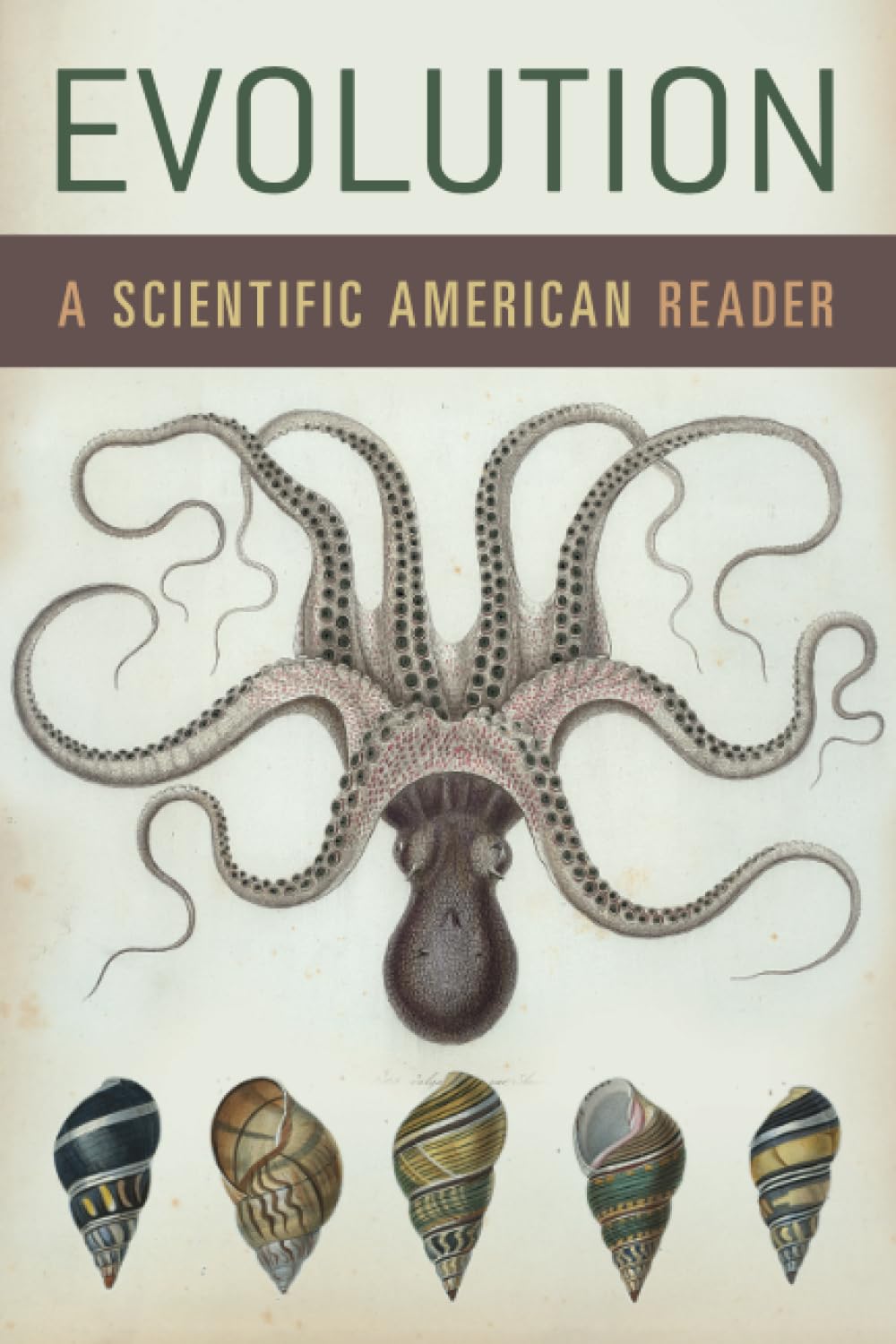
Title
Evolution: A Scientific American Reader (Scientific American Readers)
Sold by Ergodebooks, an authorized reseller.
Returns accepted within 30 days | support@ergodebooks.com
Shipping Information
- Free Standard Shipping — United States only
- Processing Time: 3–5 business days
- Estimated Delivery: 6–10 business days after dispatch
- Double-boxed, fully insured & discreetly packaged
- Tracking number sent via email once dispatched
Returns & Refund
Returns accepted within 30 days of delivery.
Damaged or Defective Item
Free return shipping + replacement or full refund
Wrong Item Received
Free return shipping + replacement or full refund
Change of Mind
Return shipping at customer's expense · 25% restocking fee applies
Payment Option

From the Scopes Monkey Trial of 1925 to the court ruling against the Dover Area School Boards proposed intelligent design curriculum in 2005, few scientific topics have engendered as much controversyor grabbed as many headlinesas evolution. And since the debate shows no signs of abating, there is perhaps no better time to step back and ask: What is evolution? Defined as the gradual process by which something changes into a different and usually more complex and efficient form, evolution explains the formation of the universe, the nature of viruses, and the emergence of humans. A firstrate summary of the actual science of evolution, this Scientific American reader is a timely collection that gives readers an opportunity to consider evolutions impact in various settings.Divided into four sections that consider the evolution of the universe, cells, dinosaurs, and humans, Evolution brings together more than thirty articles written by some of the worlds most respected evolutionary scientists. As tour guides through the genesis of the universe and complex cells, P. James E. Peebles examines the evidence in support of an expanding cosmos, while Christian de Duve discusses the birth of eukaryotes. In an article that anticipated his book Full House, Stephen Jay Gould argues that chance and contingency are as important as natural selection for evolutionary change. And Ian Tatersall makes two fascinating contributions, submitting his view that the schematic of human evolution looks less like a ladder and more like a bush.With the latest on whats being researched at every level of evolutionary studies, from prospects of life on other planets to the inner working of cells, Evolution offers general readers an opportunity to update their knowledge on this hot topic while giving students an introduction to the problems and methodologies of an entire field of inquiry.
⚠️ WARNING (California Proposition 65):
This product may contain chemicals known to the State of California to cause cancer, birth defects, or other reproductive harm.
For more information, please visit www.P65Warnings.ca.gov.