
Title
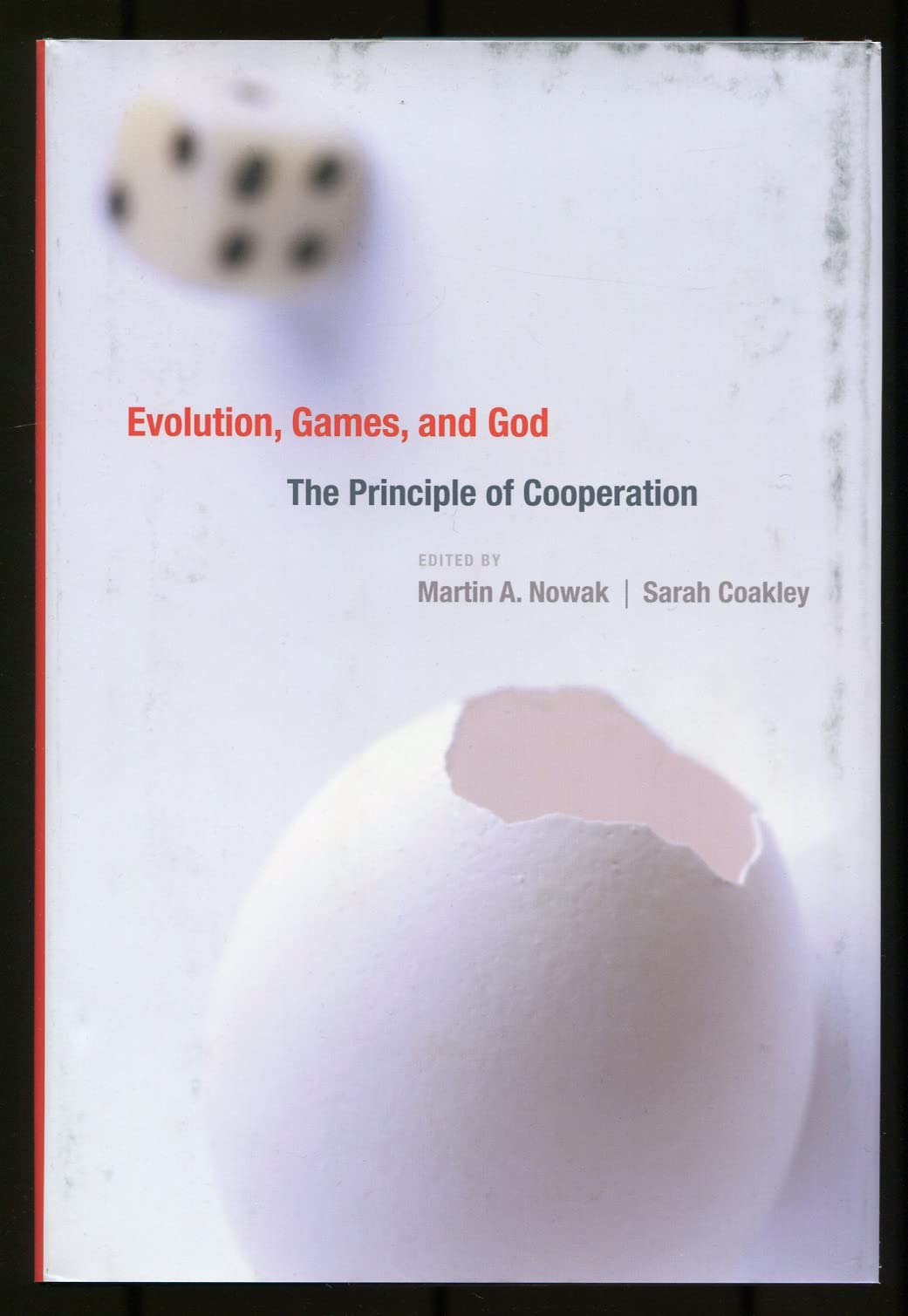
Evolution, Games, And God: The Principle Of Cooperation,Used
Sold by Ergodebooks, an authorized reseller.
Returns accepted within 30 days | support@ergodebooks.com
Shipping Information
- Free Standard Shipping — United States only
- Processing Time: 3–5 business days
- Estimated Delivery: 6–10 business days after dispatch
- Double-boxed, fully insured & discreetly packaged
- Tracking number sent via email once dispatched
Returns & Refund
Returns accepted within 30 days of delivery.
Damaged or Defective Item
Free return shipping + replacement or full refund
Wrong Item Received
Free return shipping + replacement or full refund
Change of Mind
Return shipping at customer's expense · 25% restocking fee applies
Payment Option

According to the reigning competitiondriven model of evolution, selfish behaviors that maximize an organisms reproductive potential offer a fitness advantage over selfsacrificing behaviorsrendering unselfish behavior for the sake of others a mystery that requires extra explanation. Evolution, Games, and God addresses this conundrum by exploring how cooperation, working alongside mutation and natural selection, plays a critical role in populations from microbes to human societies. Inheriting a tendency to cooperate, argue the contributors to this book, may be as beneficial as the selfpreserving instincts usually thought to be decisive in evolutionary dynamics.Assembling experts in mathematical biology, history of science, psychology, philosophy, and theology, Martin Nowak and Sarah Coakley take an interdisciplinary approach to the terms cooperation and altruism. Using game theory, the authors elucidate mechanisms by which cooperationa form of working together in which one individual benefits at the cost of anotherarises through natural selection. They then examine altruismcooperation which includes the sometimes conscious choice to act sacrificially for the collective goodas a key concept in scientific attempts to explain the origins of morality. Discoveries in cooperation go beyond the spread of genes in a population to include the spread of cultural transformations such as languages, ethics, and religious systems of meaning.The authors resist the presumption that theology and evolutionary theory are inevitably at odds. Rather, in rationally presenting a number of theological interpretations of the phenomena of cooperation and altruism, they find evolutionary explanation and theology to be strongly compatible.
⚠️ WARNING (California Proposition 65):
This product may contain chemicals known to the State of California to cause cancer, birth defects, or other reproductive harm.
For more information, please visit www.P65Warnings.ca.gov.