
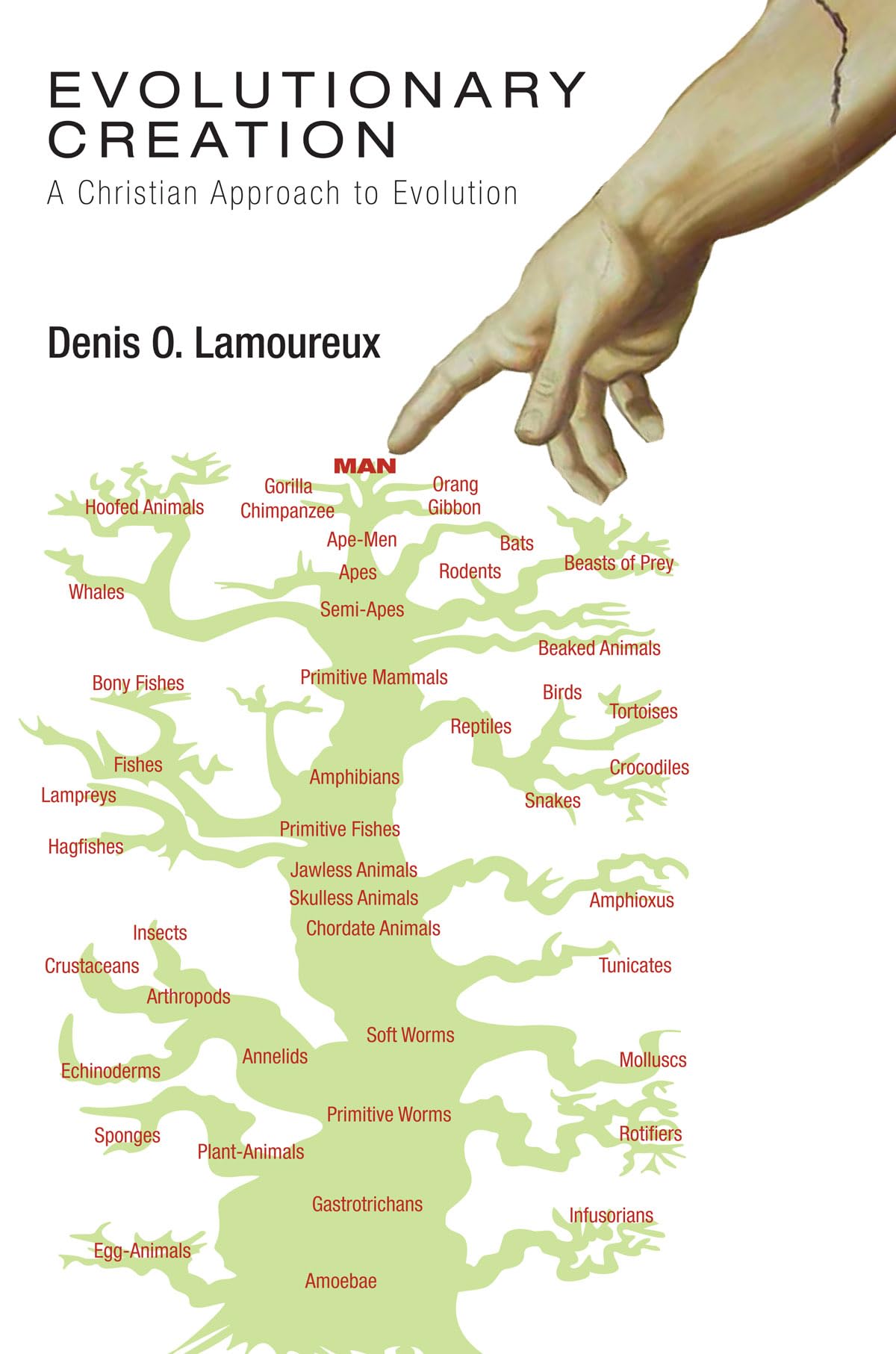
Title
Evolutionary Creation: A Christian Approach to Evolution,New
Sold by Ergodebooks, an authorized reseller.
Returns accepted within 30 days | support@ergodebooks.com
Shipping Information
- Free Standard Shipping — United States only
- Processing Time: 3–5 business days
- Estimated Delivery: 6–10 business days after dispatch
- Double-boxed, fully insured & discreetly packaged
- Tracking number sent via email once dispatched
Returns & Refund
Returns accepted within 30 days of delivery.
Damaged or Defective Item
Free return shipping + replacement or full refund
Wrong Item Received
Free return shipping + replacement or full refund
Change of Mind
Return shipping at customer's expense · 25% restocking fee applies
Payment Option

In this provocative book, evolutionist and evangelical Christian Denis O. Lamoureux proposes an approach to origins that moves beyond the 'evolutionversuscreation' debate. Arguing for an intimate relationship between the Book of God's Words and the Book of God's Works, he presents evolutionary creationa position that asserts that the Father, Son, and Holy Spirit created the universe and life through an ordained and sustained evolutionary process. This view of origins affirms intelligent design and the belief that beauty, complexity, and functionality in nature reflect the mind of God. Lamoureux also challenges the popular Christian assumption that the Holy Spirit revealed scientific and historical facts in the opening chapters of the Bible. He contends that Scripture features an ancient understanding of origins that functions as a vessel to deliver inerrant and infallible messages of faith. Lamoureux shares his personal story and his struggle in coming to terms with evolution and Christianity. Like many, he lost his boyhood faith at university in classes on evolutionary biology. After graduation, he experienced a bornagain conversion and then embraced belief in a literal sixday creation. Graduate school training at the doctoral level in both theology and biology led him to the conclusion that God created the world through evolution. Lamoureux closes with the two most important issues in the origins controversythe pastoral and pedagogical implications. How should churches approach this volatile topic? And what should Christians teach their children about origins?
⚠️ WARNING (California Proposition 65):
This product may contain chemicals known to the State of California to cause cancer, birth defects, or other reproductive harm.
For more information, please visit www.P65Warnings.ca.gov.
- Q: What is the main argument of 'Evolutionary Creation: A Christian Approach to Evolution'? A: The book argues for an understanding of origins that transcends the traditional 'evolution-versus-creation' debate, presenting evolutionary creation as a harmonious relationship between faith and science.
- Q: Who is the author of this book? A: The author is Denis O. Lamoureux, who holds advanced degrees in both theology and biology.
- Q: What topics does the book cover? A: The book addresses the relationship between evolution and Christian faith, intelligent design, and the implications for teaching children about origins.
- Q: Is the book suitable for someone struggling with the concept of evolution and faith? A: Yes, Lamoureux shares his personal journey of reconciling his faith with evolutionary biology, making it relatable for readers facing similar struggles.
- Q: What is the publication date of this book? A: The book was published on June 15, 2008.
- Q: How many pages does 'Evolutionary Creation' have? A: The book has 514 pages.
- Q: What edition of the book is available? A: The available edition is an illustrated version.
- Q: What type of binding does this book have? A: The book is available in paperback binding.
- Q: Does the book provide any practical guidance for churches? A: Yes, it discusses pastoral and pedagogical implications for churches regarding the topic of origins.
- Q: Is this book appropriate for academic study? A: Yes, it is suitable for academic study, especially for those interested in theology, biology, and the intersection of faith and science.