
Title
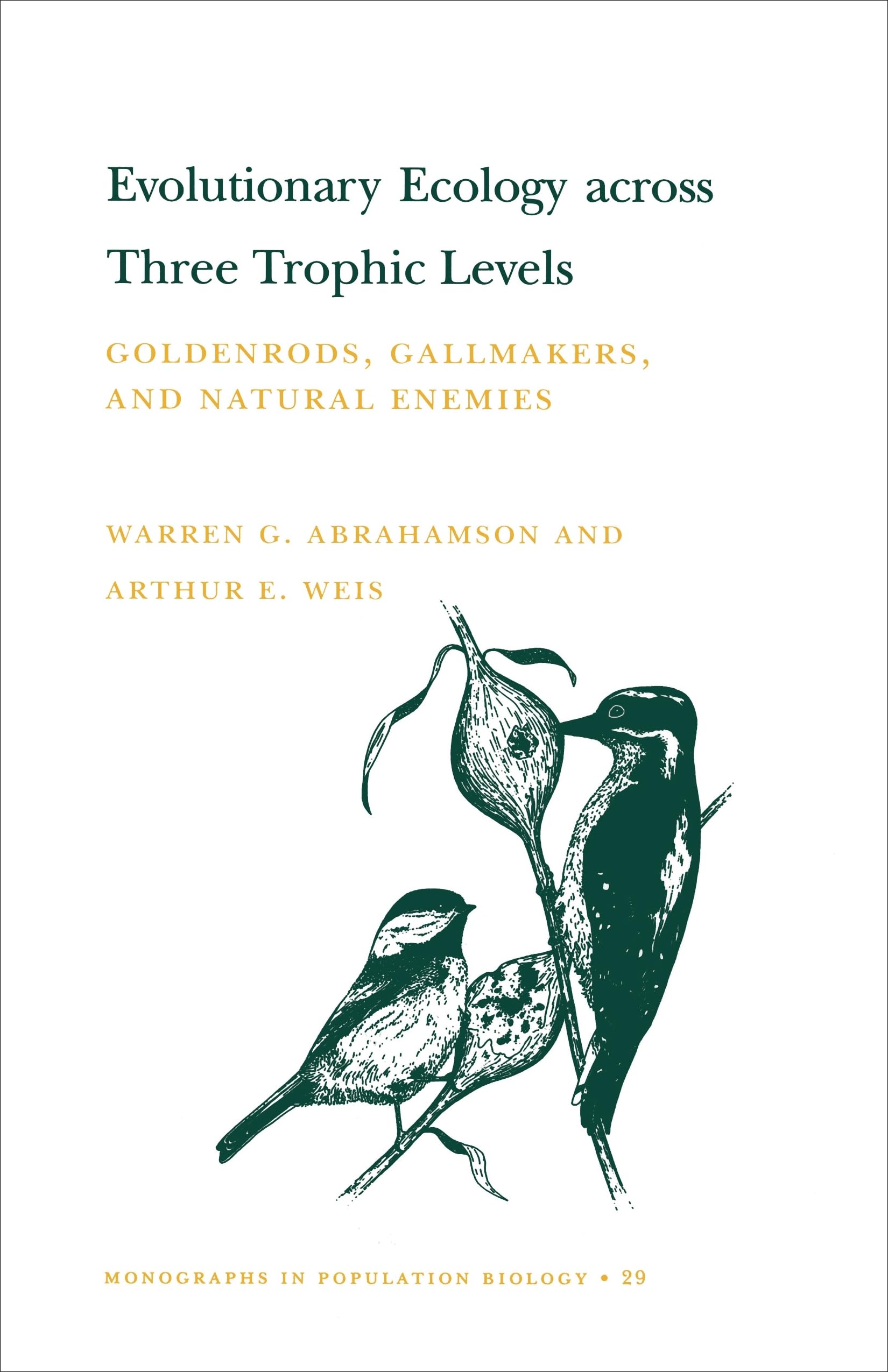
Evolutionary Ecology across Three Trophic Levels,Used
Sold by Ergodebooks, an authorized reseller.
Returns accepted within 30 days | support@ergodebooks.com
Shipping Information
- Free Standard Shipping — United States only
- Processing Time: 3–5 business days
- Estimated Delivery: 6–10 business days after dispatch
- Double-boxed, fully insured & discreetly packaged
- Tracking number sent via email once dispatched
Returns & Refund
Returns accepted within 30 days of delivery.
Damaged or Defective Item
Free return shipping + replacement or full refund
Wrong Item Received
Free return shipping + replacement or full refund
Change of Mind
Return shipping at customer's expense · 25% restocking fee applies
Payment Option

In a work that will interest researchers in ecology, genetics, botany, entomology, and parasitology, Warren Abrahamson and Arthur Weis present the results of more than twentyfive years of studying plantinsect interactions. Their study centers on the ecology and evolution of interactions among a host plant, the parasitic insect that attacks it, and the suite of insects and birds that are the natural enemies of the parasite. Because this system provides a model that can be subjected to experimental manipulations, it has allowed the authors to address specific theories and concepts that have guided biological research for more than two decades and to engage general problems in evolutionary biology.The specific subjects of research are the host plant goldenrod (Solidago), the parasitic insect Eurosta solidaginis (Diptera: Tephritidae) that induces a gall on the plant stem, and a number of natural enemies of the gallfly. By presenting their detailed empirical studies of the SolidagoEurosta natural enemy system, the authors demonstrate the complexities of specialized enemyvictim interactions and, thereby, the complex interactive relationships among species more broadly. By utilizing a diverse array of field, laboratory, behavioral, genetic, chemical, and statistical techniques, Abrahamson and Weis present the most thorough study to date of a single system of interacting species. Their interest in the evolutionary ecology of plantinsect interactions leads them to insights on the evolution of species interactions in general. This major work will interest anyone involved in studying the ways in which interdependent species interact.
⚠️ WARNING (California Proposition 65):
This product may contain chemicals known to the State of California to cause cancer, birth defects, or other reproductive harm.
For more information, please visit www.P65Warnings.ca.gov.