
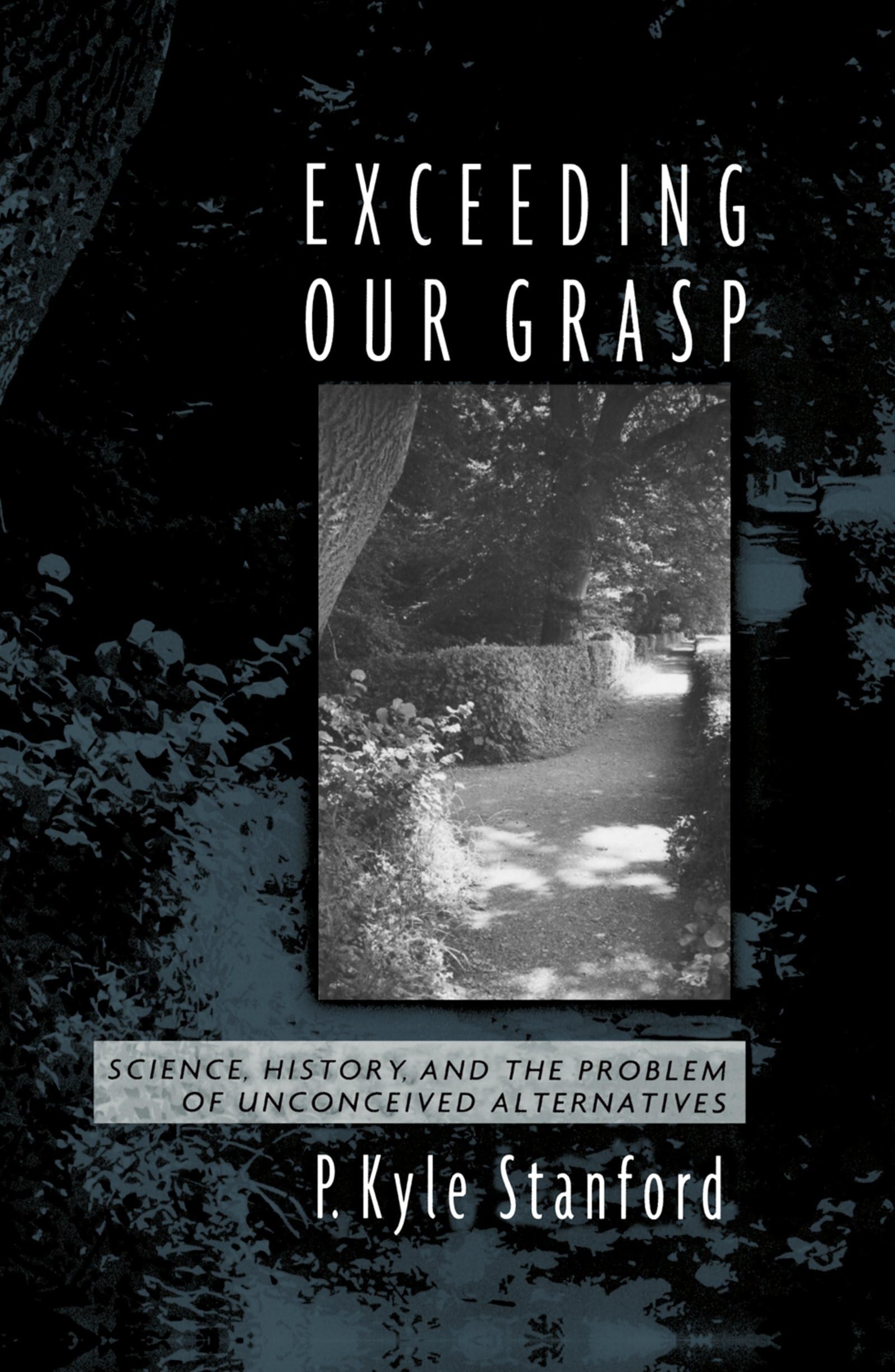
Title
Exceeding Our Grasp: Science, History, and the Problem of Unconceived Alternatives,Used
Sold by Ergodebooks, an authorized reseller.
Returns accepted within 30 days | support@ergodebooks.com
Shipping Information
- Free Standard Shipping — United States only
- Processing Time: 3–5 business days
- Estimated Delivery: 6–10 business days after dispatch
- Double-boxed, fully insured & discreetly packaged
- Tracking number sent via email once dispatched
Returns & Refund
Returns accepted within 30 days of delivery.
Damaged or Defective Item
Free return shipping + replacement or full refund
Wrong Item Received
Free return shipping + replacement or full refund
Change of Mind
Return shipping at customer's expense · 25% restocking fee applies
Payment Option

The historical record of scientific inquiry, Stanford suggests, is characterized by what he calls the problem of unconceived alternatives. Past scientists have routinely failed even to conceive of alternatives to their own theories and lines of theoretical investigation, alternatives that were both wellconfirmed by the evidence available at the time and sufficiently serious as to be ultimately accepted by later scientific communities. Stanford supports this claim with a detailed investigation of the midtolate 19th century theories of inheritance and generation proposed in turn by Charles Darwin, Francis Galton, and August Weismann. He goes on to argue that this historical pattern strongly suggests that there are equally wellconfirmed and scientifically serious alternatives to our own best theories that remain currently unconceived. Moreover, this challenge is more serious than those rooted in either the socalled pessimistic induction or the underdetermination of theories by evidence, in part because existing realist responses to these latter challenges offer no relief from the problem of unconceived alternatives itself.Stanford concludes by investigating what positive account of the spectacularly successful edifice of modern theoretical science remains open to us if we accept that our best scientific theories are powerful conceptual tools for accomplishing our practical goals, but abandon the view that the descriptions of the world around us that they offer are therefore even probably or approximately true.'Stanford has genuinely advanced the philosophical discussion about scientific realism with his careful articulation of the problem of unconceived alternatives.' The Review of Metaphysics'Stanford's book deserves to be widely read. Its central argument is clearly stated, its conclusion is radical, it engages in a productive fashion with detailed case studies, and it lays down several substantial challenges to scientific realism. Lastly, it is consistently thoughtprovoking.'Science
⚠️ WARNING (California Proposition 65):
This product may contain chemicals known to the State of California to cause cancer, birth defects, or other reproductive harm.
For more information, please visit www.P65Warnings.ca.gov.