
Title
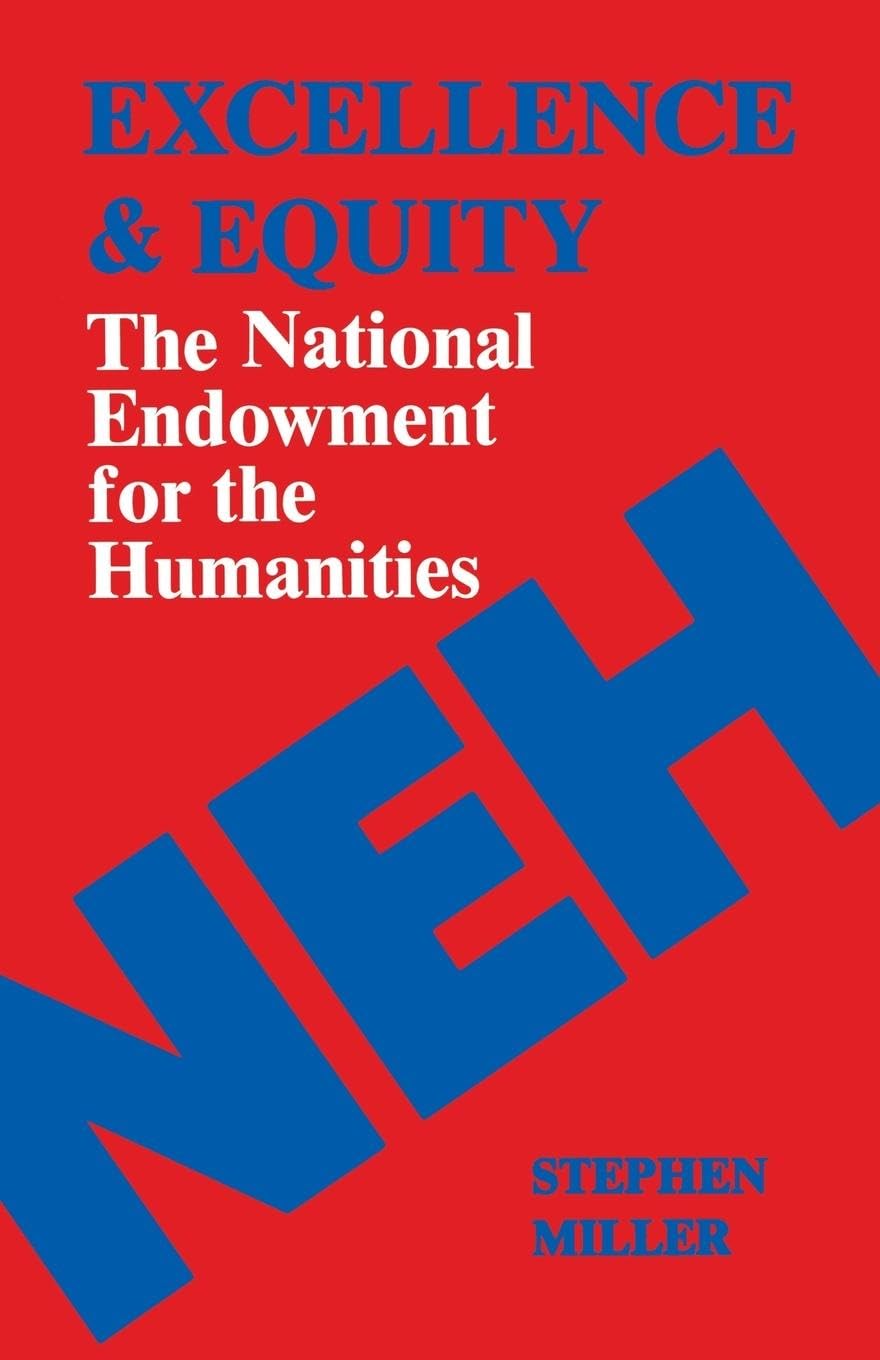
Excellence And Equity: The National Endowment For The Humanities,Used
Sold by Ergodebooks, an authorized reseller.
Returns accepted within 30 days | support@ergodebooks.com
Shipping Information
- Free Standard Shipping — United States only
- Processing Time: 3–5 business days
- Estimated Delivery: 6–10 business days after dispatch
- Double-boxed, fully insured & discreetly packaged
- Tracking number sent via email once dispatched
Returns & Refund
Returns accepted within 30 days of delivery.
Damaged or Defective Item
Free return shipping + replacement or full refund
Wrong Item Received
Free return shipping + replacement or full refund
Change of Mind
Return shipping at customer's expense · 25% restocking fee applies
Payment Option

Since its establishment in 1965 the National Endowment for the Humanities has distributed many millions of dollars in grants. Has the money been well spent? What impact have the Endowment's programs had on the academic community, the schools, and the public at large?In this first booklength study of the Endowment, Stephen Miller offers a trenchant analysis of the agency's origins, its accomplishments, and the criticisms leveled against it. In the political maneuvering that led to its establishment, Miller sees a basic misunderstanding between those in academia who lobbied for NEH and those in Congress who were its most enthusiastic supporters. The inevitable result was a confused mandate that has made the work of the Endowment and the policies of its four chairmen the focus of congressional and public criticism.One group of critics has found NEH too elitistawarding too many grants to scholars at a few major universities. Others have regarded it as too populistexpending too much on organizations that have little to do with the humanities. Still others regard its programs as simply a waste of the taxpayers' money.Excellence and Equity explores the continuing political controversy surrounding NEH and its chairmen and assesses in detail its impact on the humanities in four major program areas: research, teaching, preservation, and public programs. The book concludes with recommendations for restructuring the Endowment, for revising its review procedures, and for improving the process by which its chairman is selected. Only through such changes, Miller argues, can we hope to foster humanistic scholarship in the coming decades.
⚠️ WARNING (California Proposition 65):
This product may contain chemicals known to the State of California to cause cancer, birth defects, or other reproductive harm.
For more information, please visit www.P65Warnings.ca.gov.