
Title
Exclusion And Hierarchy: Orthodoxy, Nonobservance, And The Emergence Of Modern Jewish Identity (Jewish Culture And Contexts),Used
Sold by Ergodebooks, an authorized reseller.
Returns accepted within 30 days | support@ergodebooks.com
Shipping Information
- Free Standard Shipping — United States only
- Processing Time: 3–5 business days
- Estimated Delivery: 6–10 business days after dispatch
- Double-boxed, fully insured & discreetly packaged
- Tracking number sent via email once dispatched
Returns & Refund
Returns accepted within 30 days of delivery.
Damaged or Defective Item
Free return shipping + replacement or full refund
Wrong Item Received
Free return shipping + replacement or full refund
Change of Mind
Return shipping at customer's expense · 25% restocking fee applies
Payment Option

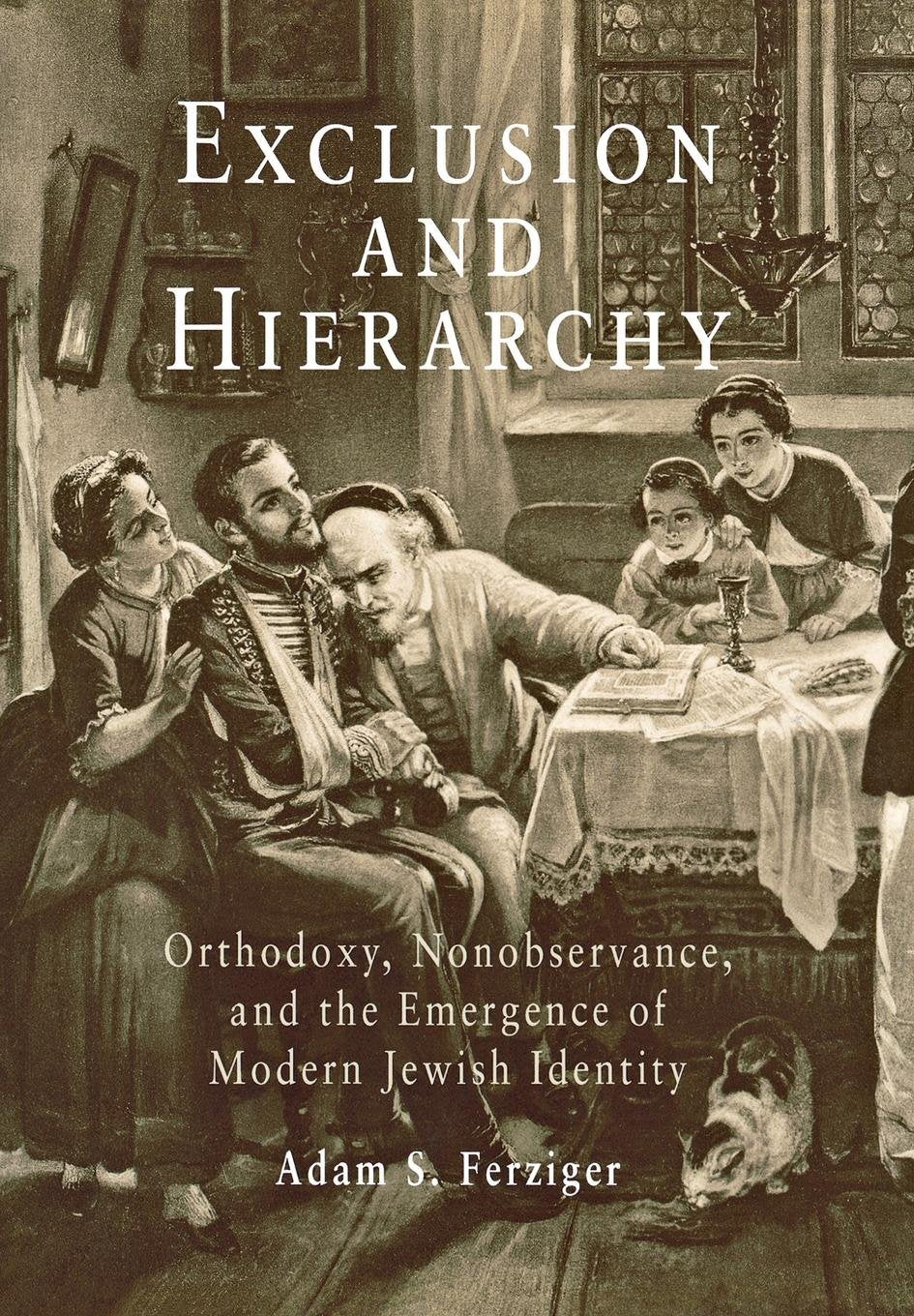
Following the Jewish Enlightenment, many eighteenthcentury Jews chose not to observe the religious laws and customs that had earlier marked them as culturally different from their Christian peers. As the Jewish population became increasingly assimilated, an ultraorthodox movement also emerged, creating a discrete identity for a group within the Jewish community that opted not to move toward the mainstream but instead to embrace the traditional laws.By tracing the evolution of the approach of the Orthodox to their nonpracticing brethren, Adam S. Ferziger sheds new light on the emergence of Orthodoxy as a specific movement within modern Jewish society. In the course of this process, German Orthodoxy in particular articulated a new hierarchical vision of Jewish identity and the structure of modern Jewish society. Viewing Orthodox Judaism as no less a nineteenthcentury phenomenon than Reform Judaism or Zionism, Ferziger looks at the ways it defined itself by its relationship to the nonobservant Jewish population. Ferziger argues that as the Orthodox movement emerged, it rejected the stance that the assimilated and nonobservers were deviant outcasts. Instead, they were accepted as legitimate members of a Jewish community, in which Orthodox Jews occupied the pinnacle, as the guardians of its tradition.This book's contribution, however, moves beyond a historical study of Orthodox Judaism. The sociological methodology that Ferziger employs enables the reader to appreciate how other religious groups have sought to carve out their places within the mosaic of modern society.
⚠️ WARNING (California Proposition 65):
This product may contain chemicals known to the State of California to cause cancer, birth defects, or other reproductive harm.
For more information, please visit www.P65Warnings.ca.gov.