
Title
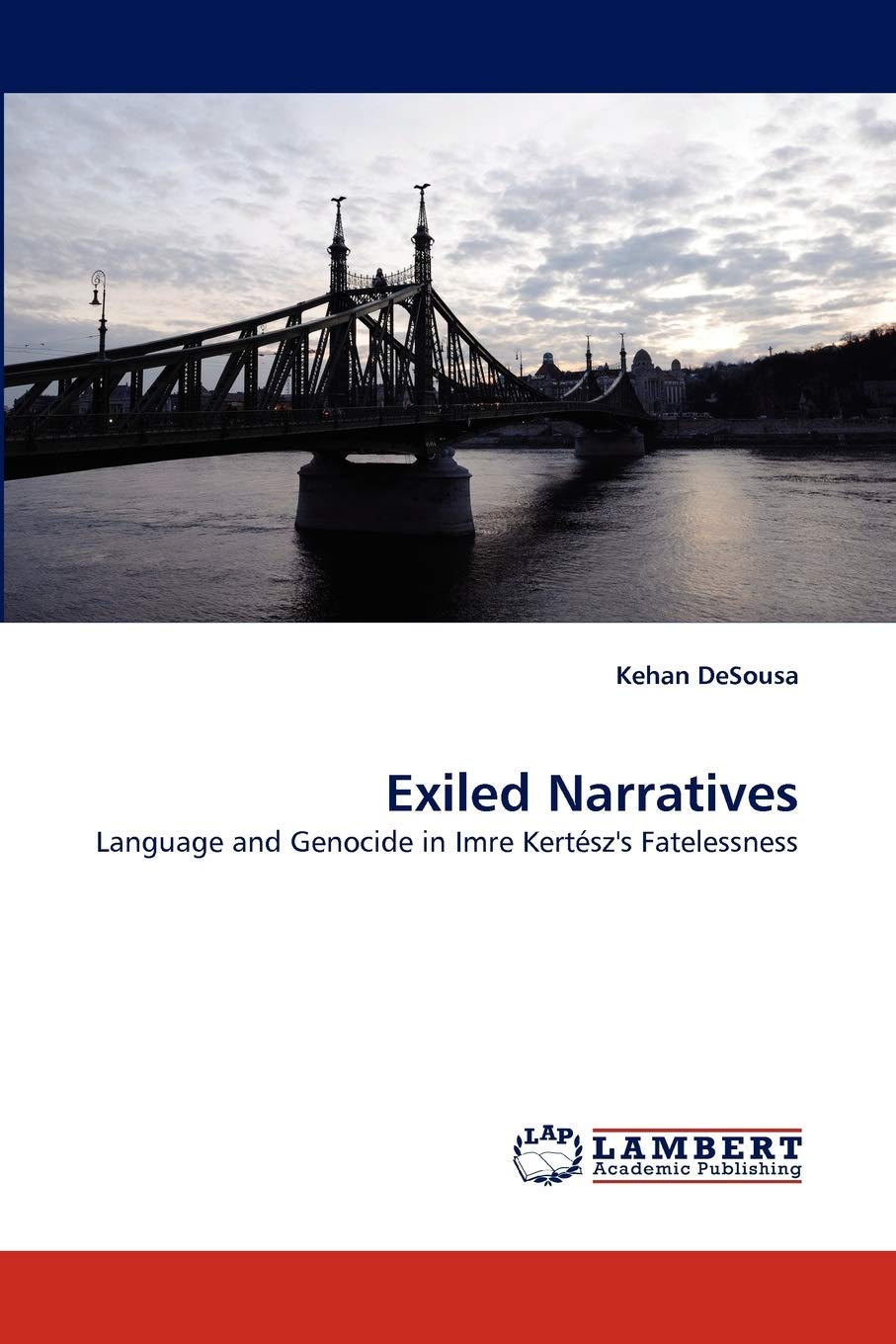
Exiled Narratives: Language and Genocide in Imre Kertsz's Fatelessness,Used
Sold by Ergodebooks, an authorized reseller.
Returns accepted within 30 days | support@ergodebooks.com
Shipping Information
- Free Standard Shipping — United States only
- Processing Time: 3–5 business days
- Estimated Delivery: 6–10 business days after dispatch
- Double-boxed, fully insured & discreetly packaged
- Tracking number sent via email once dispatched
Returns & Refund
Returns accepted within 30 days of delivery.
Damaged or Defective Item
Free return shipping + replacement or full refund
Wrong Item Received
Free return shipping + replacement or full refund
Change of Mind
Return shipping at customer's expense · 25% restocking fee applies
Payment Option

Western culture has for years privileged only the highly visible, commodified narratives of the Holocaust, sacrificing a crucial lens for gazing at the Holocaust's buried narratives. This essay examines the function of language in one such narrative, Imre Kertesz's Fatelessness, the story of a young Hungarian's experiences in concentration camps. Here, language is the tool for fate's imposition?the imposition of an identity and a future upon an individual that does not cohere with his experience. Since language provides the mechanism for the unwinding of a hostile fate, language becomes an inadequate vehicle of communication?but one with no alternative. Declaring language utterly incapable or, conversely, without fault, is an oversimplification of language's more subtle intersection with society.Contextualizing these ideas, this essay focuses on the concept of the buried narrative, and the importance of buried narratives in light of the Holocaust's importance in shaping the normative standard for genocide. This study sheds new light on the use of language during the Holocaust for historians, literature scholars, and students of the Holocaust.
⚠️ WARNING (California Proposition 65):
This product may contain chemicals known to the State of California to cause cancer, birth defects, or other reproductive harm.
For more information, please visit www.P65Warnings.ca.gov.