
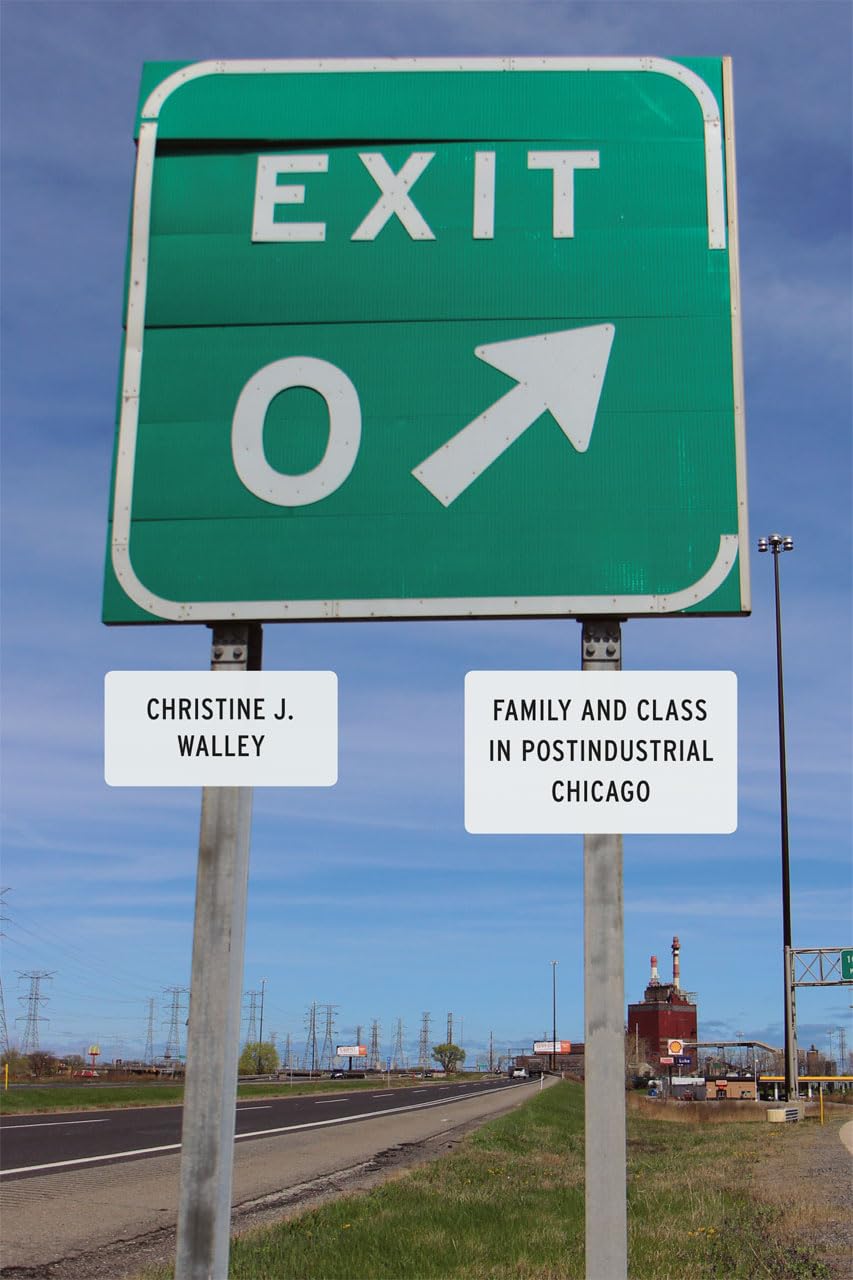
Title
Exit Zero: Family And Class In Postindustrial Chicago,New
Sold by Ergodebooks, an authorized reseller.
Returns accepted within 30 days | support@ergodebooks.com
Shipping Information
- Free Standard Shipping — United States only
- Processing Time: 3–5 business days
- Estimated Delivery: 6–10 business days after dispatch
- Double-boxed, fully insured & discreetly packaged
- Tracking number sent via email once dispatched
Returns & Refund
Returns accepted within 30 days of delivery.
Damaged or Defective Item
Free return shipping + replacement or full refund
Wrong Item Received
Free return shipping + replacement or full refund
Change of Mind
Return shipping at customer's expense · 25% restocking fee applies
Payment Option

Winner Of Clr James Book Prize From The Working Class Studies Association And 2Nd Place For The Victor Turner Prize In Ethnographic Writing.In 1980, Christine J. Walleys World Was Turned Upside Down When The Steel Mill In Southeast Chicago Where Her Father Worked Abruptly Closed. In The Ensuing Years, Ninety Thousand Other Area Residents Would Also Lose Their Jobs In The Millsjust One Example Of The Vast Scale Of Deindustrialization Occurring Across The United States. The Disruption Of This Event Propelled Walley Into A Career As A Cultural Anthropologist, And Now, In Exit Zero, She Brings Her Anthropological Perspective Home, Examining The Fate Of Her Family And That Of Bluecollar America At Large.Interweaving Personal Narratives And Family Photos With A Nuanced Assessment Of The Social Impacts Of Deindustrialization, Exit Zero Is One Part Memoir And One Part Ethnography Providing A Muchneeded Female And Familial Perspective On Cultures Of Labor And Their Decline. Through Vivid Accounts Of Her Familys Struggles And Her Own Upward Mobility, Walley Reveals The Social Landscapes Of Americas Industrial Fallout, Navigating Complex Tensions Among Class, Labor, Economy, And Environment. Unsatisfied With The Notion That Her Familys Turmoil Was Inevitable In The Everforward Progress Of The United States, She Provides A Fresh And Important Counternarrative That Gives A New Voice To The Many Americans Whose Distress Resulting From Deindustrialization Has Too Often Been Ignored.This Book Is Part Of A Project That Also Includes A Documentary Film.
⚠️ WARNING (California Proposition 65):
This product may contain chemicals known to the State of California to cause cancer, birth defects, or other reproductive harm.
For more information, please visit www.P65Warnings.ca.gov.
- Q: What is the page count of 'Exit Zero'? A: The book contains two hundred sixteen pages. This length provides a comprehensive exploration of the themes of family and class in postindustrial Chicago.
- Q: What are the dimensions of 'Exit Zero'? A: The book measures eight point nine inches in length, six inches in width, and zero point six inches in height. These dimensions make it a convenient size for reading and handling.
- Q: What binding type does 'Exit Zero' have? A: This book is available in paperback binding. Paperback editions are typically more flexible and lightweight compared to hardcover versions.
- Q: How do I read 'Exit Zero'? A: You can read 'Exit Zero' by purchasing it online or at a bookstore. It is suitable for anyone interested in cultural anthropology and the impacts of deindustrialization.
- Q: Is 'Exit Zero' suitable for academic study? A: Yes, 'Exit Zero' is suitable for academic study. It provides insights into industrial relations and cultural anthropology, making it a valuable resource for students.
- Q: What audience is 'Exit Zero' intended for? A: The book is intended for adult readers, particularly those interested in sociology and labor studies. It tackles complex themes relevant to societal changes.
- Q: How should I store 'Exit Zero' to keep it in good condition? A: Store 'Exit Zero' in a cool, dry place, away from direct sunlight. This helps preserve the book's physical condition and prevents damage to the pages.
- Q: Can I clean 'Exit Zero' if it gets dirty? A: Yes, you can clean 'Exit Zero' gently. Use a soft, dry cloth to wipe the cover, avoiding any liquids that could damage the pages.
- Q: What should I do if 'Exit Zero' arrives damaged? A: If 'Exit Zero' arrives damaged, contact the retailer for a return or exchange. Most retailers have policies in place for damaged items.
- Q: Is 'Exit Zero' a memoir or an academic text? A: Exit Zero is both a memoir and an academic text. It combines personal narratives with ethnographic analysis, providing a dual perspective on labor culture.
- Q: How does 'Exit Zero' compare to other books on deindustrialization? A: Exit Zero offers a unique female perspective on deindustrialization, contrasting with many other texts that might focus solely on economic data or male narratives.
- Q: What makes 'Exit Zero' a unique read? A: The combination of personal narrative and ethnography makes 'Exit Zero' unique. It explores the intersection of family, class, and labor in a compelling way.
- Q: Are there any other works related to 'Exit Zero'? A: Yes, 'Exit Zero' is part of a project that includes a documentary film. This film further explores the themes discussed in the book.
- Q: What genre does 'Exit Zero' belong to? A: Exit Zero is categorized under Industrial Relations and Cultural Anthropology. It provides insights into the societal impacts of industrial decline.
- Q: Who is the author of 'Exit Zero'? A: The author of 'Exit Zero' is Christine J. Walley. She draws from her personal experiences and academic background in anthropology.
- Q: Is 'Exit Zero' appropriate for younger readers? A: No, 'Exit Zero' is primarily intended for adult readers. The themes of labor, class, and socio-economic issues may not be suitable for younger audiences.