
Title
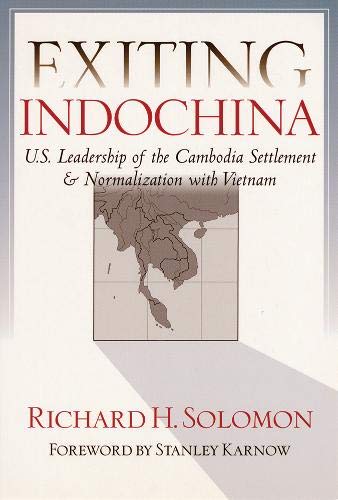
Exiting Indochina: U.S. Leadership Of The Cambodia Settlement & Normalization With Vietnam
Sold by Ergodebooks, an authorized reseller.
Returns accepted within 30 days | support@ergodebooks.com
Shipping Information
- Free Standard Shipping — United States only
- Processing Time: 3–5 business days
- Estimated Delivery: 6–10 business days after dispatch
- Double-boxed, fully insured & discreetly packaged
- Tracking number sent via email once dispatched
Returns & Refund
Returns accepted within 30 days of delivery.
Damaged or Defective Item
Free return shipping + replacement or full refund
Wrong Item Received
Free return shipping + replacement or full refund
Change of Mind
Return shipping at customer's expense · 25% restocking fee applies
Payment Option

Includes A Foreword By Stanley Karnow. For Most Americans, The Exit From Indochina Occurred In 1973, When The Last U.S. Soldiers Were Evacuated From The Roof Of The Embassy In Saigon. In Fact, The Final Exit Did Not Occur Until Two Decades Later, After The Collapse Of The Republic Of Vietnam In 1975, The Cambodian Revolution, And A Decade Of Vietnamese Occupation Of Cambodia. Only In The Early 1990S Were The Major Powers Able To Negotiate A Settlement Of The Cambodia Conflict And Withdraw From The Region.This Book Recounts The Diplomacy That Brought An End To Great Power Involvement In Indochina, Including The Negotiations For A Un Peace Process In Cambodia And Construction Of A Road Map For Normalizing U.S.Vietnam Relations. In So Doing, This Volume Also Highlights The Changing Character Of Diplomacy At The Beginning Of The 1990S, When, At Least Temporarily, An Era Of Military Confrontation Among The Major World Powers Gave Way To Political Management Of International Conflicts.
⚠️ WARNING (California Proposition 65):
This product may contain chemicals known to the State of California to cause cancer, birth defects, or other reproductive harm.
For more information, please visit www.P65Warnings.ca.gov.
- Q: What is the main topic of 'Exiting Indochina'? A: 'Exiting Indochina' discusses the U.S. leadership in the Cambodia settlement and the normalization of relations with Vietnam, focusing on the diplomatic efforts and negotiations that took place from the 1970s into the early 1990s.
- Q: Who is the author of this book? A: The book is authored by Richard H. Solomon, who provides insights into the complexities of U.S. foreign policy in Indochina.
- Q: What is the condition of the book listed for sale? A: The book is categorized as 'Used Book in Good Condition,' meaning it may show signs of wear but is still fully functional for reading.
- Q: How many pages does the book have? A: 'Exiting Indochina' contains a total of 136 pages, providing a concise exploration of its subject matter.
- Q: What is the binding type of this book? A: The book is available in paperback binding, which is common for trade publications.
- Q: When was 'Exiting Indochina' published? A: The book was published on January 1, 2000.
- Q: Does the book include any special features? A: Yes, the book includes a foreword by Stanley Karnow, adding context and authority to the subject discussed.
- Q: Is this book suitable for someone interested in military history? A: Yes, the book is categorized under 'Vietnam War' and is suitable for readers interested in military history and U.S. foreign relations.
- Q: What kind of insights does the book provide about U.S.-Vietnam relations? A: The book highlights the negotiations and diplomatic strategies that led to the normalization of relations between the U.S. and Vietnam, marking a shift from military confrontation to political engagement.
- Q: Can this book be useful for academic purposes? A: Yes, it can serve as a valuable resource for students and researchers studying U.S. foreign policy, diplomacy, and the historical context of the Vietnam War.