
Title
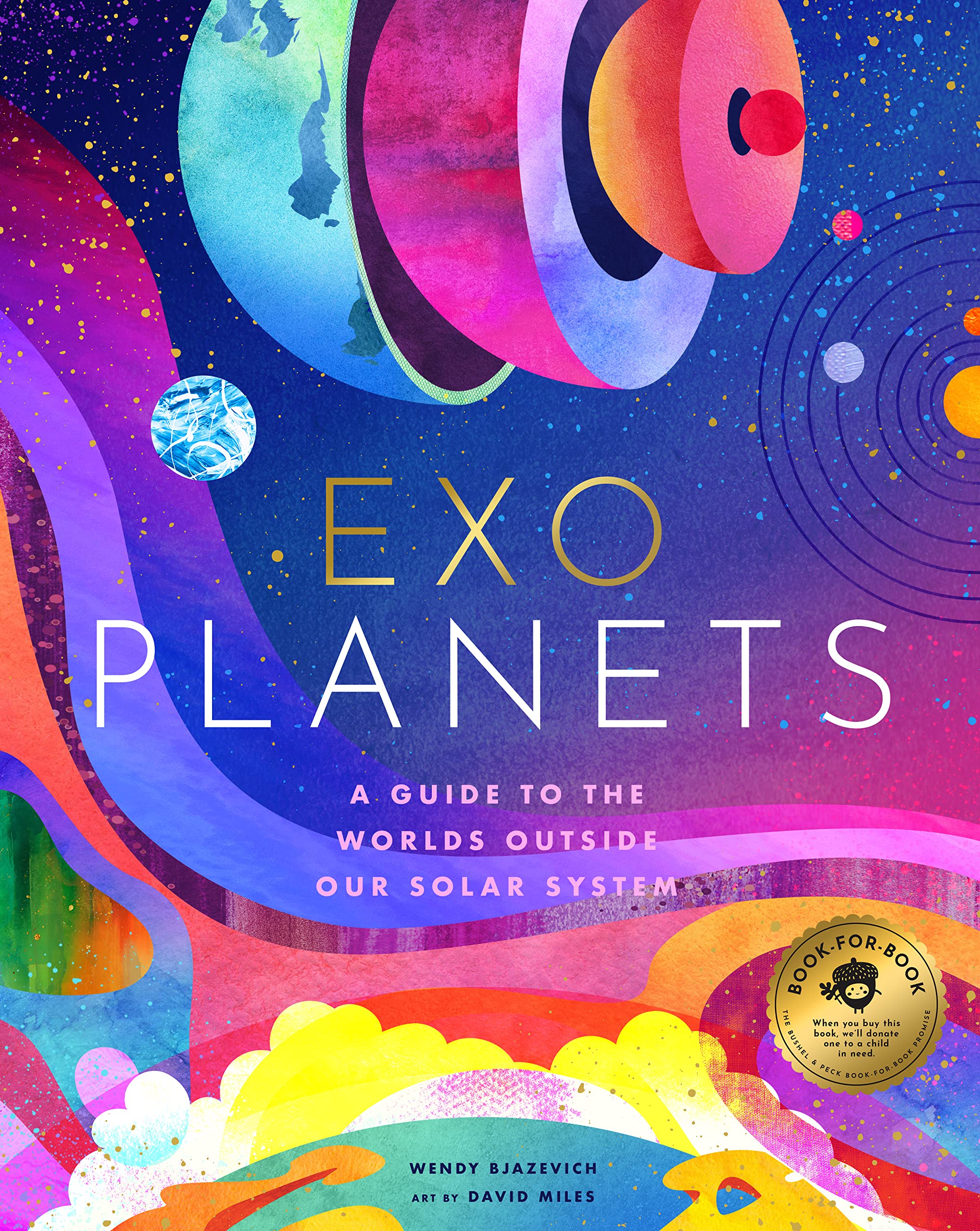
Exoplanets: A Visual Guide To The Worlds Outside Our Solar System,Used
Sold by Ergodebooks, an authorized reseller.
Returns accepted within 30 days | support@ergodebooks.com
Shipping Information
- Free Standard Shipping — United States only
- Processing Time: 3–5 business days
- Estimated Delivery: 6–10 business days after dispatch
- Double-boxed, fully insured & discreetly packaged
- Tracking number sent via email once dispatched
Returns & Refund
Returns accepted within 30 days of delivery.
Damaged or Defective Item
Free return shipping + replacement or full refund
Wrong Item Received
Free return shipping + replacement or full refund
Change of Mind
Return shipping at customer's expense · 25% restocking fee applies
Payment Option

You know all about the planets near Earth, but what about the planets outside our solar system? How are they discovered? Could there be life? Find out in Exoplanets!The saturated colors of pop art marry with swirling watercolors and sharp geometric shapes in this picture book thats perfect for budding scientists.Foreword ReviewsNASA has confirmed the existence of over 5,000 exoplanets (planets that lie outside of our solar system), and that number is growing! Exoplanets, the first book of its kind for kids, is a visually packed guidebook to the exoplanets of our universe. Youll learn the four main types of exoplanets, techniques scientists use to discover them, the probability of finding life as we know it beyond Earth, plus detailed information about dozens of some of the most fascinating exoplanets discovered so far, from water worlds to planets that are literally evaporating! Its a thrilling journey, and it all begins in Exoplanets!From NASA.gov:The 5,000plus planets found so far include small, rocky worlds like Earth, gas giants many times larger than Jupiter, and hot Jupiters in scorchingly close orbits around their stars. There are superEarths, which are possible rocky worlds bigger than our own, and miniNeptunes, smaller versions of our systems Neptune. Add to the mix planets orbiting two stars at once and planets stubbornly orbiting the collapsed remnants of dead stars.Its not just a number, said Jessie Christiansen, science lead for the archive and a research scientist with the NASA Exoplanet Science Institute at Caltech in Pasadena. Each one of them is a new world, a brandnew planet. I get excited about every one because we dont know anything about them.
⚠️ WARNING (California Proposition 65):
This product may contain chemicals known to the State of California to cause cancer, birth defects, or other reproductive harm.
For more information, please visit www.P65Warnings.ca.gov.