If you have any questions, you are always welcome to contact us. We'll get back to you as soon as possible, withing 24 hours on weekdays.
Customer service
All questions about your order, return and delivery must be sent to our customer service team by e-mail at yourstore@yourdomain.com
Sale & Press
If you are interested in selling our products, need more information about our brand or wish to make a collaboration, please contact us at press@yourdomain.com
Help
If you have any questions, you are always welcome to contact us. We'll get back to you as soon as possible, withing 24 hours on weekdays.
Customer service
All questions about your order, return and delivery must be sent to our customer service team by e-mail at yourstore@yourdomain.com
Sale & Press
If you are interested in selling our products, need more information about our brand or wish to make a collaboration, please contact us at press@yourdomain.com
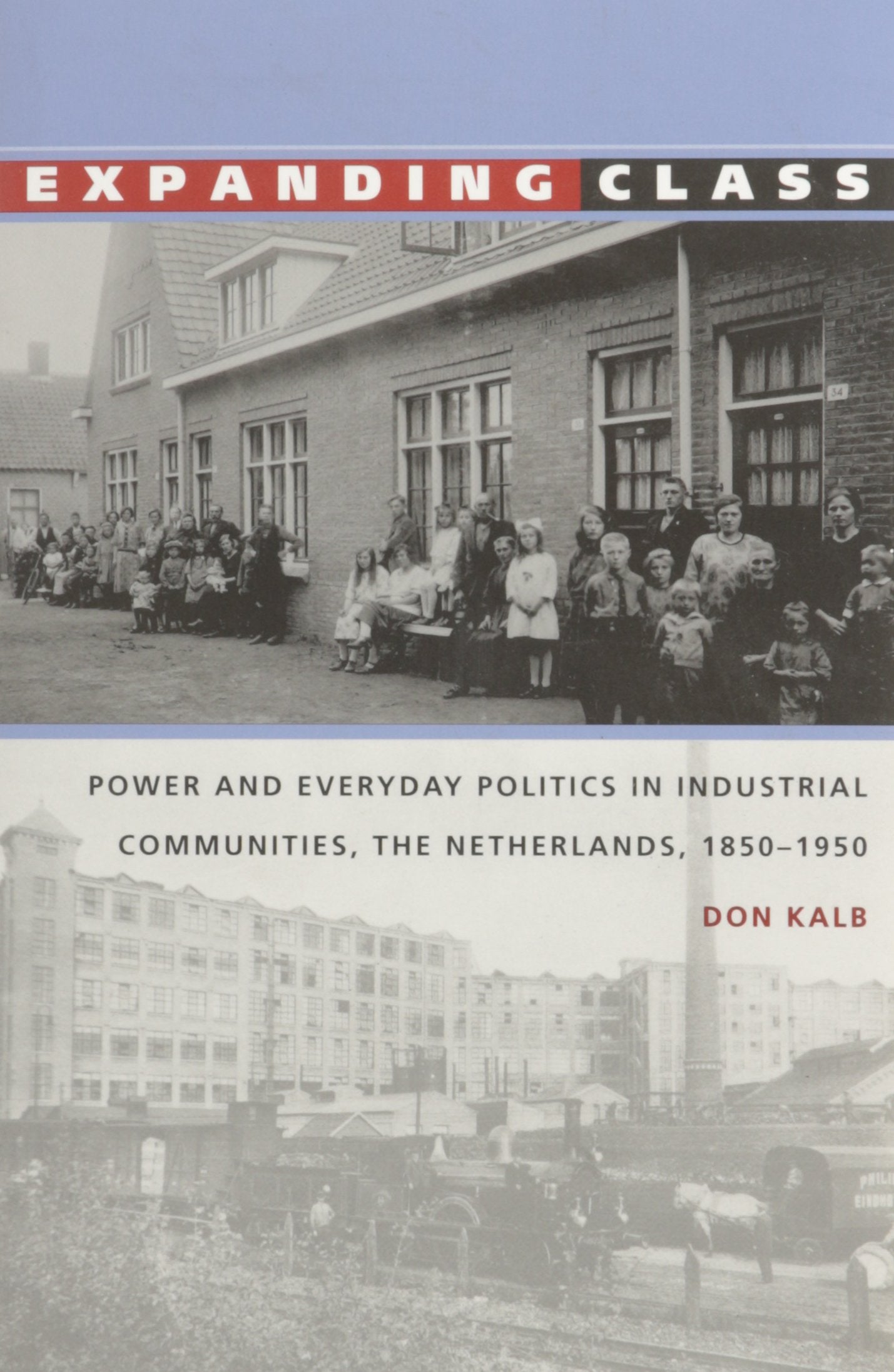
Expanding Class is the study and story of industrial class relations in North Brabant, a Catholic province of The Netherlands, over a hundredyear period. In examining the lives of workers in one of Europes more idiosyncratic industrial regions, Don Kalb affirms the utility of class analysis while responding to the cultural critics who have encouraged a movement away from this focus in labor history. In so doing, Expanding Class advances an interdisciplinary historical anthropology of workingclass formation. Basing his analysis on oral as well as archival sources, Kalb reveals a dynamic relationship between capitalist industrialization, locality, and cultural class identities.Expanding Class compares Brabants quaint central shoemaking district to its electrical boomtown Eindhoven, home of the enormous Philips Corporation. It introduces the concept of 'flexible familism,' a sociological phenomenon in which family daughters were employed to facilitate a cheap and ample labor force. Industrialists manipulated and fostered flexible familism to ensure the discipline and loyalty of the workingclass community. By using the industrial Netherlands as a paradigm, Kalb reveals new and productive ways to examine class construction and the development of labor history in other countries over the past thirty years, steering a path between the two schools of thoughtcultural and economicthat have dominated labor history discussions in recent years.
⚠️ WARNING (California Proposition 65):
This product may contain chemicals known to the State of California to cause cancer,
birth defects, or other reproductive harm.
For MAP (Minimum Advertised Price) violations and Intellectual Property (IP) or Trademark concerns, please contact:
support@ergodebooks.com
⚠️ California Proposition 65 Warning: Some products sold on this website may expose you to chemicals known to the State of California to cause cancer, birth defects, or other reproductive harm. For more information, visit www.P65Warnings.ca.gov.