If you have any questions, you are always welcome to contact us. We'll get back to you as soon as possible, withing 24 hours on weekdays.
Customer service
All questions about your order, return and delivery must be sent to our customer service team by e-mail at yourstore@yourdomain.com
Sale & Press
If you are interested in selling our products, need more information about our brand or wish to make a collaboration, please contact us at press@yourdomain.com
Help
If you have any questions, you are always welcome to contact us. We'll get back to you as soon as possible, withing 24 hours on weekdays.
Customer service
All questions about your order, return and delivery must be sent to our customer service team by e-mail at yourstore@yourdomain.com
Sale & Press
If you are interested in selling our products, need more information about our brand or wish to make a collaboration, please contact us at press@yourdomain.com
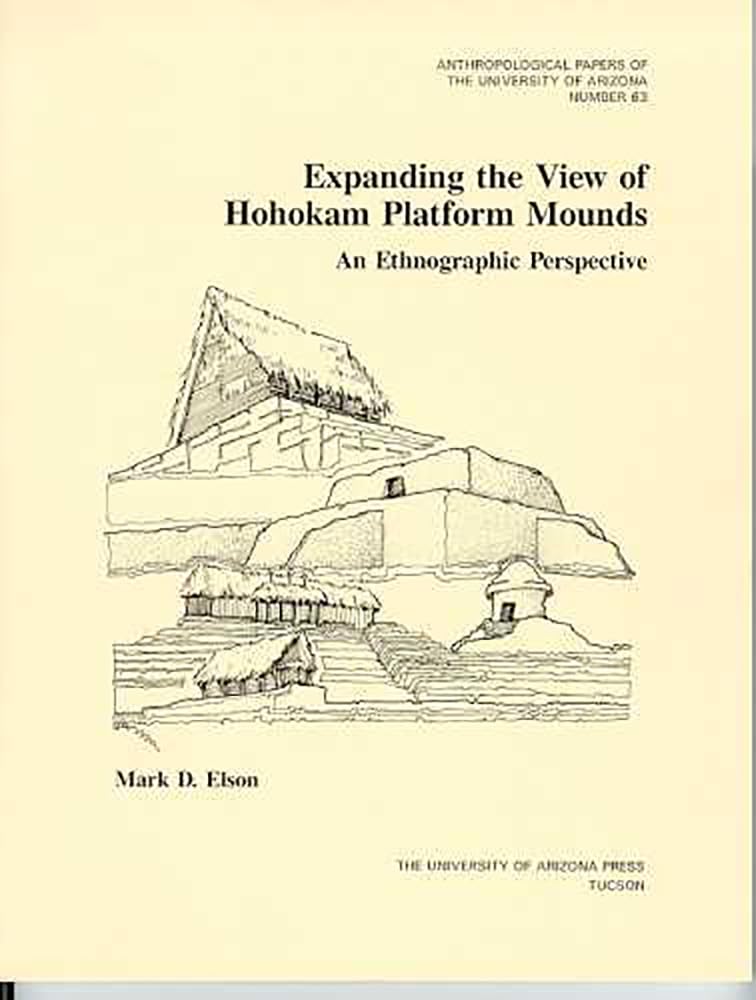
For more than a hundred years, archaeologists have investigated the function of earthen platform mounds in the American Southwest. Built by the Hohokam groups between A.D. 1150 and 1350, these mounds are among the few monumental structures in the Southwest, yet their use and the nature of the groups who built them remain unresolved. Mark Elson now takes a fresh look at these monuments and sheds new light on their significance. He goes beyond previous studies by examining platform mound function and social group organization through a crosscultural study of historic moundusing groups in the Pacific Ocean region, South America, and the southeastern United States.Using this information, he develops a number of important new generalizations about how people used mounds. Elson then applies these data to the study of a prehistoric settlement system in the eastern Tonto Basin of Arizona that contained five platform mounds. He argues that the mounds were used variously as residences and ceremonial facilities by competing descent groups and were an indication of hereditary leadership. They were important in group integration and resource management; after abandonment they served as ancestral shrines. Elson's study provides a fresh approach to an old puzzle and offers new suggestions regarding variability among Hohokam populations. Its innovative use of comparative data and analyses enriches our understanding of both Hohokam culture and other ancient societies.
⚠️ WARNING (California Proposition 65):
This product may contain chemicals known to the State of California to cause cancer,
birth defects, or other reproductive harm.
For MAP (Minimum Advertised Price) violations and Intellectual Property (IP) or Trademark concerns, please contact:
support@ergodebooks.com
⚠️ California Proposition 65 Warning: Some products sold on this website may expose you to chemicals known to the State of California to cause cancer, birth defects, or other reproductive harm. For more information, visit www.P65Warnings.ca.gov.