
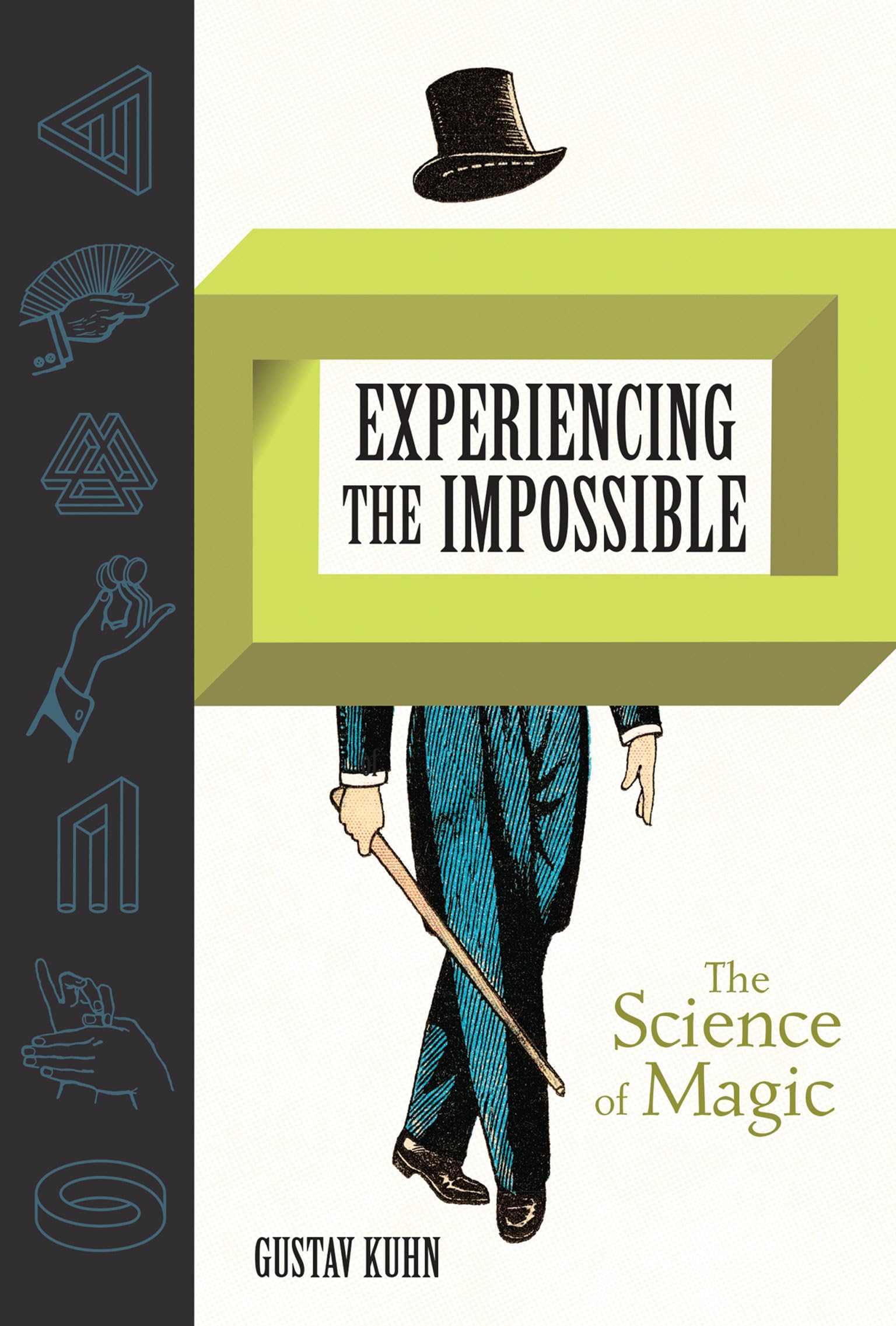
Title
Experiencing the Impossible: The Science of Magic (Mit Press),New
Sold by Ergodebooks, an authorized reseller.
Returns accepted within 30 days | support@ergodebooks.com
Shipping Information
- Free Standard Shipping — United States only
- Processing Time: 3–5 business days
- Estimated Delivery: 6–10 business days after dispatch
- Double-boxed, fully insured & discreetly packaged
- Tracking number sent via email once dispatched
Returns & Refund
Returns accepted within 30 days of delivery.
Damaged or Defective Item
Free return shipping + replacement or full refund
Wrong Item Received
Free return shipping + replacement or full refund
Change of Mind
Return shipping at customer's expense · 25% restocking fee applies
Payment Option

This thoughtprovoking tour through the science of magic will make you question what you know about your brain and your reality.A psychologist and magician shows how the scientific study of magic reveals intriguingand often unsettlinginsights into the mysteries of the human mind.What do we see when we watch a magician pull a rabbit out of a hat or read a persons mind? We are captivated by an illusion; we applaud the fact that we have been fooled. Why do we enjoy experiencing what seems clearly impossible, or at least beyond our powers of explanation? In Experiencing the Impossible, Gustav Kuhn examines the psychological processes that underpin our experience of magic.Kuhn, a psychologist and a magician, reveals the intriguingand often unsettlinginsights into the human mind that the scientific study of magic provides. Magic, Kuhn explains, creates a cognitive conflict between what we believe to be true (for example, a rabbit could not be in that hat) and what we experience (a rabbit has just come out of that hat!). Drawing on the latest psychological, neurological, and philosophical research, he suggests that misdirection is at the heart of all magic tricks, and he offers a scientific theory of misdirection. He explores, among other topics, our propensity for magical thinking, the malleability of our perceptual experiences, forgetting and misremembering, free will and mind control, and how magic is applied outside entertainmentthe use of illusion in humancomputer interaction, politics, warfare, and elsewhere.We may be surprised to learn how little of the world we actually perceive, how little we can trust what we see and remember, and how little we are in charge of our thoughts and actions. Exploring magic, Kuhn illuminates the complexand almost magicalmechanisms underlying our daily activities.
⚠️ WARNING (California Proposition 65):
This product may contain chemicals known to the State of California to cause cancer, birth defects, or other reproductive harm.
For more information, please visit www.P65Warnings.ca.gov.