
Title
Experimenting in Tongues: Studies in Science and Language,Used
Sold by Ergodebooks, an authorized reseller.
Returns accepted within 30 days | support@ergodebooks.com
Shipping Information
- Free Standard Shipping — United States only
- Processing Time: 3–5 business days
- Estimated Delivery: 6–10 business days after dispatch
- Double-boxed, fully insured & discreetly packaged
- Tracking number sent via email once dispatched
Returns & Refund
Returns accepted within 30 days of delivery.
Damaged or Defective Item
Free return shipping + replacement or full refund
Wrong Item Received
Free return shipping + replacement or full refund
Change of Mind
Return shipping at customer's expense · 25% restocking fee applies
Payment Option

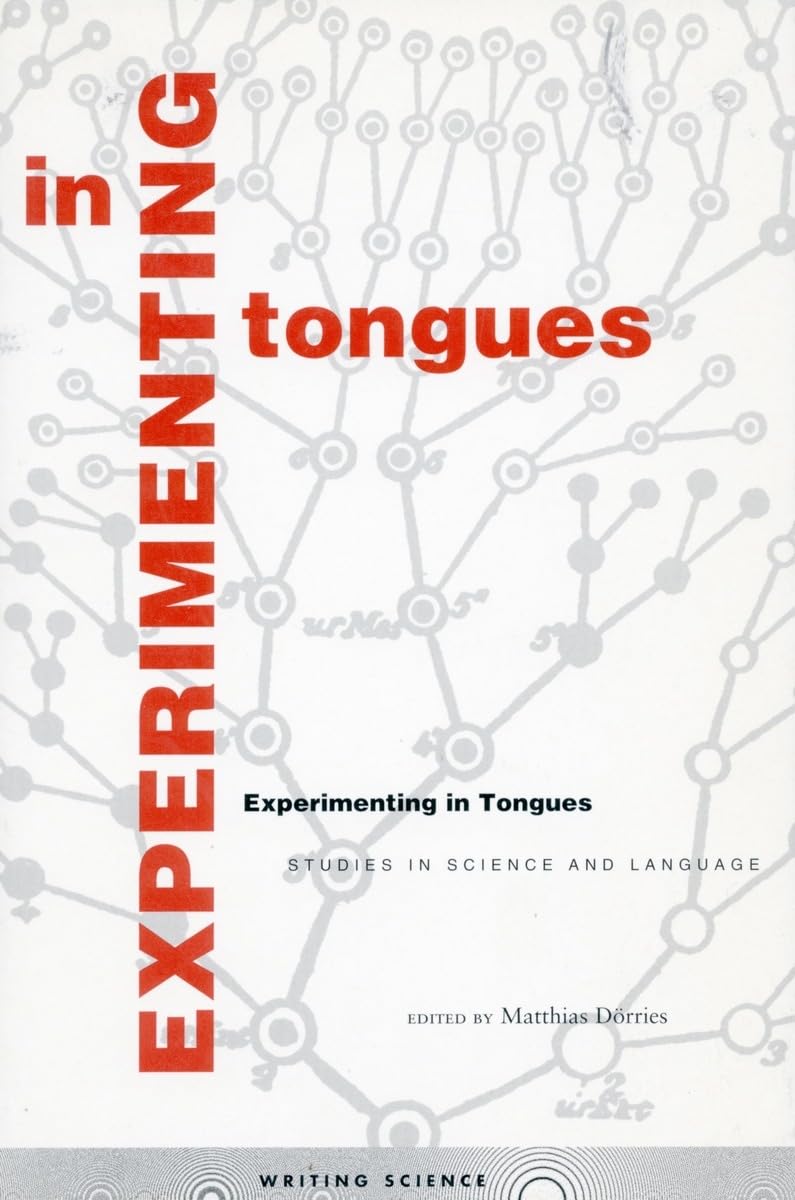
References to language abound in the sciences: biologists speak about reading the human genome and rewriting the genetic code, computer scientists develop programming language, and mathematicians seek a universal symbolic language. What is behind these references to language, and what do they say about how science actually works? This concise but ambitious volume brings together leading scholars in the history of science to address these questions from a variety of perspectives: the historical, methodological, and ideological motivations behind scientists use of language metaphors. In so doing, they ask whether and under what conditions analogies to language gain power, whether and under what conditions they are replaced by more fruitful ones, and, crucially, whether nature ever really operates and develops like a language.Against recent trends in rhetorical studies of science, the essays in the volume resist reducing language to a role as the symbolic embodiment of larger social forces. Instead, they focus on languages productive power as a generator of knowledge. For scientists in various disciplines, language is much more than a means of expression through which they preferentially argue their cases. It is a conceptual tool for scientific inquiry, and the choices scientists make vary over time with their everevolving knowledge about language and, equally, with shifting interests and means of inquiring into nature. The essays thus demonstrate a situation of mutual adaptation between the linguistic and scientific realms, and of continuous adjustments between knowledge about language and knowledge about nature.
⚠️ WARNING (California Proposition 65):
This product may contain chemicals known to the State of California to cause cancer, birth defects, or other reproductive harm.
For more information, please visit www.P65Warnings.ca.gov.