
Title
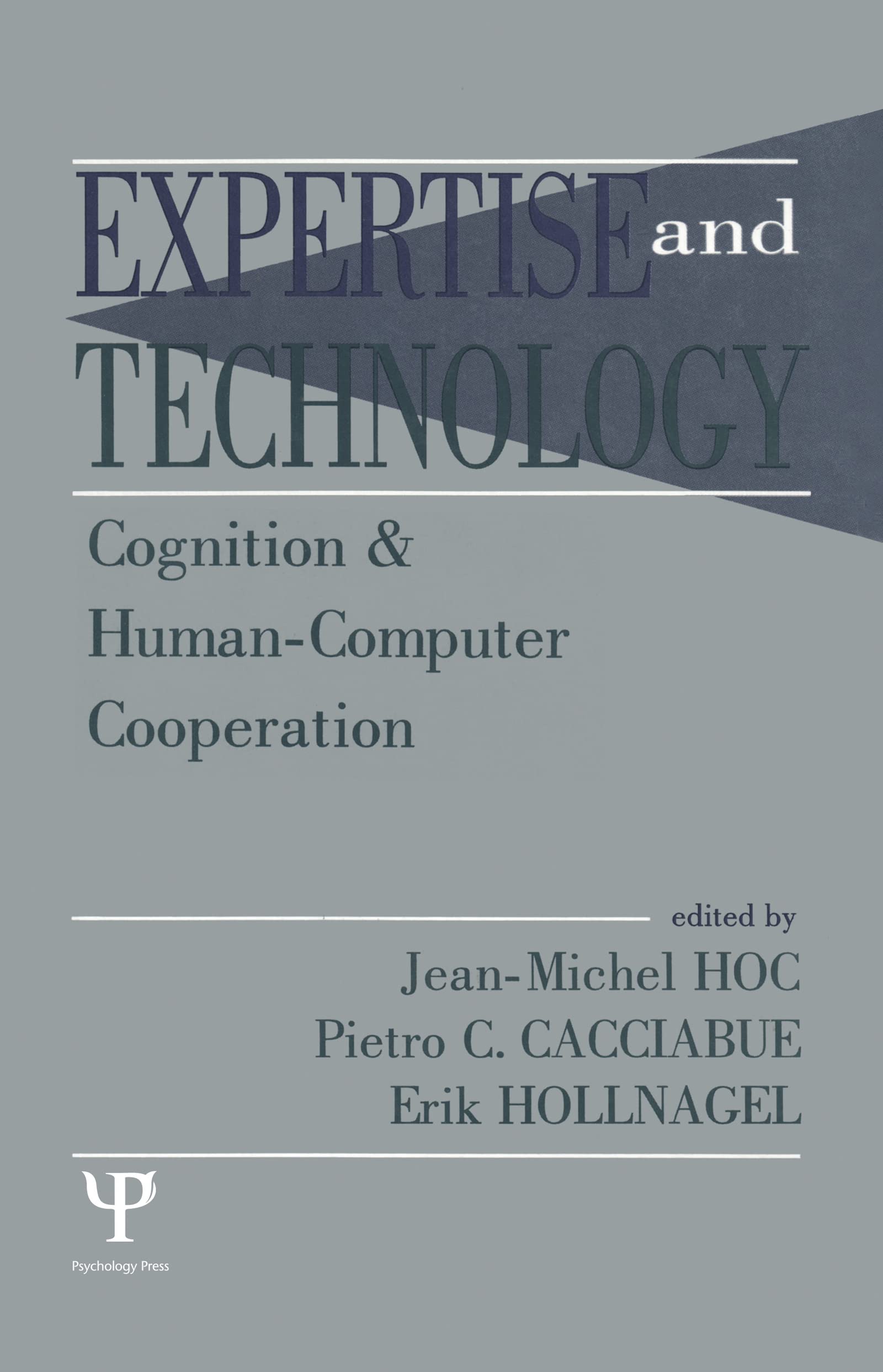
Expertise and Technology: Cognition & Humancomputer Cooperation (Expertise: Research and Applications Series),New
Sold by Ergodebooks, an authorized reseller.
Returns accepted within 30 days | support@ergodebooks.com
Shipping Information
- Free Standard Shipping — United States only
- Processing Time: 3–5 business days
- Estimated Delivery: 6–10 business days after dispatch
- Double-boxed, fully insured & discreetly packaged
- Tracking number sent via email once dispatched
Returns & Refund
Returns accepted within 30 days of delivery.
Damaged or Defective Item
Free return shipping + replacement or full refund
Wrong Item Received
Free return shipping + replacement or full refund
Change of Mind
Return shipping at customer's expense · 25% restocking fee applies
Payment Option

Technological development has changed the nature of industrial production so that it is no longer a question of humans working with a machine, but rather that a joint human machine system is performing the task. This development, which started in the 1940s, has become even more pronounced with the proliferation of computers and the invasion of digital technology in all wakes of working life. It may appear that the importance of human work has been reduced compared to what can be achieved by intelligent software systems, but in reality, the opposite is true: the more complex a system, the more vital the human operator's task. The conditions have changed, however, whereas people used to be in control of their own tasks, today they have become supervisors of tasks which are shared between humans and machines.A considerable effort has been devoted to the domain of administrative and clerical work and has led to the establishment of an internationally based humancomputer interaction (HCI) community at research and application levels. The HCI community, however, has paid more attention to static environments where the human operator is in complete control of the situation, rather than to dynamic environments where changes may occur independent of human intervention and actions.This book's basic philosophy is the conviction that human operators remain the unchallenged experts even in the worst cases where their working conditions have been impoverished by senseless automation. They maintain this advantage due to their ability to learn and build up a high level of expertise a foundation of operational knowledge during their work. This expertise must be taken into account in the development of efficient humanmachine systems, in the specification of training requirements, and in the identification of needs for specific computer support to human actions. Supporting this philosophy, this volume*deals with the main features of cognition in dynamic environments, combining issues coming from empirical approaches of human cognition and cognitive simulation,*addresses the question of the development of competence and expertise, and*proposes ways to take up the main challenge in this domain the design of an actual cooperation between human experts and computers of the next century.
⚠️ WARNING (California Proposition 65):
This product may contain chemicals known to the State of California to cause cancer, birth defects, or other reproductive harm.
For more information, please visit www.P65Warnings.ca.gov.