
Title
Explaining Creativity: The Science of Human Innovation,Used
Sold by Ergodebooks, an authorized reseller.
Returns accepted within 30 days | support@ergodebooks.com
Shipping Information
- Free Standard Shipping — United States only
- Processing Time: 3–5 business days
- Estimated Delivery: 6–10 business days after dispatch
- Double-boxed, fully insured & discreetly packaged
- Tracking number sent via email once dispatched
Returns & Refund
Returns accepted within 30 days of delivery.
Damaged or Defective Item
Free return shipping + replacement or full refund
Wrong Item Received
Free return shipping + replacement or full refund
Change of Mind
Return shipping at customer's expense · 25% restocking fee applies
Payment Option

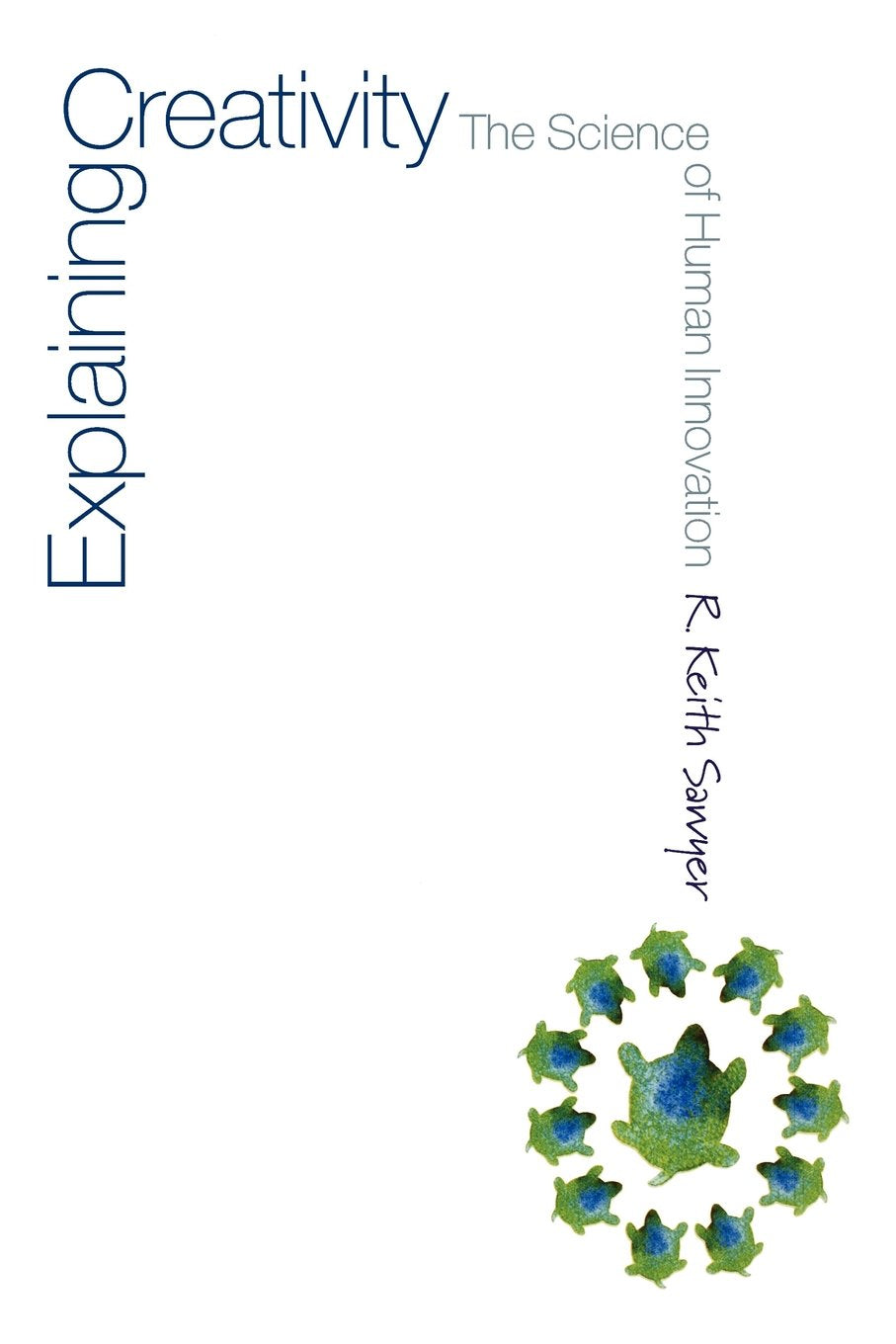
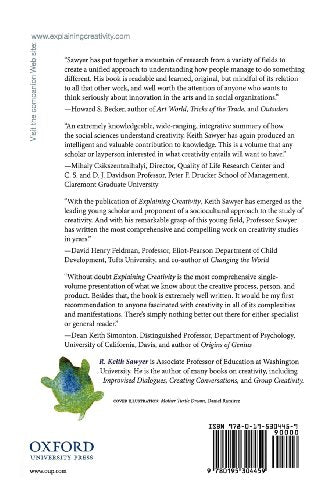
This is the first edition; the second edition was published in December, 2011 and has seven new chapters and eight new appendices. I highly recommend you buy the second edition!Explaining Creativity is an accessible introduction to the latest scientific research on creativity. In the last 50 yearss, psychologists, anthropologists, and sociologists have increasingly studied creativity, and we now know more about creativity that at any point in history. Explaining Creativity considers not only arts like painting and writing, but also science, stage performance, and business innovation. Until about a decade ago, creativity researchers tended to focus on highly valued activities like fine art painting and Nobel prize winning science. Sawyer brings this research up to date by including movies, music videos, cartoons, videogames, hypertext fiction, and computer technology. For example, this is the first book on creativity to include studies of performance and improvisation. Sawyer draws on the latest research findings to show the importance of collaboration and context in all of these creative activities.Today's science of creativity is interdisciplinary; in addition to psychological studies of creativity, Explaining Creativity includes research by anthropologists on creativity in nonWestern cultures, and research by sociologists about the situations, contexts, and networks of creative activity. Explaining Creativity brings these approaches together within the sociocultural approach to creativity pioneered by Howard Becker, Mihaly Csikszentmihalyi and Howard Gardner. The sociocultural approach moves beyond the individual to consider the social and cultural contexts of creativity, emphasizing the role of collaboration and context in the creative process.
⚠️ WARNING (California Proposition 65):
This product may contain chemicals known to the State of California to cause cancer, birth defects, or other reproductive harm.
For more information, please visit www.P65Warnings.ca.gov.
- Q: How many pages does this book have? A: This book has three hundred sixty-eight pages. It's packed with insights about creativity and its interdisciplinary nature.
- Q: What is the binding type of this book? A: This book is a paperback edition. It offers a flexible and lightweight option for readers.
- Q: Who is the author of 'Explaining Creativity'? A: The author is R. Keith Sawyer. He is known for his extensive research in the field of creativity.
- Q: What topics are covered in 'Explaining Creativity'? A: The book covers various creative domains, including arts, sciences, and business innovation. It integrates research from psychology, sociology, and anthropology.
- Q: Is this book suitable for beginners in creativity? A: Yes, this book is suitable for beginners. It serves as an accessible introduction to scientific research on creativity.
- Q: Can I benefit from this book if I'm an experienced professional? A: Yes, even experienced professionals can benefit. The book includes up-to-date research findings and insights that enhance understanding of creativity.
- Q: How should I store this book to keep it in good condition? A: Store this book in a cool, dry place, away from direct sunlight. This helps prevent damage to the cover and pages.
- Q: What should I do if the book arrives damaged? A: If the book arrives damaged, contact the seller for a return or exchange. Most retailers have policies in place for such issues.
- Q: Are there any special care instructions for this book? A: No special care instructions are needed for this paperback book. Just handle it with clean hands to maintain its condition.
- Q: How does 'Explaining Creativity' compare to other books on creativity? A: This book stands out due to its interdisciplinary approach. It incorporates insights from various fields, unlike many creativity-focused books.
- Q: Is this book appropriate for academic study? A: Yes, this book is appropriate for academic study. It is based on scientific research and includes valuable references.
- Q: What age group is this book suitable for? A: This book is suitable for adults and older teens. Its content is intended for readers interested in understanding creativity.
- Q: Does this book include practical examples of creativity? A: Yes, it includes practical examples from various creative fields, such as movies, music, and business innovation.
- Q: Is there a second edition of this book available? A: Yes, a second edition is available, published in December two thousand eleven, featuring seven new chapters and eight new appendices.
- Q: What makes this book unique in its approach to creativity? A: This book uniquely integrates sociocultural perspectives, emphasizing collaboration and context in the creative process.